
LECTURE ON "ACADEMIC INTEGRITY" FOR STUDENTS OF THE FACULTY OF DESIGN
On September 15, 2026, an online lecture titled "ACADEMIC INTEGRITY" was held for students of the Faculty of Design at KNUTD. The lecture was conducted by Oleksii Volianyk, Head of the KNUTD Center for Educational Quality Management. Participants included students at the first (Bachelor’s) and second (Master’s) levels of higher education in the specialty "Design", representing the departments of Graphic Design; Art and Fashion Design; Interior and Furniture Design; and Multimedia Design, as well as PhD students from the "Design" educational and scientific program. The students are enrolled in the following educational programs: "Graphic Design", "Fashion Design", "Environmental Design" and "Multimedia Design" (Bachelor’s level); "Design (by types)", "Fashion Design" and "Environmental Design" (Master’s level), "Design" (PhD level).
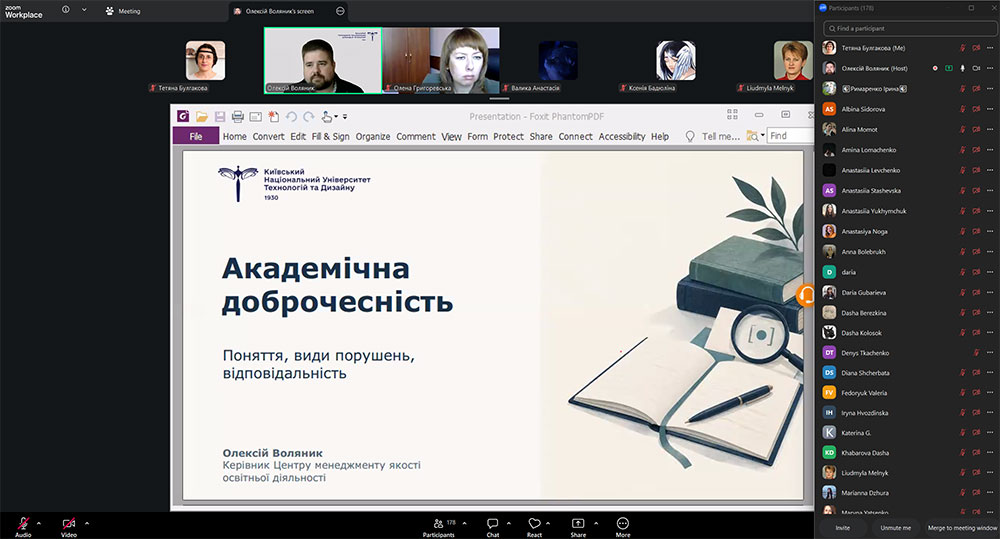
During the meeting, the fundamental principles of academic integrity and the regulatory documents governing their observance within the educational process were reviewed. Particular attention was paid to types of academic integrity violations, including academic plagiarism, misappropriation of authorship, fabrication, unauthorized assistance, biased assessment, and other manifestations of academic dishonesty.
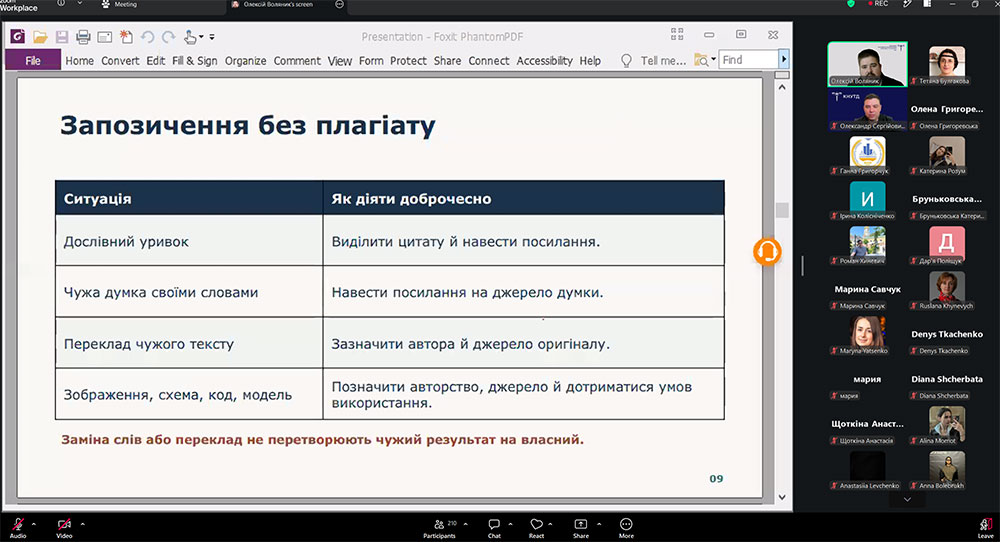
The issue of the correct use of borrowed material and proper citation of sources was addressed separately. Using specific examples, students were shown the distinction between the ethical use of others' ideas, texts, translations, images, and other materials and academic plagiarism.
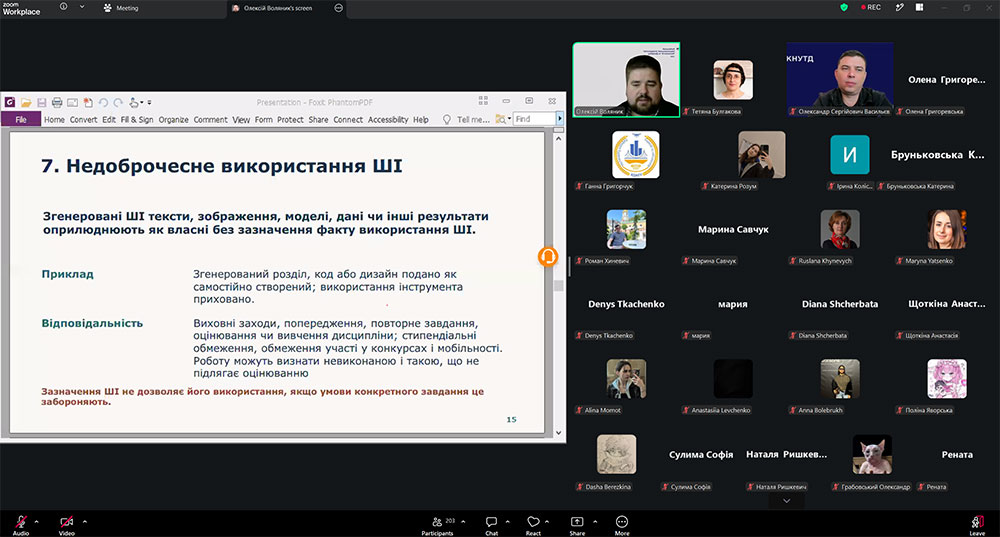
A key part of the lecture was the discussion on the use of artificial intelligence technologies in educational and research activities. Emphasis was placed on the need for the responsible use of AI tools and the proper disclosure of their application when creating texts, images, models, data, and other outputs of academic and research work.
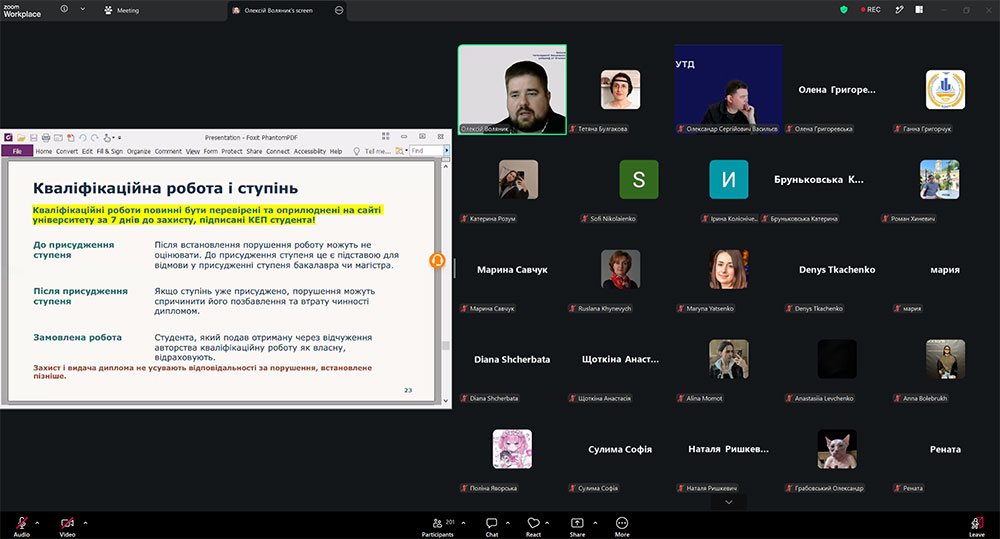
Particular attention was paid to upholding academic integrity during the preparation of qualification papers and dissertations. Candidates were informed of current requirements regarding the screening of these works for academic plagiarism and their subsequent publication.
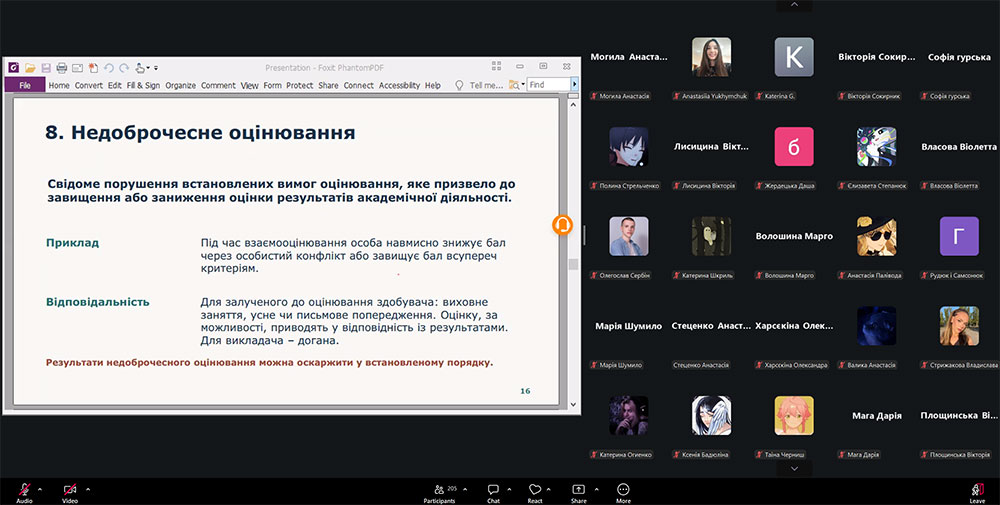
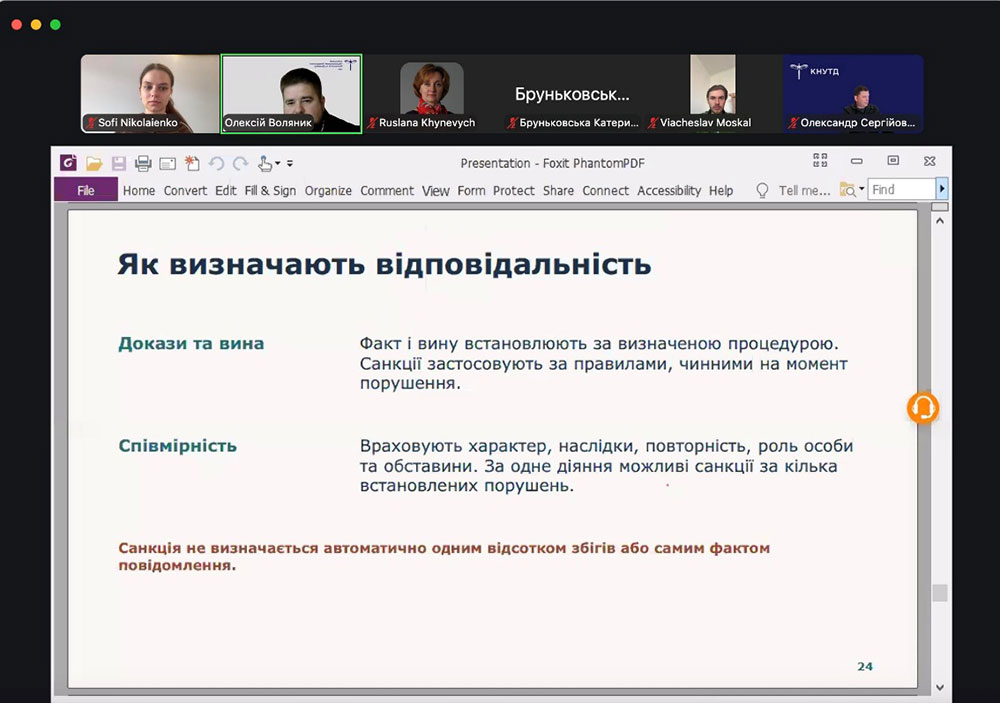
Conducting such information and educational events is a key component in fostering a culture of academic integrity among students of the Faculty of Design; it promotes a responsible attitude toward the outcomes of their own academic and research activities, adherence to copyright standards, and the informed use of modern digital technologies.
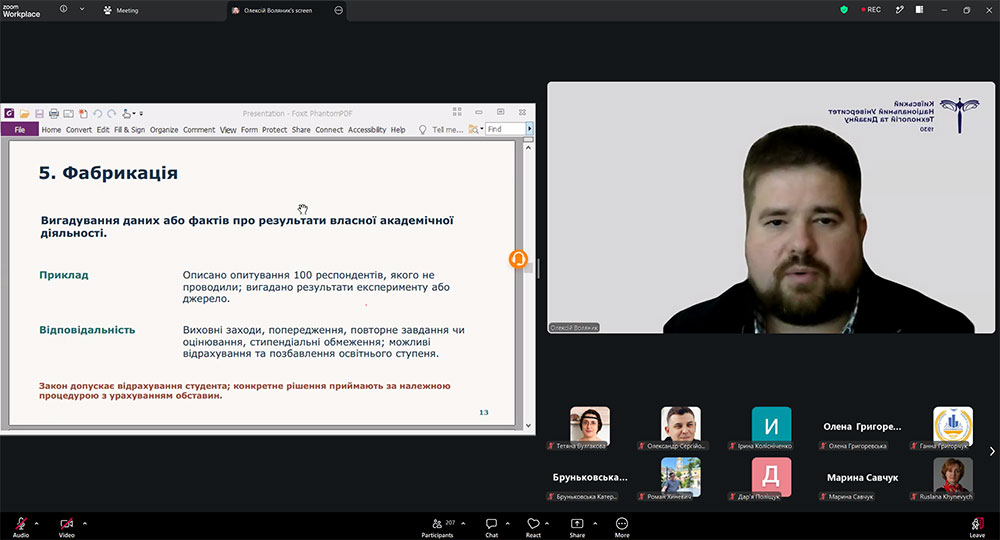
We thank Oleksii Volianyk and the KNUTD Center for Quality Management of Educational Activities for an informative and timely lecture!
16.09.2026