
STAKEHOLDERS DISCUSSED THE DEVELOPMENT OF THE “PSYCHOLOGY” AND “VOCATIONAL EDUCATION” EDUCATIONAL PROGRAMS AT THE FACULTY OF FASHION AND TECHNOLOGIES
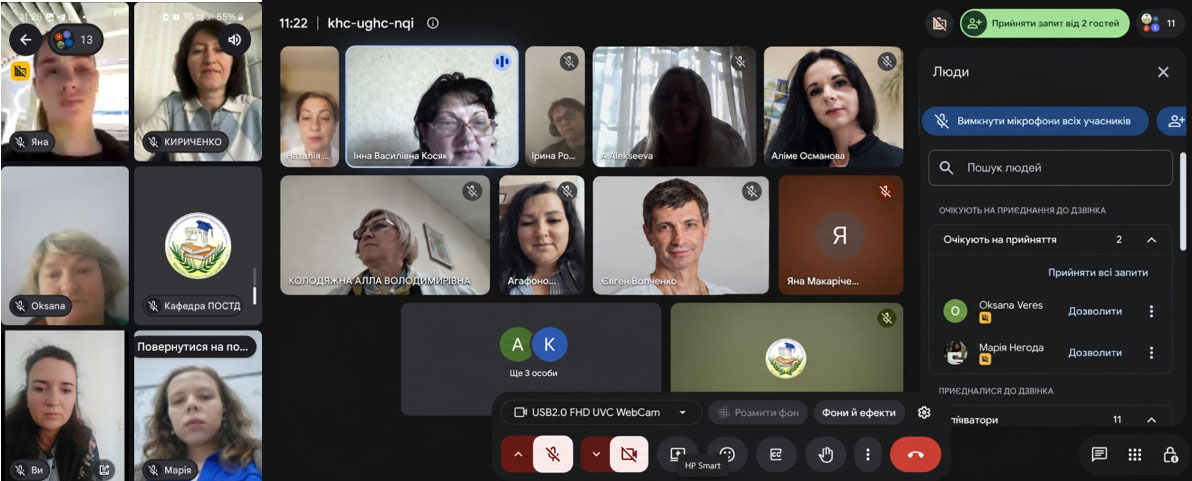
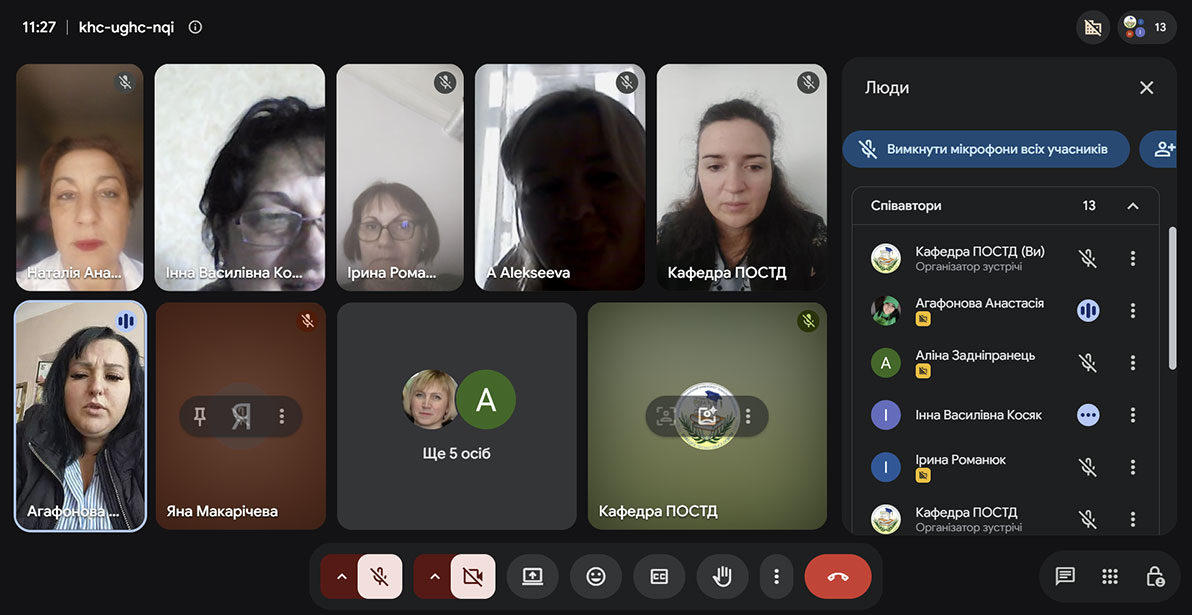
On October 1, 2026, the Faculty of Fashion and Technology at Kyiv National University of Technologies and Design hosted an online roundtable with stakeholders and external reviewers of the “Psychology” and “Vocational Education (Light Industry Product Technology)” at the first (bachelor’s) and second (master’s) levels of higher education.
The discussion was attended by representatives of the academic community, program coordinators, employers, practicing psychologists, representatives of vocational education institutions, and graduates of KNUTD.
The Department of Psychology and Continuing Professional Education was represented by Nataliia Dobrovolska, department chair, Doctor of Psychology, associate professor; Alona Tykhomirova, program coordinator for the “Psychology” educational program at the first (bachelor’s) level of higher education, Candidate of Psychological Sciences, senior lecturer; Alla Kolodyazhna, program coordinator for the “Psychology” educational program at the second (master’s) level of higher education, Candidate of Psychological Sciences, associate professor; Inna Kosyak, program coordinator for the “Vocational Education (Light Industry Product Technology)” educational program at the second (master’s) level of higher education, Candidate of Pedagogical Sciences, Associate Professor; Rimma Kyrychenko, Candidate of Psychological Sciences, Associate Professor.
The following individuals were invited to participate in the discussion of the “Psychology” educational program: Alime Osmanova, Candidate of Psychological Sciences, Associate Professor in the Department of Psychology and Pedagogy at the National University of Kyiv-Mohyla Academy; Yevhen Volchenko, Candidate of Psychological Sciences, Associate Professor at the Volodymyr Dahl East Ukrainian National University, physician in physical and rehabilitation medicine; Eduard Skolota, Doctor of Philosophy (PhD) in Psychology, Associate Professor at the Volodymyr Dahl East Ukrainian National University; Iryna Alekseeva, clinical psychologist at the Slavuta Vocational Lyceum; Yana Makaricheva, graduate of Kyiv National University of Technology and Design (KNUTD) with a degree in Psychology, child psychologist, and specialist in inclusive education at the “Mosaic” Gymnasium.
The development of the vocational education program “Vocational Education (Light Industry Product Technology)” was discussed by Oksana Veres, Deputy Director for Academic and Production Affairs at the Kyiv Professional College of Technology and Service and a first-category specialist instructor; Nelia Kredenets, Director of the Lviv Vocational College of Fashion Industry at KNUTD, Doctor of Pedagogical Sciences, Professor, Honored Worker of Public Education of Ukraine, and member of the Union of Designers of Ukraine; Alina Zadnipranets, a graduate of KNUTD under the educational program “Vocational Education (Light Industry Product Technology),” instructor of vocational-theoretical training disciplines at the Kyiv Professional College of Technologies and Fashion Design; Anastasia Agafonova, a graduate of KNUTD under this educational program, instructor of vocational and theoretical training courses at the Slavuta Vocational Lyceum.
Representatives from the professional community and alumni shared their practical experiences and offered suggestions regarding the curriculum for training future psychologists. Participants emphasized the need to combine a solid theoretical foundation with the acquisition of practical skills, the development of communication and professional competencies, readiness to work with diverse client groups, and the ability of future professionals to respond to current societal challenges. During the discussion of vocational education programs, attention was focused on updating the curriculum to reflect current technological and industrial changes, developing students’ managerial, communication, and psychological-pedagogical competencies, introducing project-based learning and interdisciplinary connections, as well as expanding cooperation with vocational education institutions and businesses to strengthen the practical component of learning.
The format of an open professional dialogue made it possible to gather feedback from various stakeholder groups, assess the relevance of the educational programs’ content, and identify areas for their further improvement.
The proposals and recommendations made during the roundtable will be taken into account when revising and improving vocational education programs. Systematic engagement with stakeholders helps ensure the quality of the educational process, the relevance of educational programs, and the preparation of competitive professionals capable of working effectively in today’s professional environment.
02.10.2026