
THE WORD THEY PAID FOR WITH THEIR LIVES
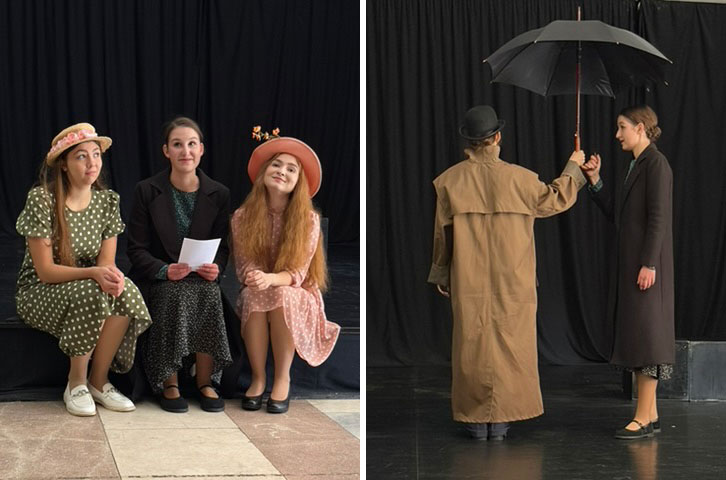
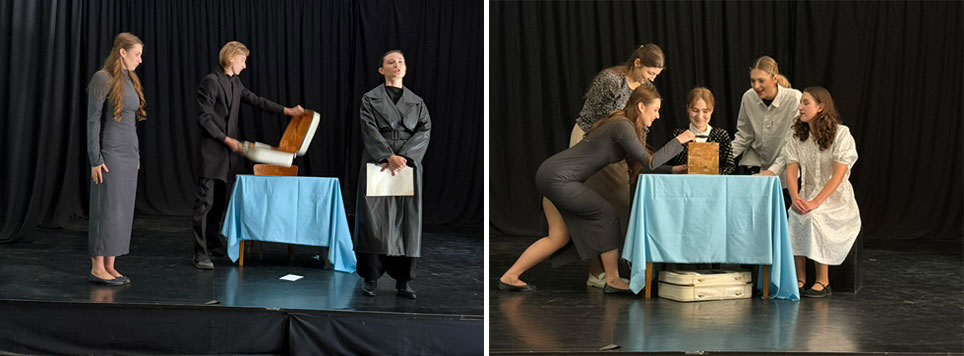
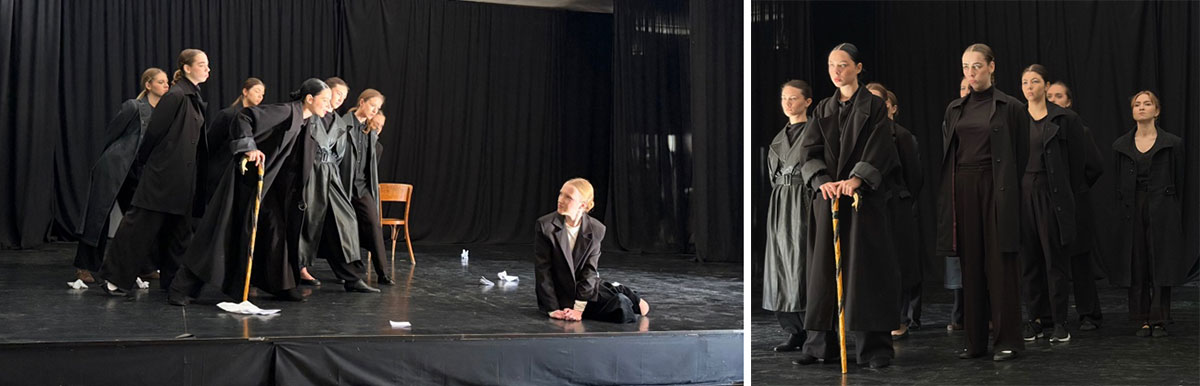
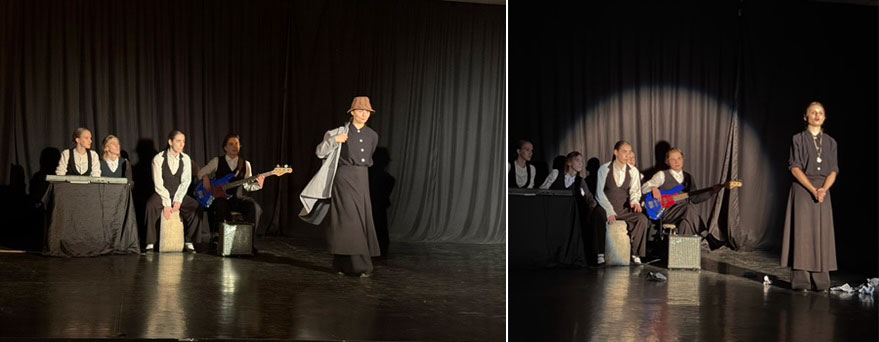
On 8 October 2026, the Department of Stage Arts and Culture of the Faculty of Culture and Creative Industries at Kyiv National University of Technologies and Design (KNUTD) presented the stage speech showcase "Outstanding Figures of Ukraine." Fourth-year students (group BAMP-23) from the acting studio of People's Artist of Ukraine L. M. Somov performed compositions built on archival sources, epistolary heritage, and living dialect speech. The showcase was originally scheduled for 7 October but was postponed due to a power outage and an air raid alert. It took place the following day, a reminder that in today's circumstances education and artistic practice are sustained above all by the resilience of those who create them.
The project's originator and director, Senior Lecturer of the Department of Stage Arts and Culture Alla Binieieva, undertook extensive work with the cohort. She combined a research phase, a lengthy rehearsal process, and the staging itself. Her aim was to present outstanding Ukrainians through the authentic sound of their own words, free of textbook gloss.
The compositions drew on archival materials – letters, diary entries, and the testimonies of contemporaries. Marko Vovchok, Kateryna Bilokur, Olena Teliha, Nadiia Svitlychna, and Vasyl Stus were brought to life on stage. Their lives spanned different eras, yet all of them were united by devotion to the Ukrainian word, which they defended through their work, and some with their very lives. Epistolary text places particular demands on stage speech. It is not dramatic writing intended for performance, but the intimate, often fragmentary utterance of a real person, including letters written in prison and in exile. The students had to uncover the subtext, the logic of thought, and the emotional score of each document while preserving its authenticity and resisting the temptation to overplay the material.
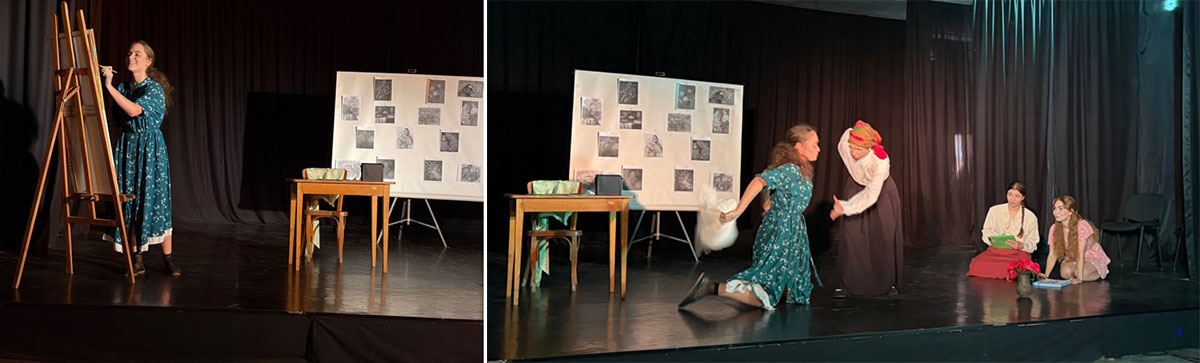
A special place among the compositions belonged to Kateryna Bilokur, a native of the village of Bohdanivka in the Poltava region. Her letters constitute a unique linguistic document. The self-taught painter wrote as she spoke, in the living Poltava vernacular, with its distinctive phonetics, vocabulary, and inimitable imagery. Alla Binieieva set herself and her students a demanding task: not merely to read these letters from the stage, but to convey the artist's dialect and restore her words to their original sound. To this end, she turned to living Left-Bank dialects, particularly those of the Sumy region, which are related to Poltava speech within the south-eastern dialect group. Reproducing dialect speech requires precise aural analysis and deliberate work on articulation and intonation patterns. Without it, dialect easily slips into mere stylization. As a result of this work, the audience heard not a literary "adaptation" but the voice of Kateryna Bilokur herself – sincere, unadorned, and at the same time profoundly poetic. In this respect, the showcase became a practice of safeguarding intangible cultural heritage, since regional speech is a living carrier of historical memory.
The coherence of the showcase owed much to the carefully considered sound and music design of all five pieces. The music did not simply accompany the spoken word but entered into dialogue with it. It evoked each era, heightened the emotional dramaturgy of every life story, and created a space in which documentary text acquired theatrical depth.
The showcase demonstrated that stage speech as an academic discipline extends far beyond speech technique. It cultivates in the future actor a research-based approach to text, the ability to work with primary sources, and a sense of responsibility for words spoken on stage on behalf of a real historical figure. For the graduating students, it marked an important step in their professional development at the intersection of acting, cultural studies, and historical scholarship.
The Department of Stage Arts and Culture extends its sincere gratitude to Alla Binieieva for the depth of her concept and her dedicated work, and to the students of BAMP-23 for their diligence, sensitivity to the material, and perseverance. You have shown that even in the most difficult circumstances, the Ukrainian word continues to resound.
09.10.2026