
INTELLECTUAL PROPERTY IN IT: SOFTSERVE’S PRACTICAL EXPERIENCE FOR STUDENTS AND FACULTY OF THE ICT DEPARTMENT
On October 9, 2026, as part of the compulsory educational component OK 1, “Software Development Methodology with Fundamentals of Intellectual Property,” of the “Software Engineering for Intelligent Systems” educational and professional program at the second (master’s) level of higher education, a guest online lecture on the topic “Intellectual Property and Contemporary Challenges in Software Project Management” was held as part of the mandatory educational component OK 1, “Software Development Methodology with Fundamentals of Intellectual Property,” of the “Software Engineering for Intelligent Systems” educational and professional program at the second (master’s) level of higher education. The lecture featured Mykhailo Zhelieznov, Senior Project Manager at the international IT company SoftServe, who has over 15 years of experience in the IT industry.
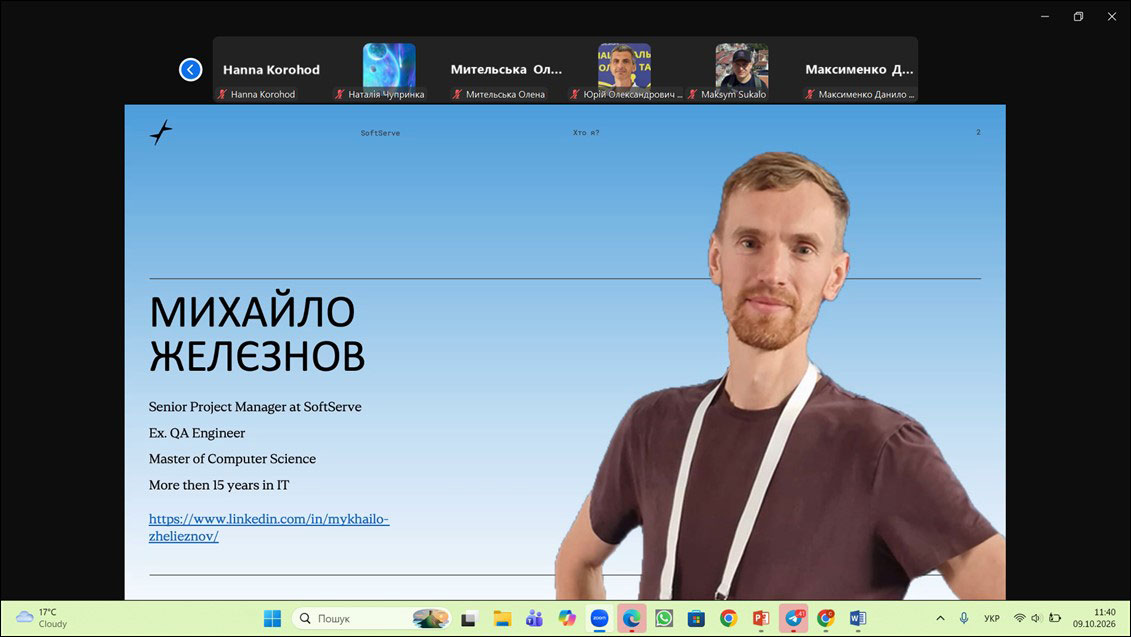
The event was attended by Vladyslava SKIDAN, Head of the Department of Information and Computer Technologies, Candidate of Technical Sciences, and Associate Professor, as well as faculty members and students from the Department of Information and Computer Technologies at Kyiv National University of Technologies and Design. The guest online lecture was moderated by Antonina VOLIVACH, Candidate of Technical Sciences and Associate Professor in the Department of Information and Computer Technologies.

The purpose of the event was to deepen university students knowledge of the legal, organizational, and professional aspects of software development, familiarize them with modern approaches to software project management, and foster an understanding of the importance of intellectual property protection in the context of the rapid development of digital technologies.
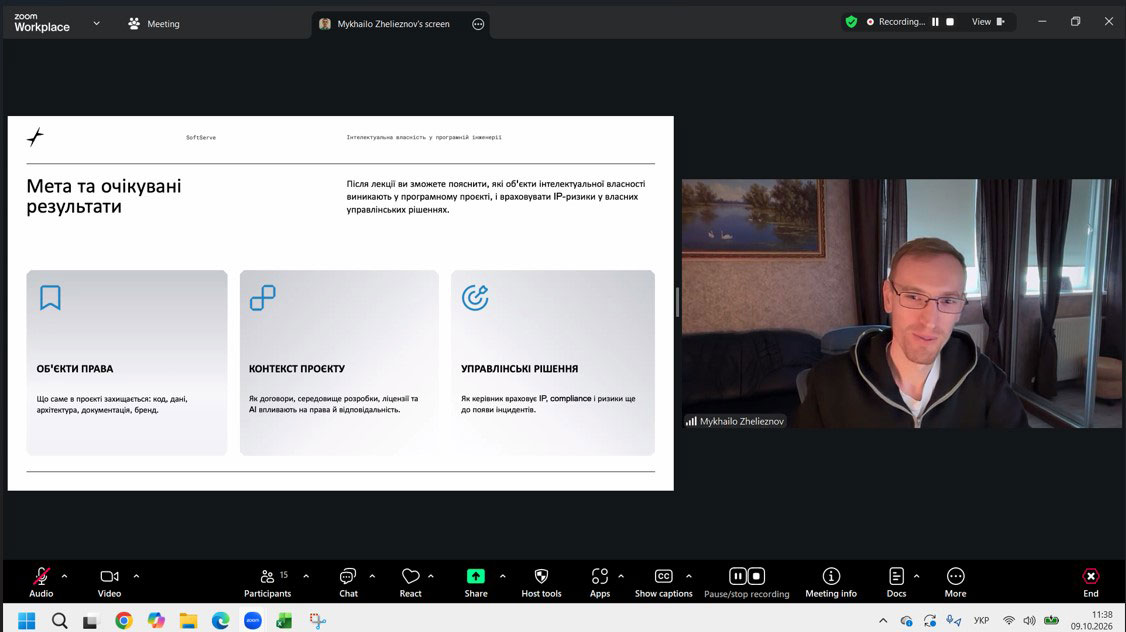
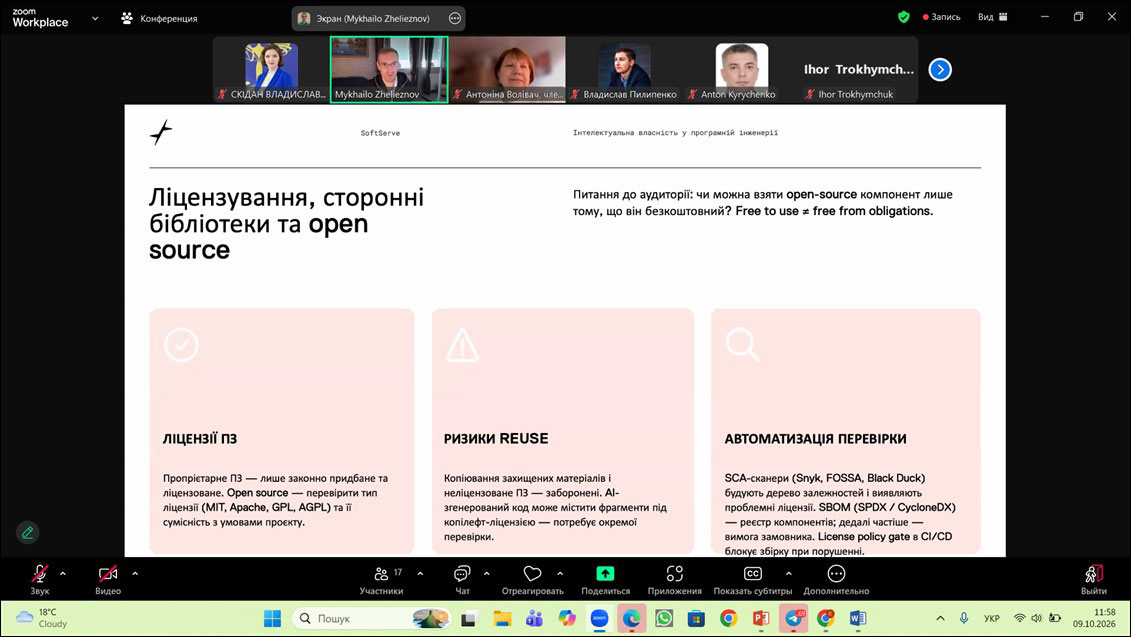
During the lecture, Mykhailo ZHELEZNOV shared his practical experience working in the IT industry and highlighted current issues regarding the use of intellectual property in the processes of creating, implementing, and maintaining software products. Particular attention was paid to the legal aspects of software development, the distribution of rights and responsibilities among project team members, and the need to comply with licensing requirements when using software components.
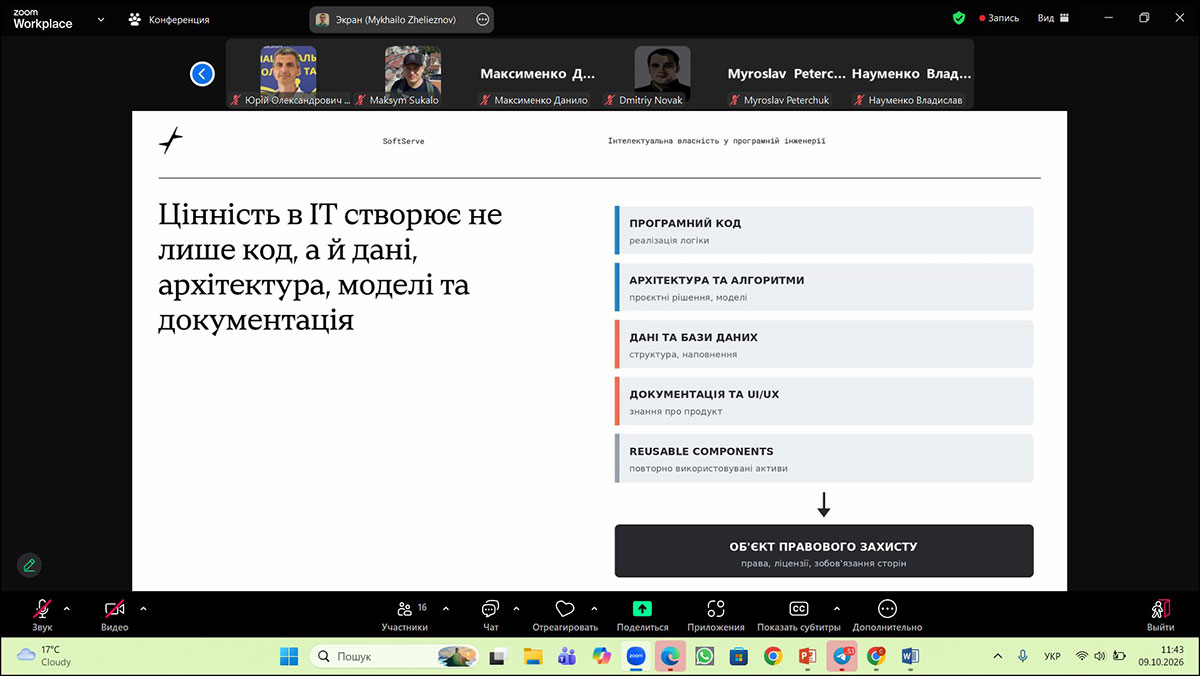
A separate section of the lecture was devoted to software licensing and the specifics of using open source software. Participants learned about the basic principles of the MIT, Apache, GPL, and AGPL licenses, their differences, restrictions, and requirements for using software components in commercial and non-commercial projects. It was emphasized that open-source code does not mean the absence of legal obligations, and that compliance with license terms is an important component of a developer’s professional responsibility.
Risk management in software projects played a significant role in the discussion, particularly the prevention of copyright infringements, verification of software license compatibility, monitoring the use of third-party libraries and dependencies, and the use of automated tools to identify potential legal and security risks.
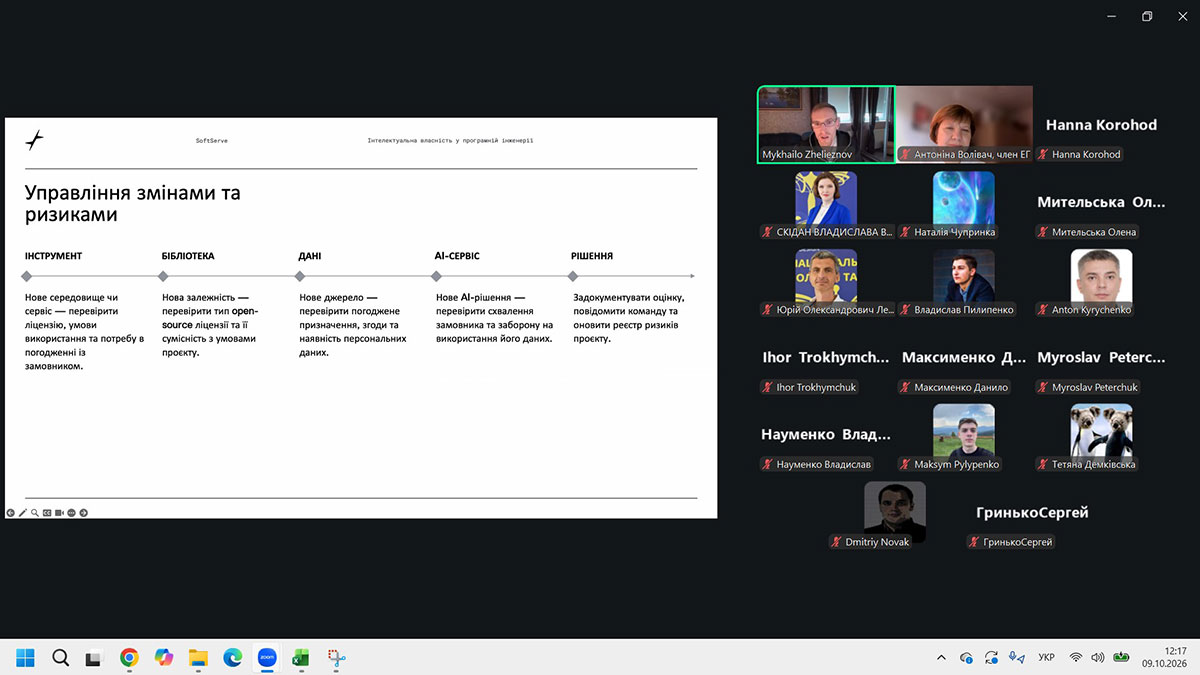
Significant attention was paid to information security and ensuring data confidentiality during the software development process. The importance of complying with contractual obligations, controlling access to information resources, securing development environments, and preventing the unauthorized dissemination of information was discussed.
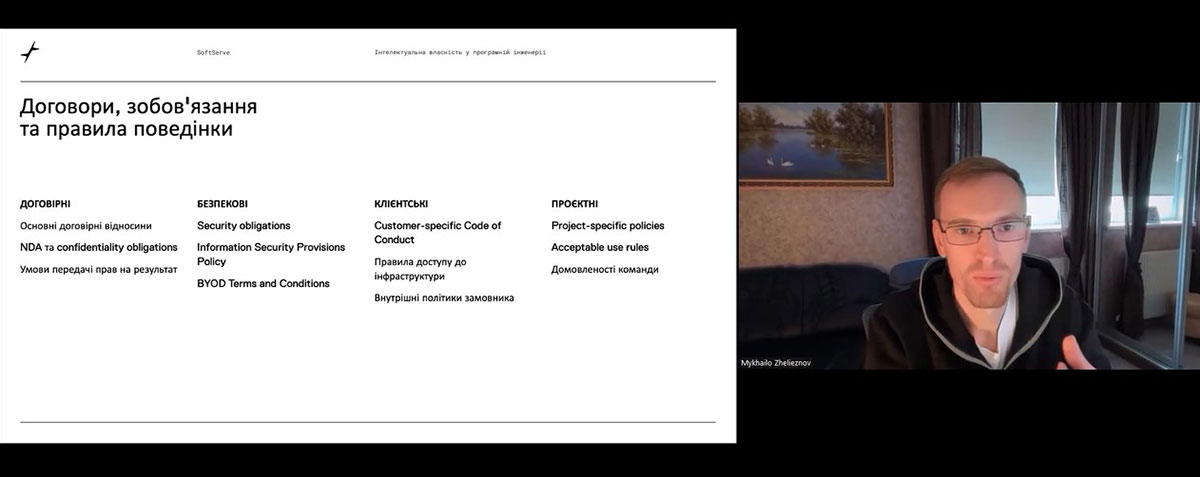
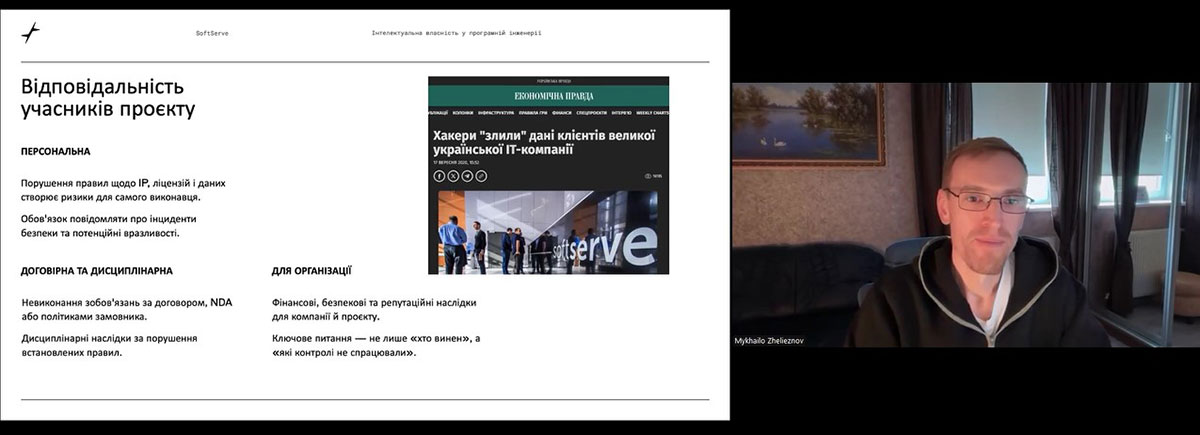
In the context of today’s challenges in software project management, participants discussed the importance of professional ethics, the responsibilities of project team members, compliance with IT companies internal policies, and fostering a culture of responsible use of intellectual assets.
The meetings practical focus was particularly valuable, as the issues discussed are directly related to software development practices and the challenges faced by professionals at modern IT companies. The examples provided offered an opportunity to examine the specifics of software project management, the use of development environments, data protection, access control, and compliance with intellectual property requirements.
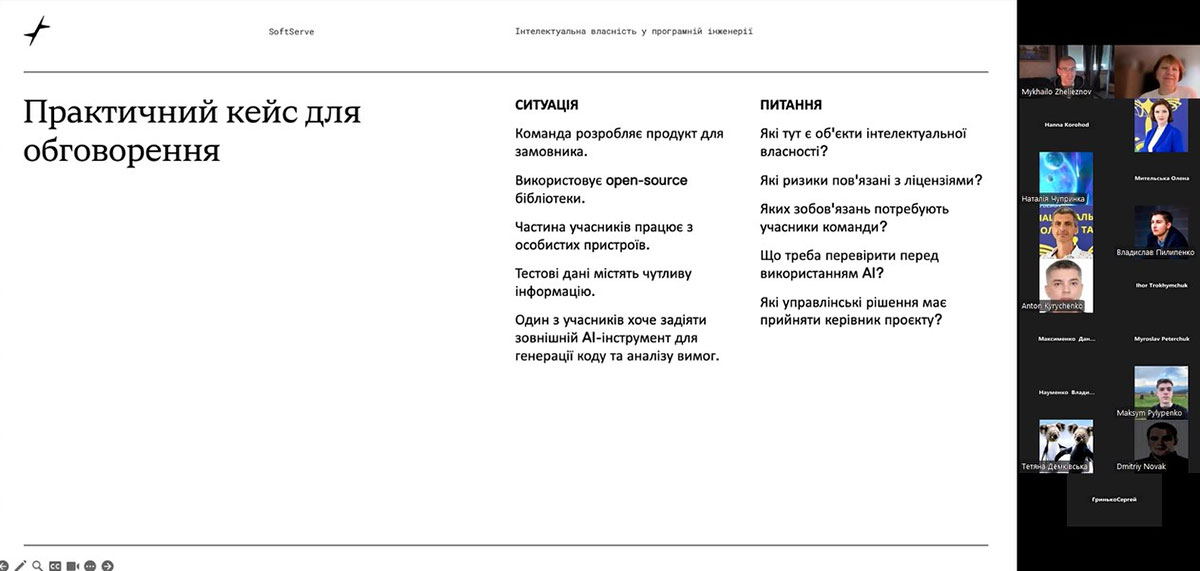
In an open discussion format, the students had the opportunity to ask questions, participate in the analysis of a practical case study, and exchange views on challenging situations that arise during software development. This helped deepen their understanding of the interrelationship between technical solutions, intellectual property requirements, data protection, and effective software project management.
Holding such events is an important component of the practice-oriented training of students in the Department of Information and Computer Technologies; it promotes the integration of modern IT industry expertise into the educational process, the development of professional competencies, and the formation of skills for making informed technical and managerial decisions.
Involving SoftServe representatives in the educational events of the Department of Information and Computer Technologies helps strengthen cooperation between the university and the IT industry, update the content of educational programs to meet current labor market needs, and improve the quality of training for future software engineering professionals.

The Department of Information and Computer Technologies extends its sincere gratitude to Mykhailo ZHELEZNOV and SoftServe for a substantive, relevant, and practice-oriented lecture, their willingness to share their professional experience, and their support for the development of modern IT education.
Such events create additional opportunities for the professional growth of higher education students, broaden their understanding of the real challenges facing the IT industry, and help them develop the competencies necessary for successful professional careers in the context of society’s digital transformation.
12.10.2026