
GUEST ONLINE LECTURE “FEATURES OF 3D DESIGN SOFTWARE SYSTEMS IN THE FASHION INDUSTRY” FOR GRADUATE STUDENTS AND FACULTY MEMBERS OF THE DEPARTMENT OF ICT
As part of the educational and professional program “Software Engineering for Intelligent Systems” at the second (master’s) level of higher education in the F2 Software Engineering specialty at Kyiv National University of Technologies and Design, a guest online lecture was held on the topic “Features of 3D Design Software Systems in the Fashion Industry”.
The event was moderated by Tetiana Anatoliivna NADOPTA, Ph.D. in Technical Sciences, Associate Professor, and Chair of the Department of Fashion Industry in Light Industry at Khmelnytskyi National University, who introduced participants to modern digital technologies for design, 3D modeling, and virtual visualization of fashion industry products.
The purpose of the lecture was to deepen students’ understanding of the specifics of using specialized 3D design software, its functional capabilities, the mathematical foundations of digital modeling, and its practical application in the design of clothing, footwear, and accessories.
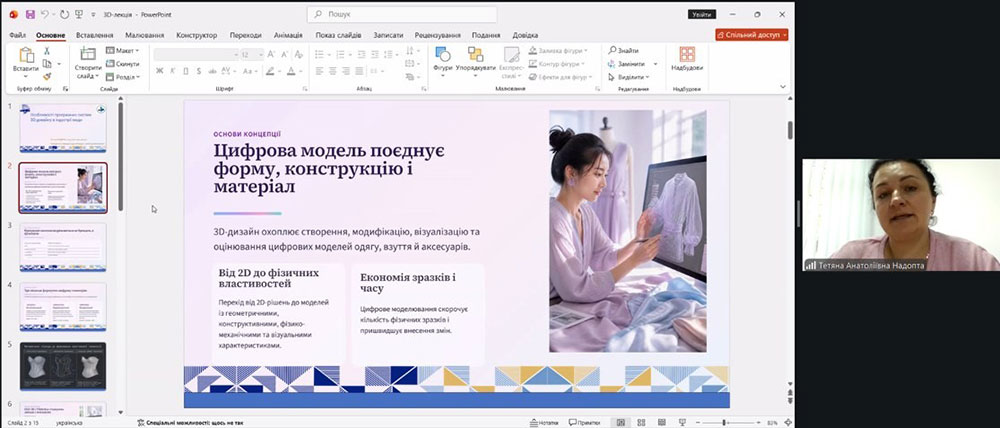
During the lecture, Tetyana Anatoliivna discussed modern approaches to creating digital product models that combine geometric, structural, physical-mechanical, and visual characteristics. Particular attention was paid to the transition from traditional two-dimensional design to comprehensive three-dimensional modeling, which makes it possible to optimize structural solutions, reduce the number of physical prototypes, and improve the efficiency of manufacturing processes.
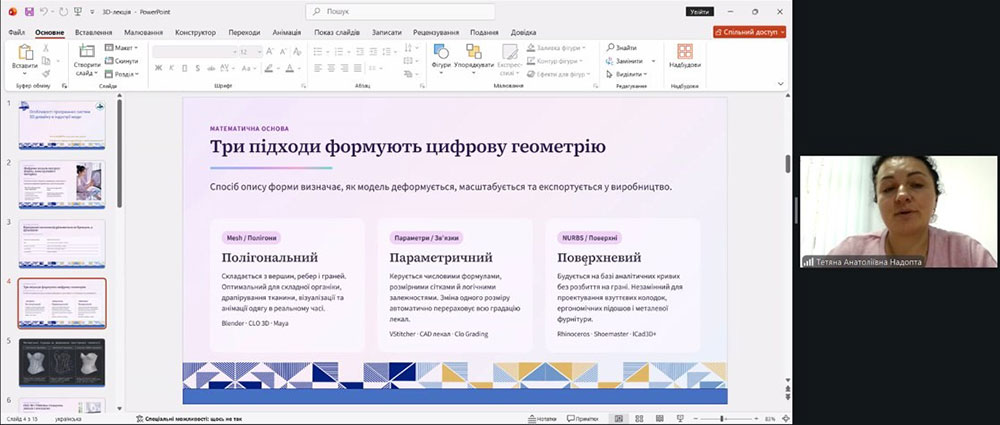
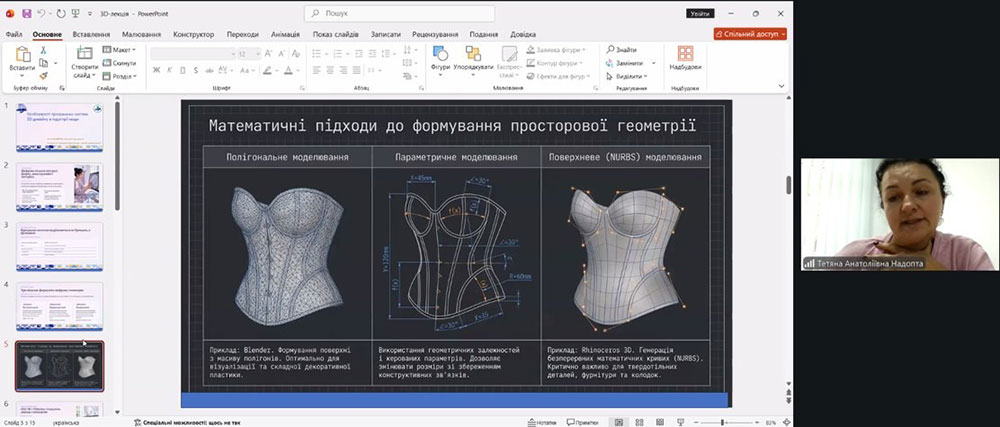
Participants in the event learned about the functional capabilities of modern software platforms such as CLO 3D, Browzwear VStitcher, Style3D, Blender, Rhinoceros 3D, and ICad3D+, as well as the principles for selecting software based on the specific requirements of digital design tasks. The session covered the specifics of polygonal, parametric, and surface modeling; the use of digital avatars; virtual stitching of parts; simulation of the physical properties of materials; and 3D visualization of products.
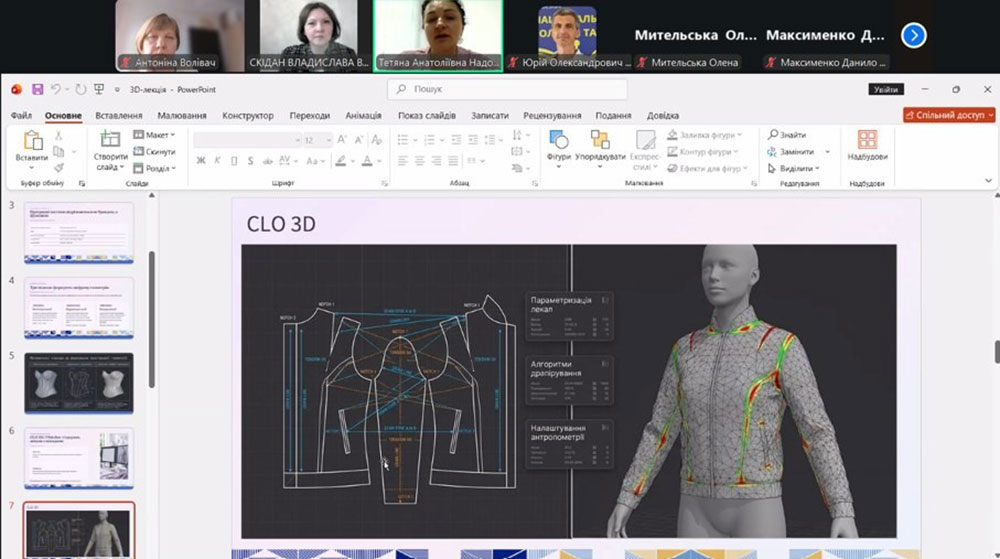
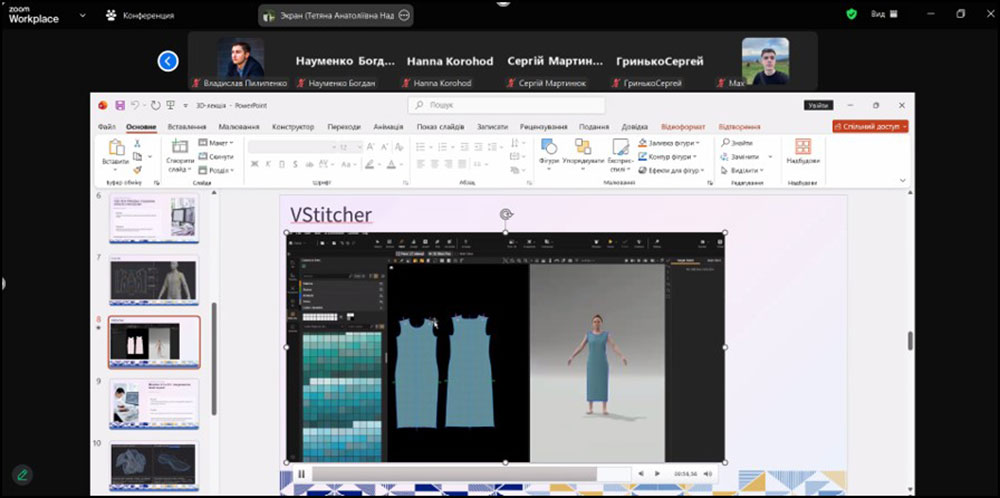
Tetyana Anatoliivna paid special attention to virtual fitting and digital prototyping technologies, which make it possible to evaluate a garment’s fit, analyze fabric tension, simulate its drape, and identify design flaws even before a physical sample is produced.
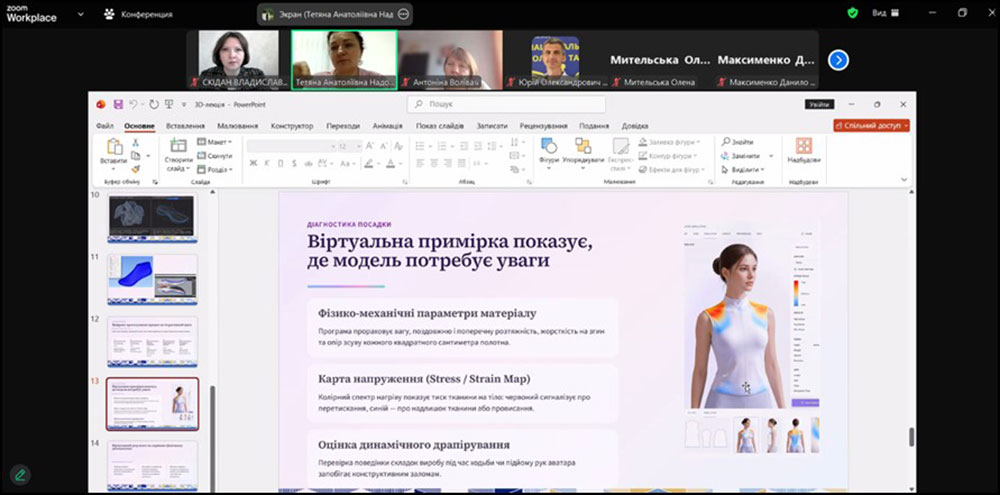
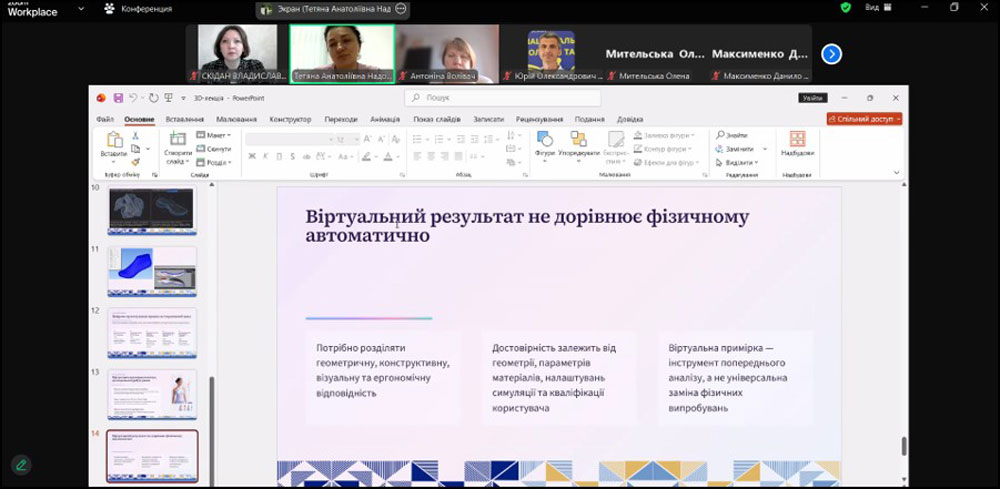
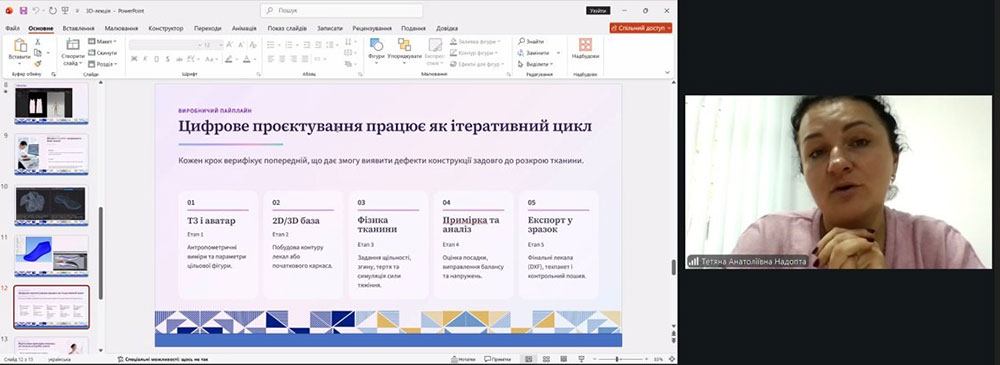
The lecture covered the digital design process from defining technical specifications and creating a 3D model to verifying its characteristics and preparing documentation for production. An important aspect of the lecture was the discussion of the integration of 3D design software systems into a unified digital environment, which facilitates collaboration among designers, engineers, software developers, process engineers, and quality control specialists.
Holding such interdisciplinary educational events is particularly important for the training of master’s students in the “Software Engineering for Intelligent Systems” program, as it promotes the integration of competencies in the fields of software engineering, computer modeling, digital technologies, and the fashion industry. The knowledge gained lays the foundation for the development of innovative software solutions, intelligent systems for automated design, digital prototyping, and product visualization.
The lecture helped broaden the professional horizons of higher education students, deepen interdepartmental collaboration, and strengthen the practice-oriented component of the educational process in line with current trends in the digital transformation of the fashion industry.
The faculty and graduate students of the Department of Information and Computer Technologies at Kyiv National University of Technologies and Design express their sincere gratitude to Tetiana Anatoliivna NADOPTI for her informative, relevant, and professionally oriented lecture, her presentation of modern 3D design software technologies, sharing her scientific and practical experience, and making a significant contribution to the development of interdisciplinary cooperation and the improvement of the quality of training for future software engineering professionals.
15.10.2026