
SUMMARY OF THE ІІ INTERNATIONAL SCIENTIFIC AND PRACTICAL CONFERENCE “INNOVATIVE ECOSYSTEM FOR THE REBUILDING OF UKRAINE: INTEGRATION OF SCIENCE, EDUCATION AND BUSINESS
On October 8, 2026, Kyiv National University of Technologies and Design hosted the II International Scientific and Practical Conference “Innovative Ecosystem for Ukraine’s Reconstruction: Integration of Science, Education and Business”.
The event was organized by the Ministry of Education and Science of Ukraine, Kyiv National University of Technologies and Design. The co-organizers included the State Institution “Institute for Economics and Forecasting of the National Academy of Sciences of Ukraine”; the Research Institute of Law-Making and Scientific-Legal Expertise of the National Academy of Sciences of Ukraine; the State Educational and Scientific Institution “Academy of Financial Management”; Taras Shevchenko National University of Kyiv; Kyiv National Economic University named after Vadym Hetman; West Ukrainian National University; State University of Trade and Economics; KROK University of Economics and Law; State University “Kyiv Aviation Institute”; Dmytro Motornyi Tavria State Agrotechnological University; University of Foggia (Italian Republic); European Institute for Innovation Development (Ostrava, Czech Republic); International Academy of Applied Sciences (Łomża, Republic of Poland); University of Applied Sciences, University of Management and Administration in Opole (Republic of Poland); International Balkan University (Skopje, Republic of North Macedonia); State Academy of Applied Sciences in Krosno (Republic of Poland) and Riga Nordic University (Republic of Latvia).
The conference was also held with the support of the Erasmus+ and Horizon Europe programmes, within the framework of projects implemented at Kyiv National University of Technologies and Design: ERASMUS+ K2 – SEAL-NR “Skills Enrichment for Adaptive Leadership in the New Reality”; ERASMUS-JMO-2023-MODULE “Promoting European Skills and Approaches to Sustainable Bioeconomy in the Context of Current Challenges in Ukraine”; Horizon Europe – IMPACT-Campus “Knowledge Valorisation Centres for Sustainable Entrepreneurship and Digital Transformation”; as well as the project implemented within the international Q-Helix Alliance under the European Universities Support Programme “Scientific Vectors”.
The conference brought together more than 200 leading scholars representing 35 higher education institutions across Ukraine, including institutions from Kyiv, Dnipro, Ternopil, Vinnytsia, Poltava, Kharkiv, Odesa, Rivne, Lutsk, Lviv, Khmelnytskyi, Ostroh, and Kropyvnytskyi, as well as representatives of businesses and research institutions from Ukraine and abroad. The event was held in a hybrid format, combining in-person and online participation.
The conference was moderated by Tetiana Vlasiuk, Dean of the Faculty of Economics and Management, PhD in Economics, Associate Professor. At the beginning of the conference, the participants expressed their sincere gratitude and profound respect to the courageous defenders of Ukraine, who stand steadfast in protecting the sovereignty and territorial integrity of our country every day. It is thanks to the unwavering resilience, heroism, and selfless dedication of the servicemen and servicewomen of the Armed Forces of Ukraine that we are able to continue our educational and scientific activities, unite the nation's intellectual potential, and work together towards the reconstruction, development, and prosperity of a future strong and unbreakable Ukraine.
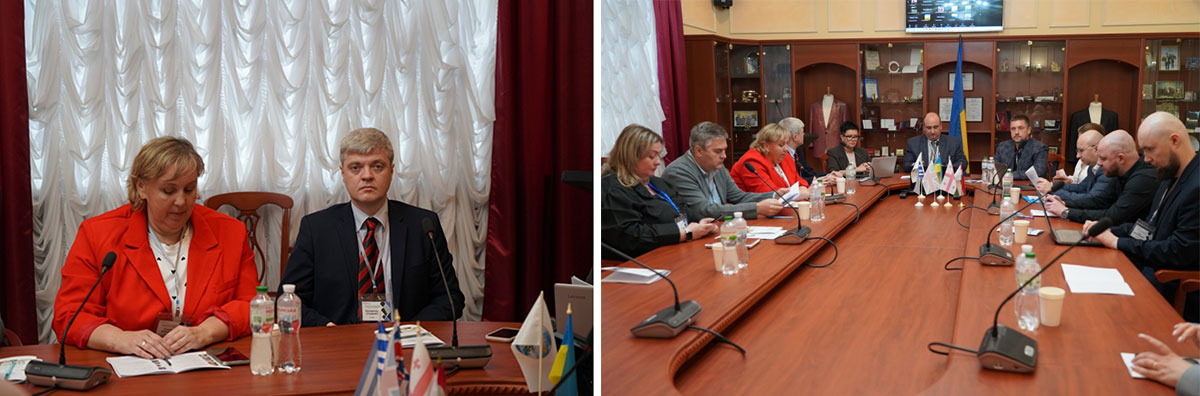
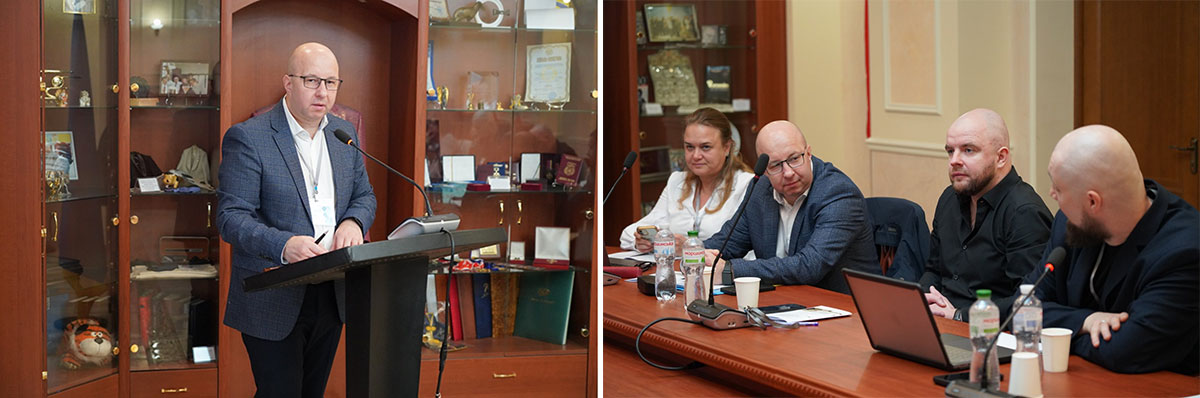
The conference was officially opened by Taliat Bielialov, Acting Rector of Kyiv National University of Technologies and Design and Vice-Rector for Scientific, Pedagogical and Educational Activities, who welcomed the participants and emphasized the particular importance of developing an innovative model for Ukraine’s reconstruction based on close integration of science, education, business, and international partnerships. In his opening address, he stressed that contemporary challenges require not only the restoration of the country's damaged potential but also the structural modernization of the national economy, the introduction of advanced technologies, and the development of a competitive, European-oriented Ukraine. He also highlighted the significance of the participation of Ukrainian and international partners in the conference and expressed his hope that the scientific dialogue would lead to new partnerships, joint research and educational projects, practical recommendations, and innovative solutions aimed at Ukraine’s post-war reconstruction.
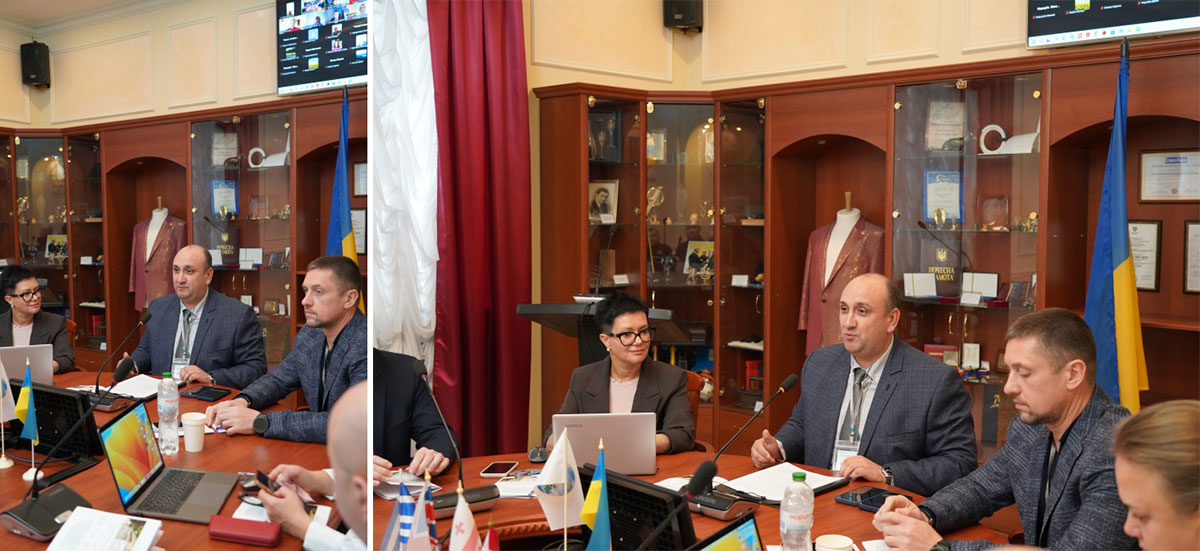
International partners of Kyiv National University of Technologies and Design delivered presentations highlighting the importance of cooperation and interaction between science, education, and business.
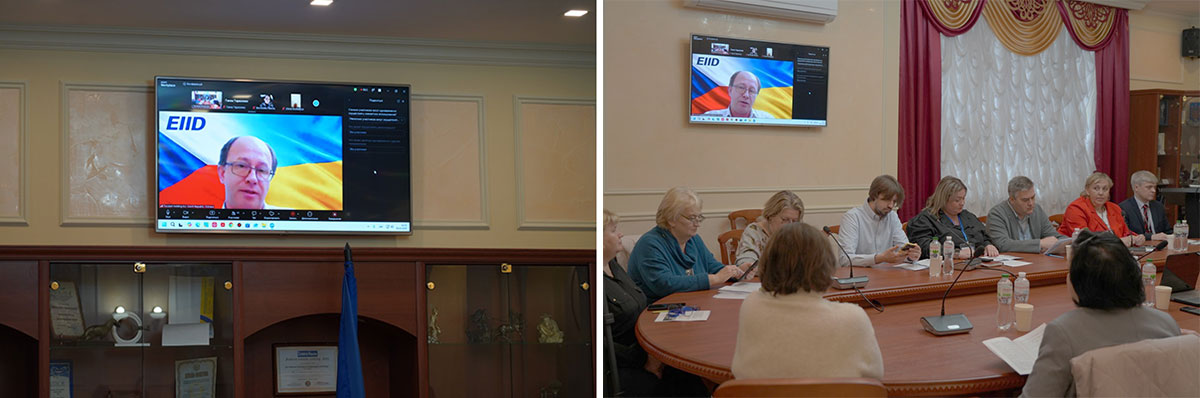
Alexander Buychik, Vice-President for Science at the European Institute for Innovation Development and Director of Science at Tuculart Holding (Czech Republic), emphasized in his welcoming address the importance of joining efforts across science, education, and business to support Ukraine’s recovery and development. Particular attention was paid to the devastating consequences of Russian aggression for the Ukrainian scientific community, including the destruction of research infrastructure, the forced displacement of researchers, the disruption of scientific activities, and the threats to preserving the country's intellectual potential. The speaker expressed his deepest condolences to the families of those who had lost their lives as a result of russian attacks. He highlighted the courage and unwavering resilience of Ukrainian scientists and educators who continue their professional activities despite the challenges of wartime, and acknowledged the significant role of entrepreneurs in supporting education and innovation. In conclusion, he wished the conference participants productive scientific discussions and expressed his sincere hopes for a just peace, successful reconstruction, and a dignified future for Ukraine.
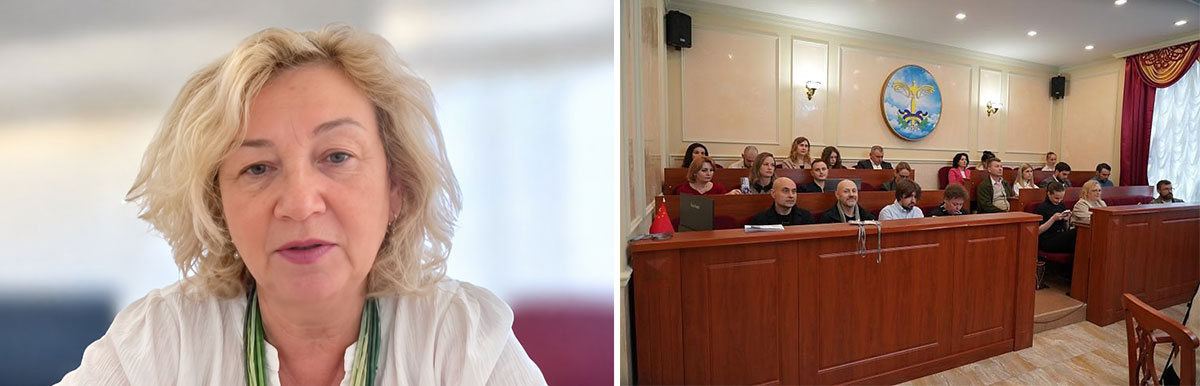
Snizhana Bilyk, Advisor to the Rector of the International Balkan University, Skopje (Republic of North Macedonia), presented the progress and achievements of joint projects implemented in cooperation with Kyiv National University of Technologies and Design: IMPACT-Campus “Knowledge Valorisation Centres for Sustainable Entrepreneurship and Digital Transformation” (Horizon Europe) and ERASMUS+ K2 – SEAL-NR “Skills Enrichment for Adaptive Leadership in the New Reality” .These projects aim to develop the competencies required by young people and students in the 21st century, foster entrepreneurial skills, enhance adaptability, and provide psychological support to young people, particularly internally displaced persons and students pursuing their education under wartime conditions. The speaker emphasized the importance of international partnerships bringing together higher education institutions from North Macedonia, Ukraine, Latvia, Poland, and Azerbaijan, as well as non-governmental organizations and associated partners. Among the project's key achievements, she highlighted the establishment of the European Virtual Exchange Hub at Kyiv National University of Technologies and Design in late 2025, a large-scale survey involving more than 2,500 students, the preparation of two analytical reports, and the ongoing work of an international team of authors on a scientific monograph.
Particular attention was devoted to the prospects for developing synchronous and asynchronous virtual academic exchanges, expanding international cooperation, and creating an innovative educational environment. In conclusion, the speaker wished the conference participants productive discussions and continued success in implementing joint international initiatives.
Agnieszka Dorota Woźniak, PhD, Vice-Rector for Development at the State Academy of Applied Sciences in Krosno (Republic of Poland), emphasized that Ukraine’s post-war reconstruction should not merely focus on rebuilding damaged infrastructure but should also serve as a powerful catalyst for economic modernization, the introduction of innovative technologies, and the development of a resilient innovation ecosystem. Particular attention in her presentation was devoted to the crucial role of universities in these processes, especially in promoting practice-oriented education, training highly qualified professionals, and strengthening cooperation between science, education, and business. As an example of the successful integration of scientific research with the practical needs of enterprises, she presented the activities of the 5G Laboratory operating at the State Academy of Applied Sciences in Krosno, which contributes to the advancement of digital technologies and modern communication systems. The key priorities for international cooperation highlighted in her presentation included energy security, renewable energy, decarbonization, energy efficiency, digitalization, and academic mobility. The speaker stressed that the effective implementation of innovations requires the establishment of long-term partnerships and mutual trust among universities, businesses, and government institutions. In conclusion, she expressed her institution’s readiness to expand cooperation with Ukrainian partners, implement joint research and educational projects, and actively contribute to the development of an innovative model for Ukraine’s reconstruction.
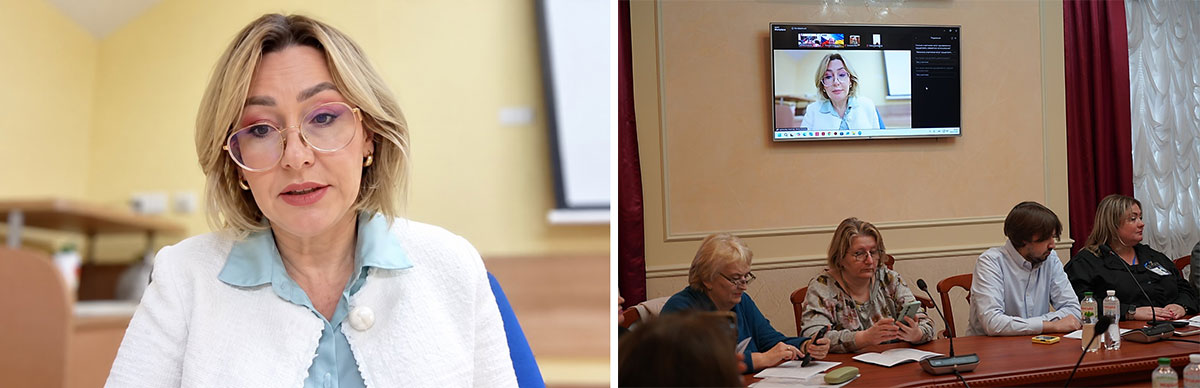
Vitalii Venger, Doctor of Economic Sciences, Professor, Director of the State Institution “Institute for Economics and Forecasting of the National Academy of Sciences of Ukraine”, delivered a presentation entitled “Science in Wartime: The Speed of Innovation as a Factor of Economic Resilience”. In his presentation, the speaker emphasized the crucial role of science, education, and business in Ukraine’s reconstruction, drawing attention to the extensive losses suffered by the country's educational and research infrastructure as a result of Russian aggression, the decline in research personnel, and the urgent need to preserve the nation's intellectual capital. At the same time, he highlighted the resilience of the Ukrainian scientific community, its ability to respond rapidly to contemporary challenges, and its capacity to develop innovative solutions for the defense sector, energy, healthcare, and infrastructure reconstruction. Particular attention was devoted to the need to accelerate the commercialization of scientific and technological developments, promote technology transfer, and establish effective mechanisms for cooperation between research institutions and the real sector of the economy. The speaker also presented practical approaches to assessing the technological, market, and investment readiness of research developments, creating investment portfolios, and preparing promising innovation projects within the institutions of the National Academy of Sciences of Ukraine. Among the priority areas for further cooperation, he identified the establishment of interdisciplinary research teams, the integration of research findings into the educational process, the promotion of academic mobility, joint training of researchers, and the involvement of students in applied research projects. The central message of the presentation was the need to transform scientific knowledge into practical technological solutions capable of strengthening economic resilience, fostering innovation-driven development, and supporting Ukraine’s post-war recovery and reconstruction.
Olena Ptashchenko, Doctor of Economic Sciences, Professor, Professor of the Department of Economic Cybernetics and Informatics at West Ukrainian National University, and a member of the Conference Scientific and Organizing Committee, welcomed the conference participants on behalf of the university's leadership.
In her address, she emphasized the crucial role of innovation in Ukraine’s post-war recovery and the development of a modern innovation ecosystem. Particular attention was devoted to the importance of long-standing institutional partnerships, the promotion of domestic academic mobility among students, and the exchange of knowledge, research achievements, and best educational practices.
The speaker expressed her sincere gratitude to Kyiv National University of Technologies and Design for its fruitful cooperation, the creation of opportunities for academic collaboration, and its commitment to uniting the efforts of educators and researchers to foster Ukraine’s innovation-driven development.
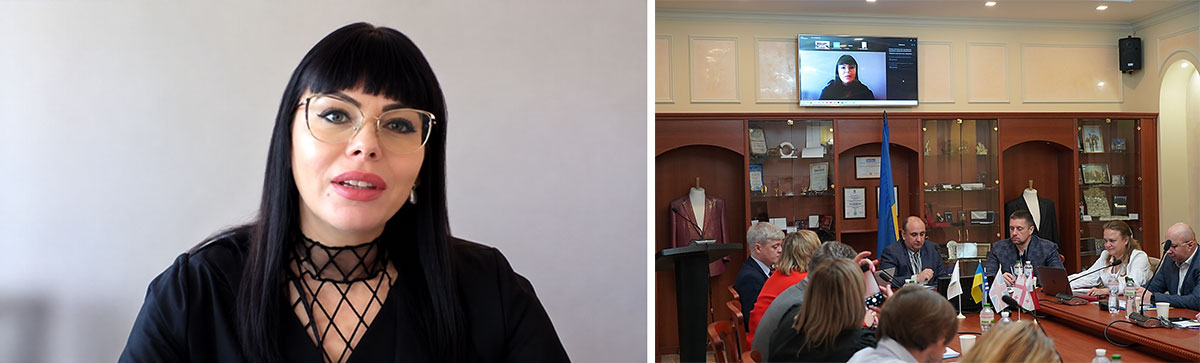
Ihor Rymyk, Doctor of Economic Sciences, Professor, Head of the Department of Economics and Finance at KROK University of Economics and Law, and a member of the Conference Scientific and Organizing Committee, welcomed the conference participants on behalf of the university's academic community. In his welcoming address, he emphasized the importance of strengthening partnerships, expanding scientific and educational cooperation, and engaging students and academic staff in joint research events and projects. Particular attention was devoted to the resilience of Ukraine’s higher education system and the ability of universities to continue their educational and research activities under martial law, overcoming security challenges while ensuring the continuity of the nation's intellectual development. The speaker stressed that the experience of Ukrainian higher education institutions operating under wartime conditions is unique and deserves international recognition and wider dissemination. He also highlighted the successful experience of Kyiv National University of Technologies and Design in integrating science, education, and business, emphasizing the tangible benefits of such partnerships for fostering innovation, advancing research activities, and training highly qualified, competitive professionals.
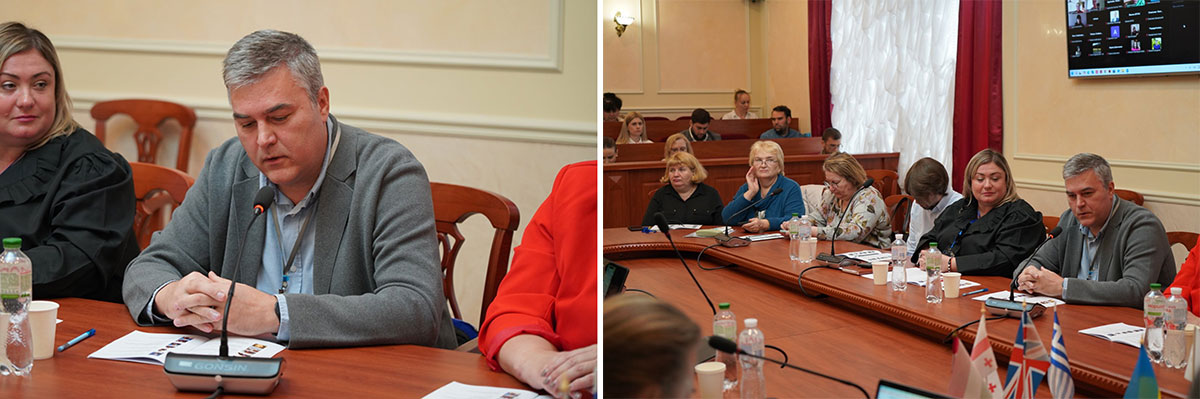
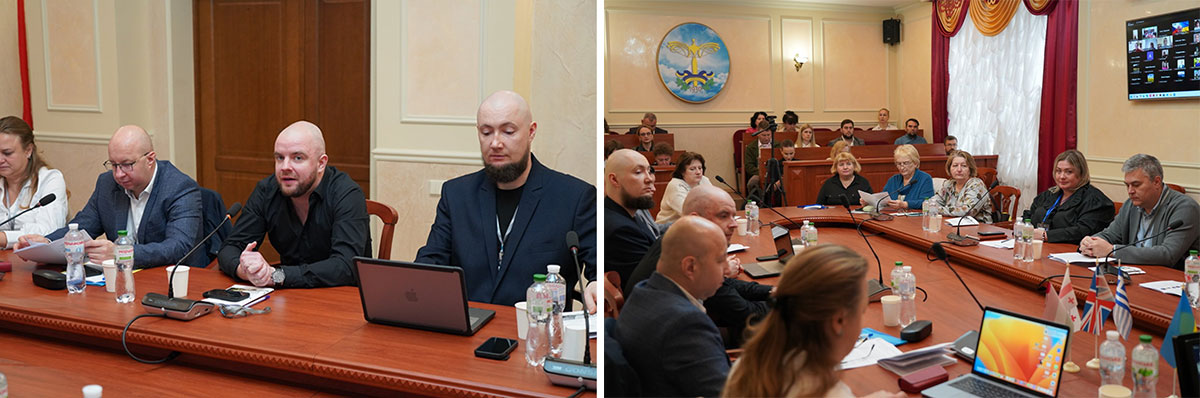
Volodymyr Horbachenko, Director and Co-owner of the Digital marketing agency G-WEB.GROUP, delivered a presentation entitled “ZERO-CLICK SEO: A New Map of Brand Visibility in the Age of AI”. In his presentation, he explored the transformation of the digital information landscape driven by artificial intelligence and the growing prevalence of the Zero-Click concept, which enables users to obtain the information they need without directly visiting websites. Particular attention was devoted to changes in search engine user behavior, the increasing influence of generative artificial intelligence, and the gradual shift from traditional search engine optimization (SEO) models towards new approaches to ensuring the digital visibility of brands, companies, and universities. The speaker highlighted the growing importance of social platforms, particularly Reddit, TikTok, and YouTube, as sources of information and platforms for building user trust. Among the key strategic priorities, he identified the development of Generative Engine Optimization (GEO), increasing the likelihood of digital resources being cited in AI-generated responses, structuring digital content, and ensuring a comprehensive organizational presence in the modern information environment. In conclusion, the speaker emphasized that the adoption of artificial intelligence technologies and the adaptation of digital communications to evolving search algorithms are becoming essential factors in strengthening organizational competitiveness and establishing sustainable competitive advantages in the digital economy.
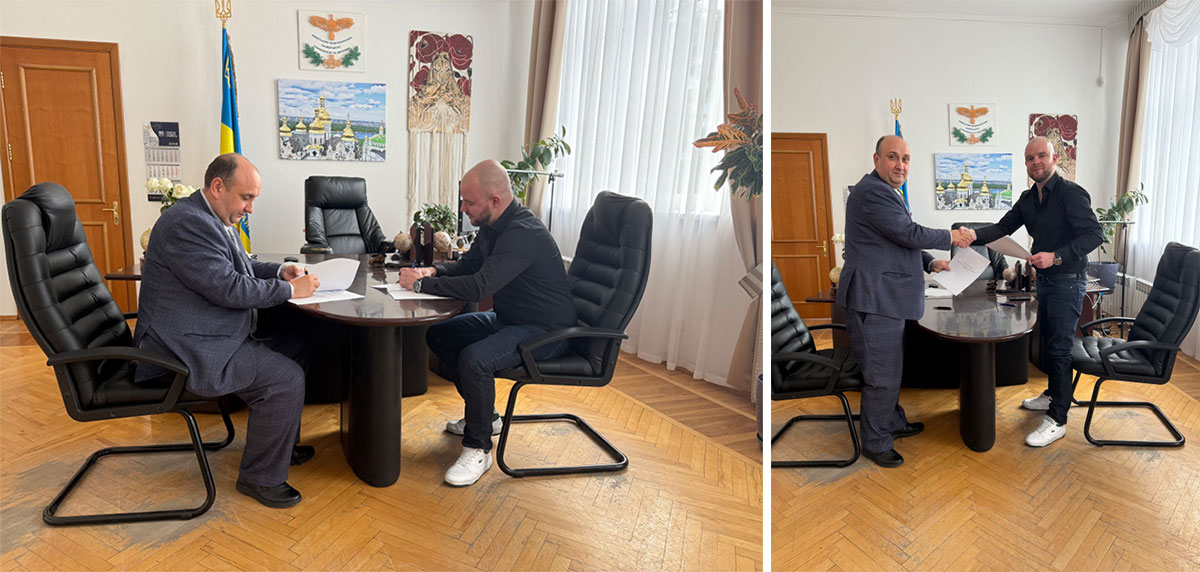
An important highlight of the conference was the signing of a Memorandum of Cooperation between Kyiv National University of Technologies and Design and the Digital marketing agency G-WEB.GROUP. The initiative was proposed by Volodymyr Horbachenko, Director and Co-owner of the agency, with the support of the Department of Marketing and its Head, Olena Yevseitseva, PhD in Economics, Associate Professor. This cooperation will facilitate the integration of advanced digital technologies and practice-oriented approaches into the educational process, the development of joint scientific and applied research initiatives, the exchange of professional expertise, and the involvement of higher education students in real-world business projects. This partnership represents a practical embodiment of the conference's central vision: the creation of an innovative ecosystem in which the synergy of science, education, and business becomes a driving force for technological modernization, the training of competitive professionals, and Ukraine’s sustainable economic recovery.
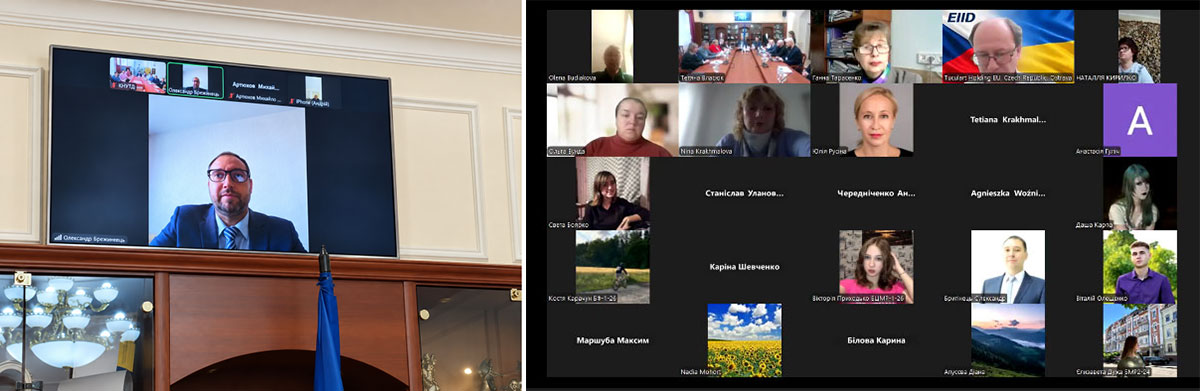
Oleksandr Bryhinets, Doctor of Law, Professor, Professor of the Department of Constitutional, Administrative and Financial Law at Leonid Yuzkov Khmelnytskyi University of Management and Law, focused his presentation on pressing issues of information security and ensuring the human right to information. The speaker emphasized that, in the context of the global informatization of society, not only access to information resources but also the ability to critically comprehend, analyze, and objectively evaluate the information obtained is becoming increasingly important. Particular attention was devoted to the role of higher education institutions in developing analytical thinking, intellectual independence, and research competencies among young people. It was also emphasized that the development of critical thinking and the ability to acquire new knowledge independently are essential prerequisites for training highly qualified professionals capable of effectively responding to the challenges of society's digital transformation. At the same time, the speaker highlighted the importance of translating scientific research findings into practical applications to foster innovation-driven development and support Ukraine’s reconstruction.
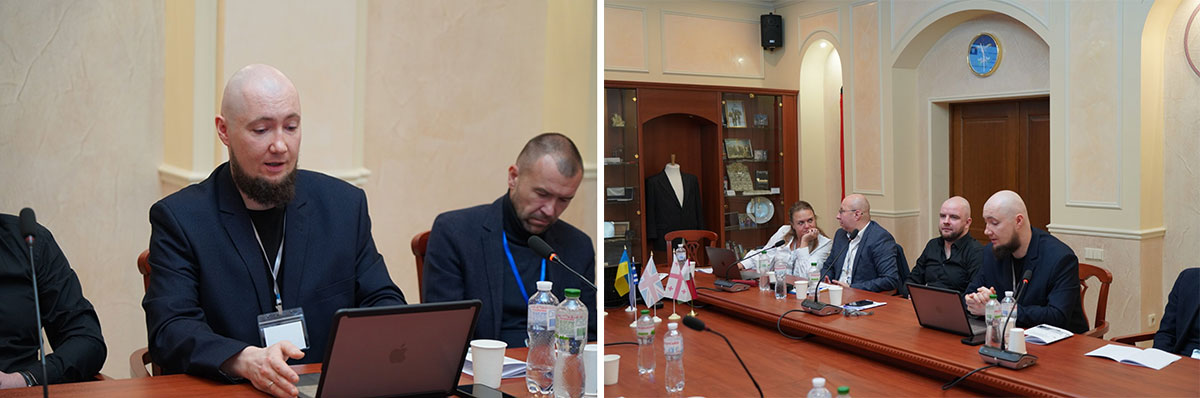
Ivan Skorokhodov, Marketing Director at Fialan, Prizzi Sewing Machines (Kyiv, Ukraine), presented the findings of his scientific research focused on developing a customer experience management mechanism within multi-tier production chains in the light industry sector. Particular attention was devoted to the transformation of relationships among equipment and material suppliers, manufacturing enterprises, consumer brands, and end consumers. He emphasized that customer experience is shaped at every level of the production chain, while the value created is transferred among its participants, influencing the quality of the final product and business competitiveness. The speaker substantiated the importance of integrating resources, technologies, knowledge, and competencies across all participants in the production ecosystem, highlighting that the effectiveness of their interaction determines the potential for innovation-driven enterprise development, product quality improvement, and the creation of sustainable long-term competitive advantages.
The conference continued with a series of thematic sessions. During the session entitled “Strategic Priorities for Managing the Development of Education, Science and Business in the Context of Ukraine’s Post-War Recovery”, moderated by Svitlana Bondarenko, Doctor of Economic Sciences, Professor of the Department of Management at Kyiv National University of Technologies and Design, with Dmytro Kovalenko, PhD in Economics, Associate Professor of the Department of Management, serving as Session Secretary, participants focused on strategic approaches to managing the development of education and science, strengthening cooperation between universities and businesses, fostering an innovation ecosystem, facilitating knowledge and technology transfer, supporting entrepreneurship, and developing the competencies required for Ukraine’s post-war recovery economy.
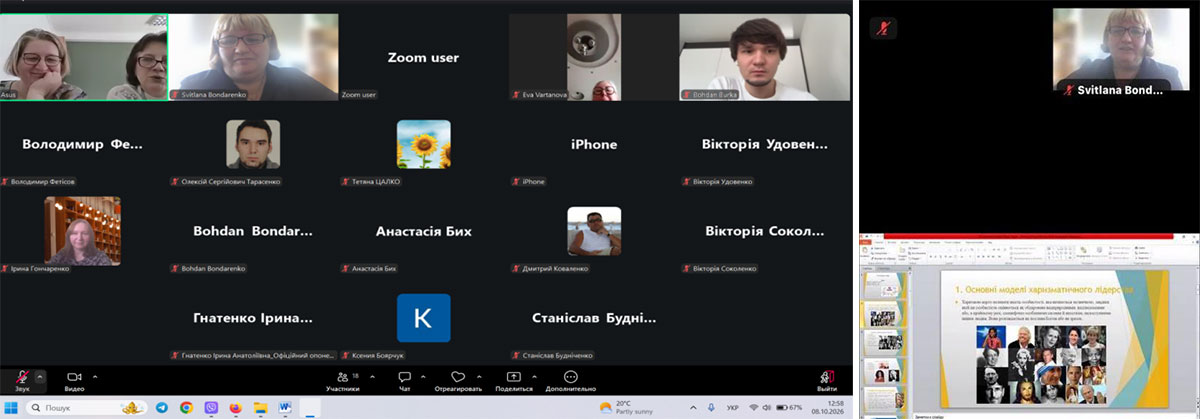
During the session, participants presented their research findings and proposals aimed at improving management mechanisms for the development of education, science, and business. They exchanged experiences, outlined promising areas for cooperation, and identified priorities for further collaboration.
The thematic session entitled “Development of the Financial Services Industry in the Digital Age” brought together leading scholars from higher education institutions and research organizations in Ukraine and abroad, including the European Institute for Innovation Development (Czech Republic), the State Institution “Institute for Economics and Forecasting of the National Academy of Sciences of Ukraine,” the State Educational and Scientific Institution “Academy of Financial Management”, the State University of Trade and Economics, and Borys Grinchenko Kyiv Metropolitan University. The session was moderated by Iryna Tarasenko, Doctor of Economic Sciences, Professor, Head of the Department of Finance.
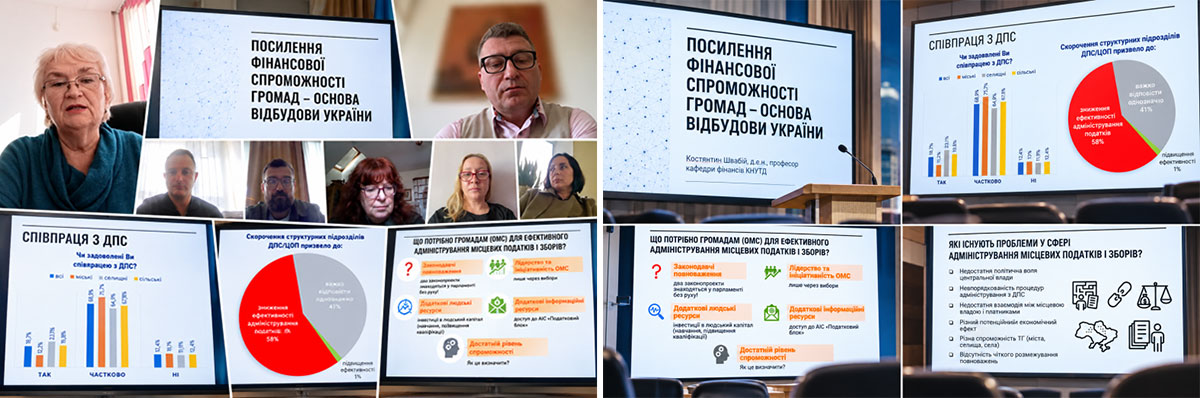
The session participants discussed current trends in the development of Ukraine’s financial system in the context of digitalization. Academic staff and third-cycle (PhD) students presented the findings of their research. Particular interest and lively academic discussion were generated by the presentations delivered by Kostiantyn Shvabii, Doctor of Economic Sciences, Professor, Professor of the Department of Finance, entitled “Strengthening the Financial Capacity of Local Communities as a Foundation for Ukraine’s Reconstruction” and PhD student Dmytro Popovichenko, entitled “Supervisory Convergence as a Component of the European Integration Transformation of State Regulation of Ukraine’s Financial Services Market.”
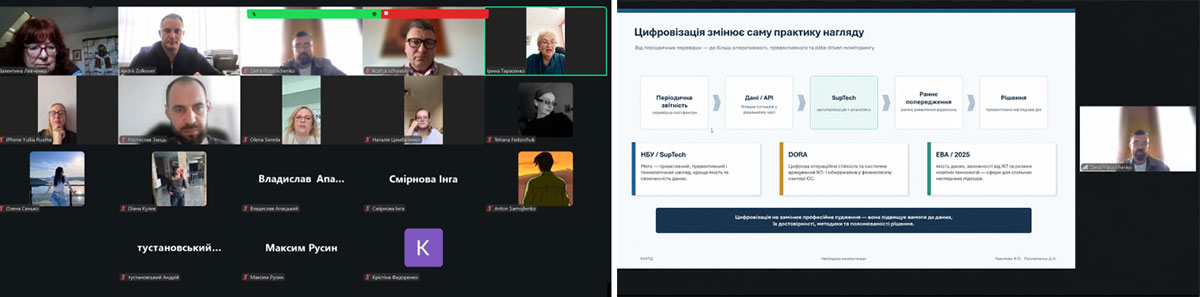
The Department of Finance extends its sincere gratitude to all participants and wishes them continued success in their scientific, professional, and creative endeavors.
During the thematic session entitled “Impact Entrepreneurship as a Driving Force for Ukraine’s Reconstruction: Creating Value for the Economy and Society”, moderated by Iryna Hnatenko, Doctor of Economic Sciences, Professor, Professor of the Department of Management, with Iryna Miahkykh, Doctor of Economic Sciences, Professor, Professor of the Department of Management, serving as Session Secretary, researchers presented their studies focusing on enterprise innovation resilience, social impact, digital business transformation, the circular economy, and mechanisms for supporting entrepreneurship in the context of Ukraine’s reconstruction.
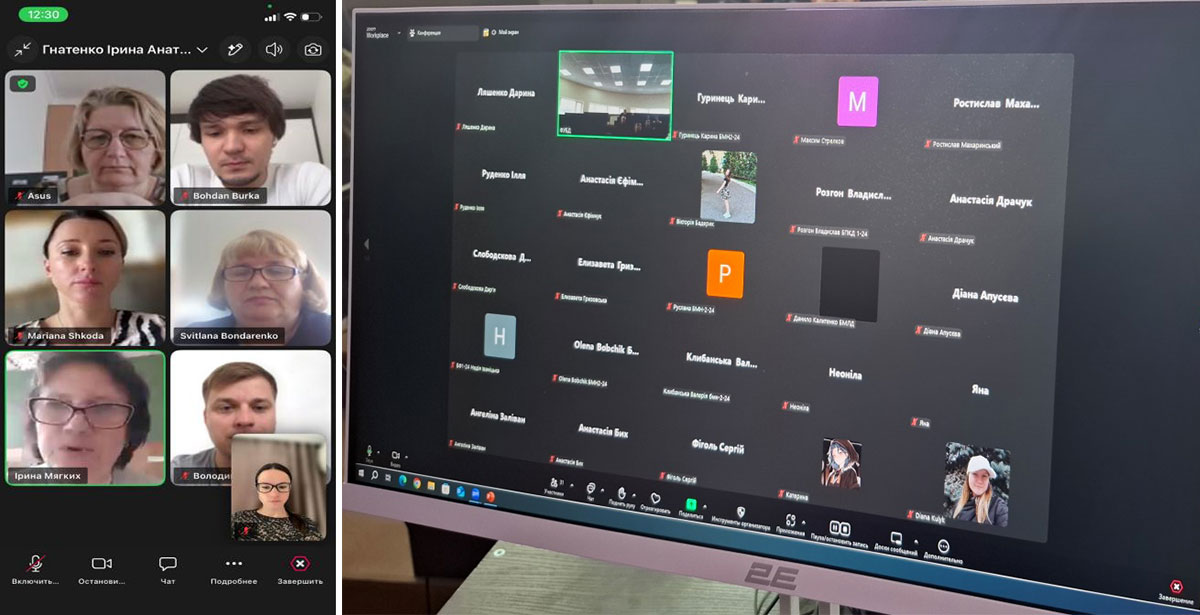
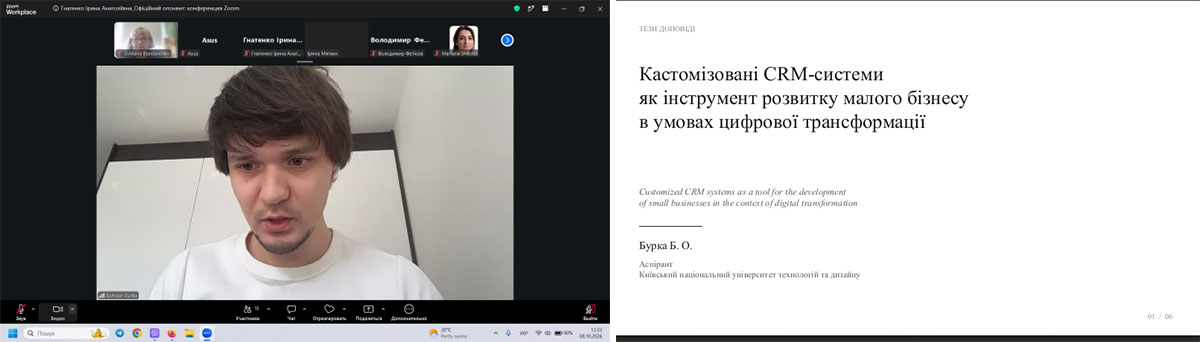
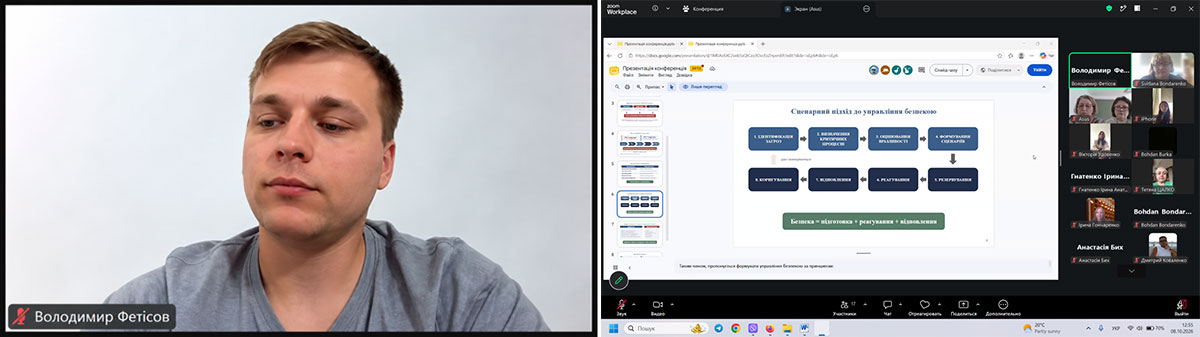
Particular attention was drawn to the presentations by Volodymyr Fetisov, who addressed the management of enterprise development security under wartime conditions and digital transformation, and Bohdan Burka, who explored customized Customer Relationship Management (CRM) systems as a tool for small business development in the context of digital transformation.
The presentations delivered by Mariana Shkoda, Iryna Hnatenko, and Dmytro Kozenkov addressed issues related to social impact, enterprise innovation resilience, the circular economy, ESG investing, and digital business models.
Overall, the research presented during the session demonstrated that impact entrepreneurship is a comprehensive instrument for Ukraine’s recovery and reconstruction, combining economic efficiency, social responsibility, innovation, and the creation of long-term societal value.
Academic staff, PhD students, and master's and bachelor's degree students of the Department of Marketing presented their research findings during the thematic session entitled “Transformation of Marketing Education in Ukraine: Challenges, Opportunities and Prospects”, moderated by Olena Yevseitseva, PhD in Economics, Associate Professor, Head of the Department of Marketing. The presentations covered current issues in the development of marketing education, the application of digital technologies and artificial intelligence, the improvement of marketing strategies, and the introduction of innovative approaches into contemporary educational and business practices. Particular attention was devoted to the impact of artificial intelligence and intelligent technologies on the transformation of marketing education. The presentations also explored the use of advanced digital tools in the professional training of specialists for the creative industries, the development of digital competencies, and the adaptation of educational programmes to the evolving demands of the labour market.
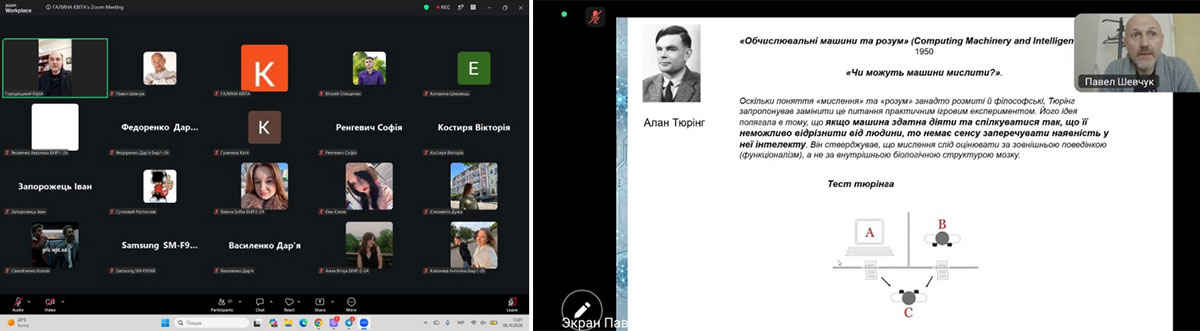
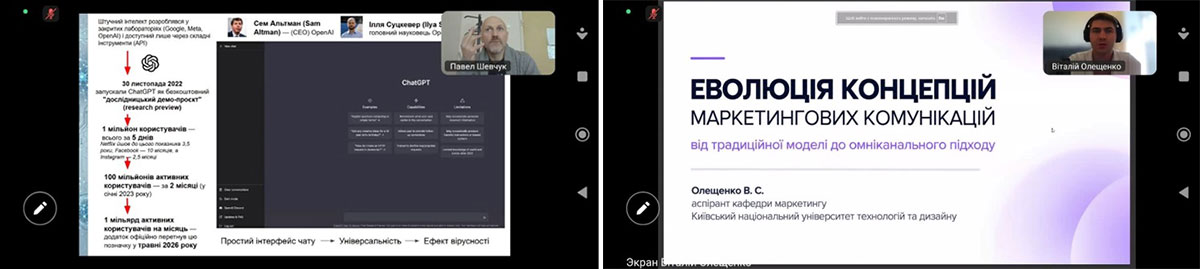

An important area of scientific research focused on the digitalization of marketing activities and the improvement of marketing communications. Researchers presented their findings on the application of digital technologies for demand management, the development of integrated marketing communications, the creation of effective advertising strategies, and brand promotion. Particular attention was devoted to source attribution mechanisms in Google AI Overviews as a promising tool for digital marketing.
A significant part of the discussions focused on the role of marketing in Ukraine’s post-war economic recovery. In particular, the presentations addressed international marketing strategies of Ukrainian companies, the development of distribution enterprises amid economic transformations, the risks associated with the operation of online marketplaces under martial law, and opportunities for implementing socially responsible marketing within the framework of the circular economy.
Research findings were also presented on improving corporate educational programmes, developing event marketing, communication repositioning of B2B companies, and transforming the professional training of marketing specialists in response to the advancement of digital communications.
The session provided an important platform for exchanging scientific ideas, presenting relevant research findings, and identifying future directions for the development of marketing education in Ukraine. The topics discussed highlighted the need to integrate innovative technologies into the educational process, strengthen the practical component of professional training, and deepen cooperation between education, science, and business.
Another important part of the conference was the thematic session entitled “Developing Youth Leadership Potential in the Post-War Period: The Role of Education”, dedicated to current issues in developing leadership qualities among young people, fostering civic responsibility, and strengthening the role of education in Ukraine’s recovery and reconstruction.
The session was moderated by Svitlana Nevmerzhytska, PhD in Technical Sciences, Associate Professor, Associate Professor of the Department of Management, with Oleksii Tarasenko, PhD in Economics, Associate Professor of the Department of Management, serving as Session Secretary.
The session participants discussed contemporary approaches to developing youth leadership potential, fostering resilience, entrepreneurial thinking, digital competencies, and teamwork skills. Particular attention was devoted to the role of higher education institutions in creating a supportive environment for young people's self-realization, encouraging their initiative, and strengthening their readiness to contribute to societal transformations.
The session facilitated the exchange of scientific ideas, practical experience, and innovative educational practices. The discussions reaffirmed the importance of international cooperation, intercultural dialogue, and academic collaboration in preparing young leaders capable of addressing the challenges of Ukraine’s post-war recovery and reconstruction.
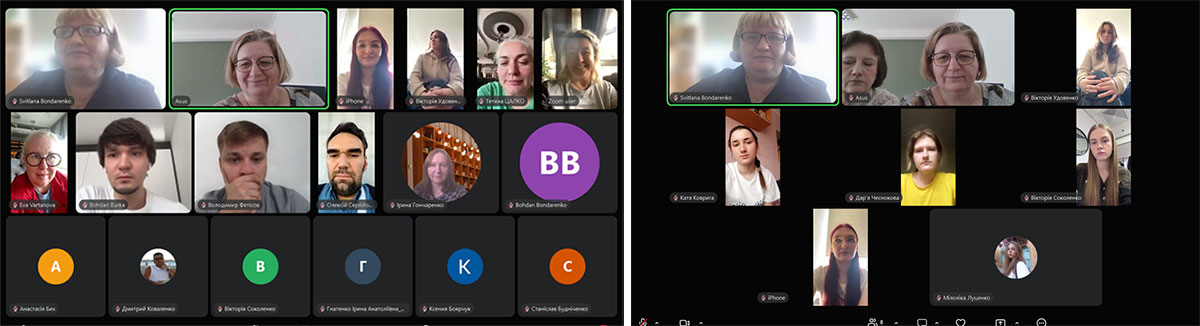
The organization of this thematic session within the framework of the Erasmus+ SEAL-NR project marked an important step towards strengthening educational partnerships and reinforcing the role of education as a key factor in nurturing an active, responsible, and innovation-oriented younger generation.
The thematic session entitled “Development of Ukraine’s Economic Ecosystem Based on Bioeconomic Transformations” was moderated by Polina Puzyrova, Doctor of Economic Sciences, Professor, Head of the Department of Economics, who welcomed all participants and officially opened the session.
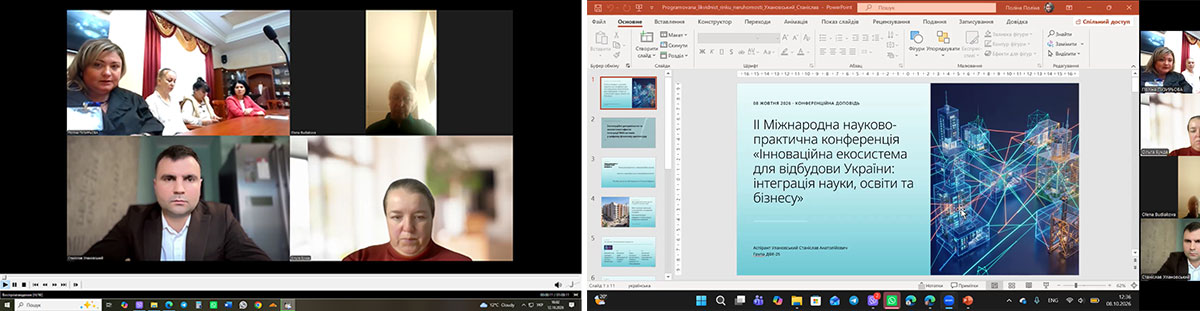
Stanislav Ulanovskyi, a second-year PhD student at the Department of Economics (Scientific Supervisor – Yevheniia Khaustova, Doctor of Economic Sciences, Professor), delivered an original presentation entitled “Institutional Determinants and Ecosystem Effects of Programmable Liquidity in the Real Estate Market through the Integration of Real-World Assets (RWA)”. In his presentation, he explored the institutional prerequisites and economic effects of integrating tokenized real-world assets (RWA) into the modern digital financial architecture. Particular attention was devoted to the role of government regulation, digital technologies, and financial institutions in advancing asset tokenization, as well as its potential to enhance market liquidity, expand investment opportunities, reduce transaction costs, and foster the development of new financial ecosystems.

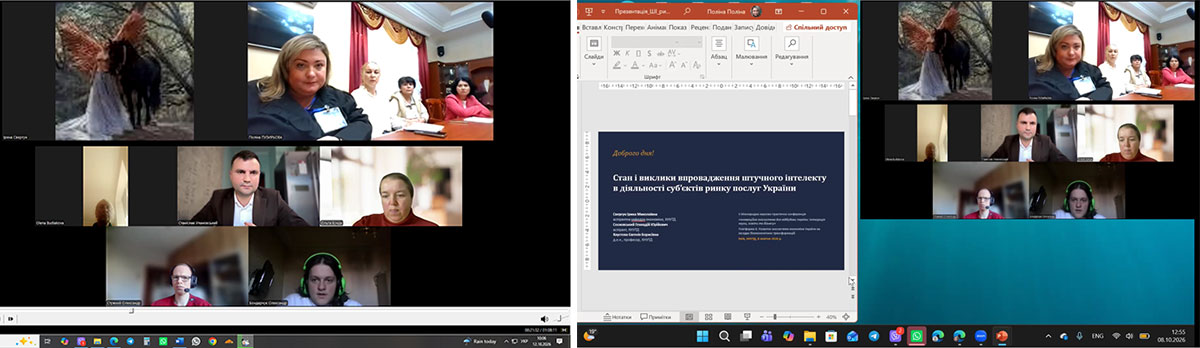
An equally engaging presentation was delivered by Iryna Sverhun, a fourth-year PhD student, on the topic “Current State and Challenges of Artificial Intelligence Adoption among Service Market Participants in Ukraine” (Scientific Supervisor – Yevheniia Khaustova, Doctor of Economic Sciences, Professor). In her presentation, she examined the current state, key trends, and challenges associated with the adoption of artificial intelligence in the activities of enterprises operating in Ukraine’s service sector. Particular attention was devoted to the potential of artificial intelligence (AI) to automate business processes, improve customer service quality, optimize managerial decision-making, and strengthen enterprise competitiveness. The speaker also identified the key barriers to digital transformation, including insufficient technological readiness, a shortage of qualified professionals, financial constraints, and information security risks.

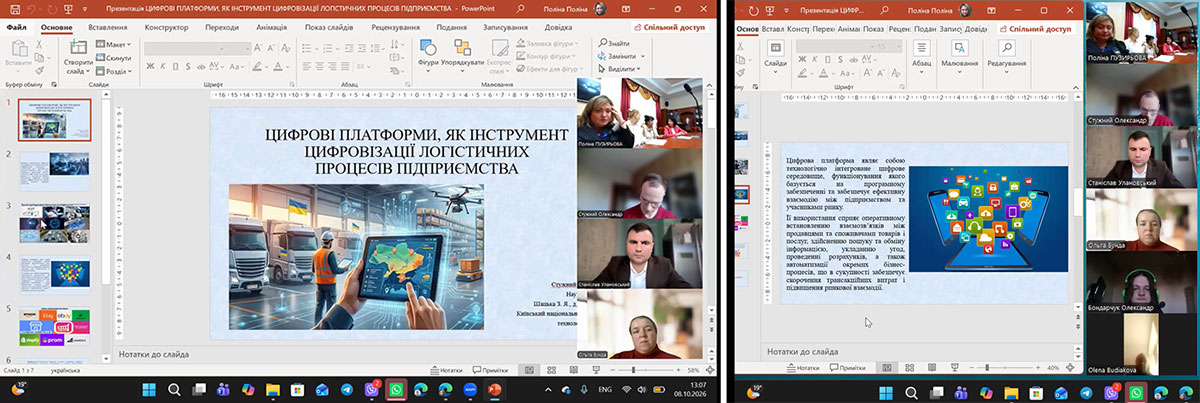
A highly relevant presentation was delivered by Oleksandr Stuzhnyi, a fourth-year PhD student, on the topic “Digital Platforms as a Tool for the Digitalization of Enterprise Logistics Processes” (Scientific Supervisor – Zoryna Shatska, Doctor of Economic Sciences, Professor). In his presentation, he explored the role of digital platforms in transforming enterprise logistics processes, particularly their importance for automating supply chain management, optimizing transportation and warehousing operations, enhancing the transparency of logistics flows, and reducing operating costs. The speaker drew the participants’ attention to the potential of digital platforms to improve logistics efficiency, facilitate real-time information exchange, and strengthen enterprise competitiveness in the context of the digital transformation of the economy.

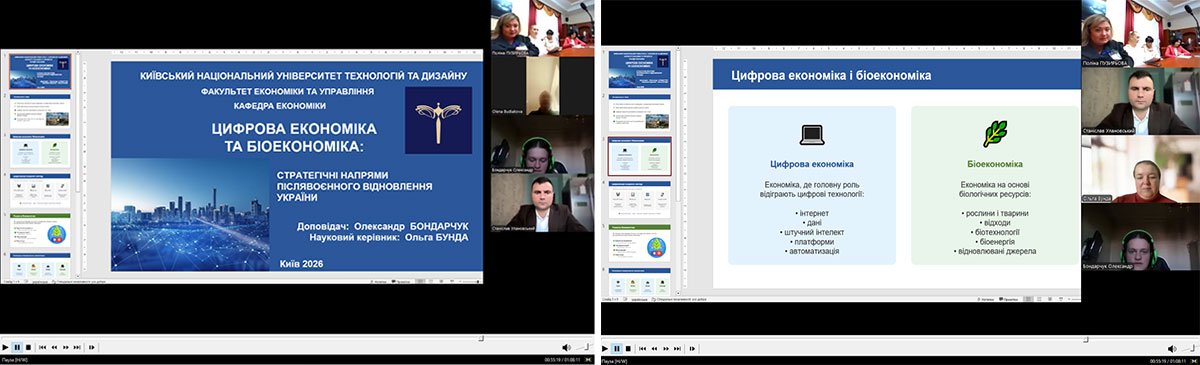
An informative and engaging presentation was delivered by Oleksandr Bondarchuk, a first-year student of group BME-26, on the topic “Digital Economy and Bioeconomy: Strategic Directions for Ukraine’s Post-War Recovery” (Scientific Supervisor – Olha Bunda, PhD in Economics, Associate Professor). In his presentation, he explored the role of the digital economy and bioeconomy in supporting Ukraine’s post-war recovery, highlighting strategic priorities for digital transformation, the introduction of innovative technologies, the sustainable use of biological resources, and the development of the circular economy. Particular attention was devoted to the integration of digital and bioeconomic solutions as a foundation for enhancing the competitiveness, economic stability, and resilience of the national economy, creating new sources of added value, and ensuring Ukraine’s sustainable development.
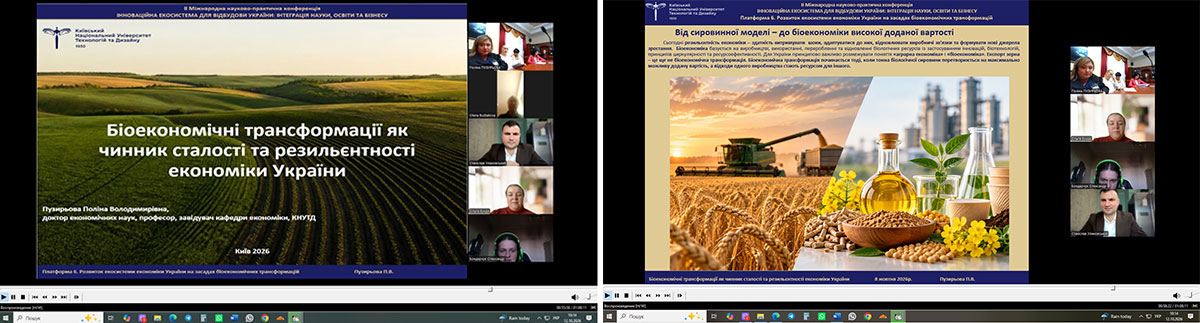
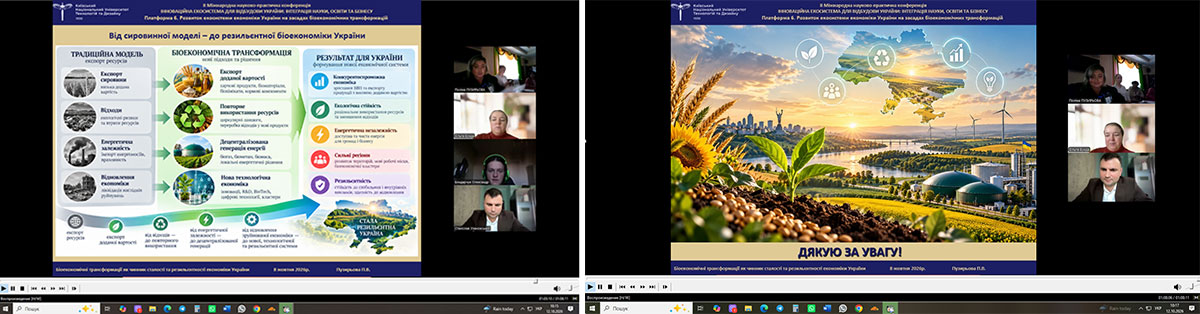
The thematic session concluded with a presentation by Polina Puzyrova, Doctor of Economic Sciences, Professor, Head of the Department of Economics, entitled “Bioeconomic Transformations as a Factor of Sustainability and Resilience of Ukraine’s Economy”. In her presentation, she explored bioeconomic transformations as a strategic factor in ensuring the sustainability and resilience of Ukraine’s economy, emphasizing the need to shift from a raw material-based model of economic development towards an innovative, resource-efficient, and circular economy. Polina Puzyrova highlighted the role of the sustainable use of biological resources, the advancement of biotechnology, renewable energy, advanced processing of raw materials, and the development of bioeconomic ecosystems in enhancing the competitiveness of the national economy. The speaker also emphasized the potential of the bioeconomy to strengthen economic resilience, facilitate adaptation to global challenges, and support Ukraine’s post-war recovery and reconstruction based on the principles of sustainable development.
The thematic session concluded with a constructive scientific discussion, during which participants exchanged views on the current challenges and prospects for the development of Ukraine’s economy amid ongoing transformations.
The discussions highlighted the importance of further scientific research, interdisciplinary cooperation, and the implementation of innovative approaches to ensuring sustainable development and supporting Ukraine’s post-war recovery and reconstruction.
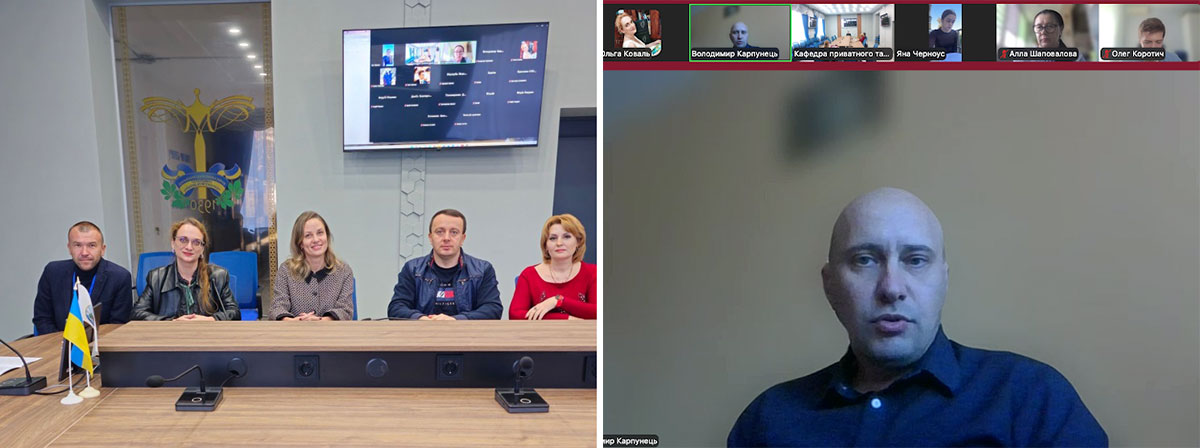
During the thematic session entitled “Law and Politics: Challenges of Ukraine’s Reconstruction”, moderated by Yurii Onyshchyk, Doctor of Law, Professor, presentations were delivered by Alla Shapovalova, PhD in Political Sciences, Associate Professor of the Department of Private and Public Law, on the topic “Trust, Transparency and Communication in Shaping Ukraine’s Post-War Reconstruction Policy”; Volodymyr Karpunets, PhD student at the Department of Private and Public Law, on the topic “Problematic Aspects of the Sui Generis Legal Regime for AI-Generated Works under Ukrainian Legislation”; and Oleh Korotych, PhD student at the Department of Private and Public Law, on the topic “Public Financial Oversight of the Reconstruction of Territorial Communities”. Students of the Department of Private and Public Law at Kyiv National University of Technologies and Design also participated in the session.
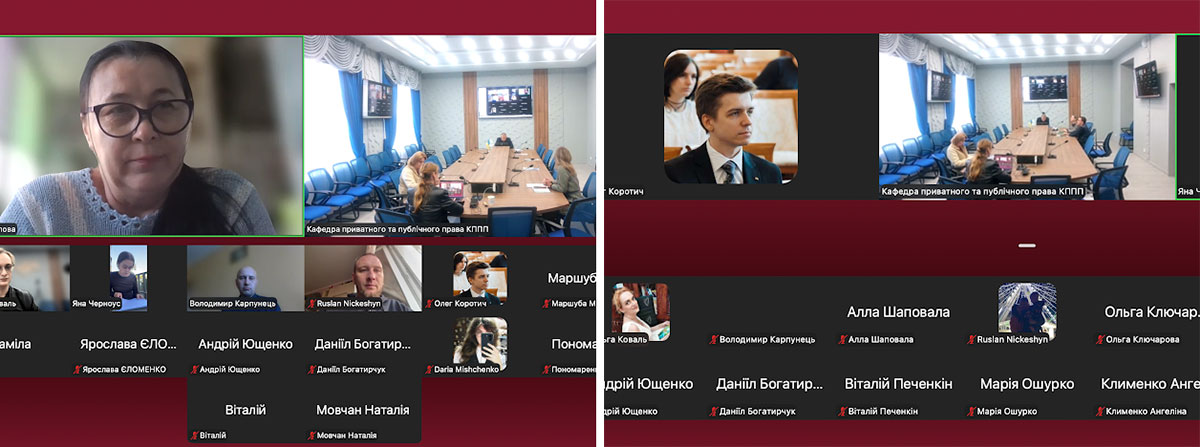
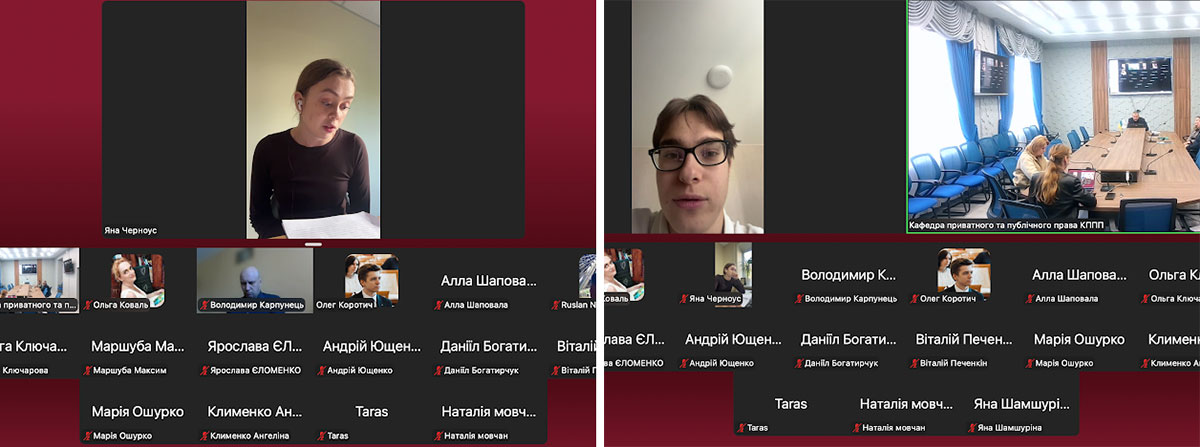
The participants commended the high academic standard of the presentations, the relevance of the issues addressed, and the practical significance of the scientific ideas and proposals put forward.
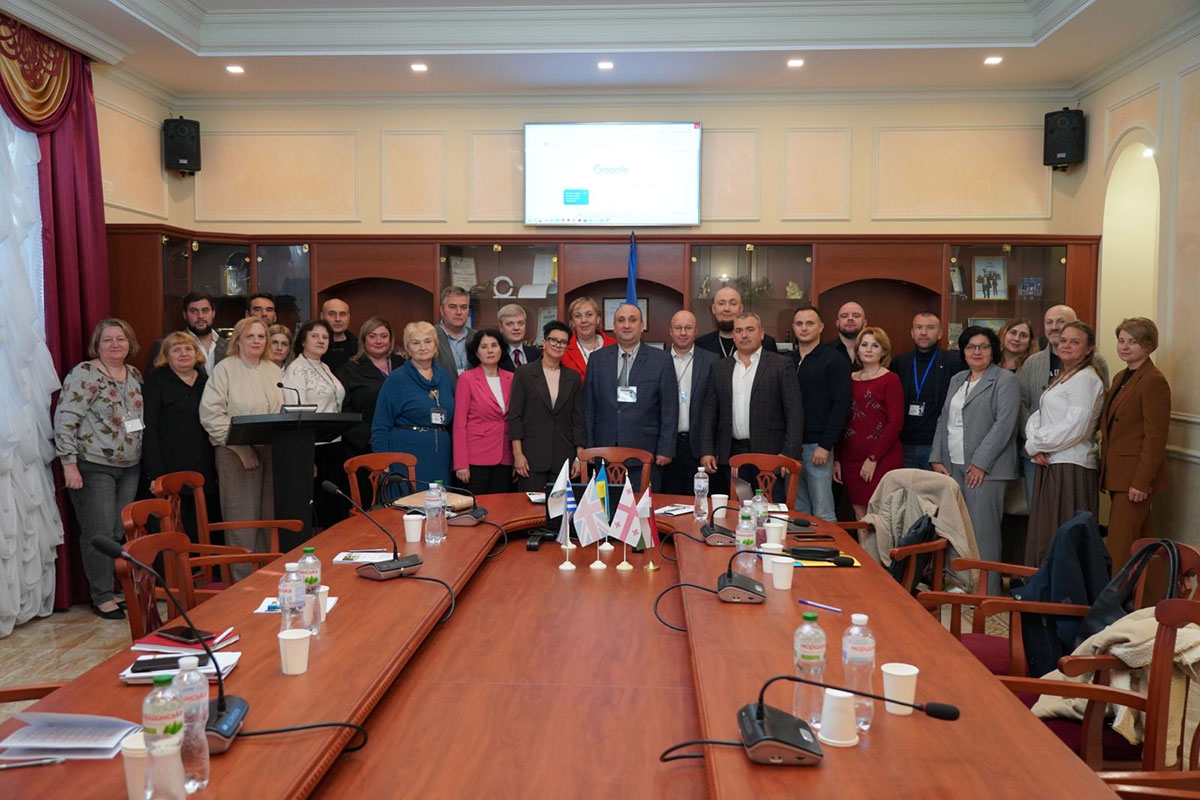
We sincerely thank all participants for sharing their experiences and research findings on current issues in economics, management, and law!
We wish everyone good health and look forward to new scientific discussions!
15.10.2026