
ECONOMICS MARATHON AT THE DEPARTMENT OF ECONOMICS: FIVE DAYS OF INTELLECTUAL CHALLENGES, ECONOMIC DISCOVERIES, AND NEW OPPORTUNITIES!
From October 12 to 16, 2026, the Department of Economics at Kyiv National University of Technologies and Design hosted Economics Week, dedicated to World Economist Day and Economist Day in Ukraine.
This event provided an excellent opportunity to bring together students and faculty members around a shared commitment to understanding economic principles, developing professional competencies, exchanging knowledge, and fostering modern economic thinking.
Today, economics is an integral part of social development, as it is economic knowledge that helps us understand the complex processes of global transformations, assess the consequences of management decisions, navigate conditions of uncertainty, and find effective ways to overcome contemporary challenges. Economic education takes on particular significance amid martial law, the digitalization of society, and the need to ensure the resilience and future recovery of Ukraine’s economy.
The Department of Economics, with the support of Tetіana VLASІUK, Dean of the Faculty of Economics and Management, prepared a rich five-day program that harmoniously combined educational, informative, interactive, and scientific-practical activities. Each day had its own theme and unique format, opening up new opportunities to test knowledge, develop analytical skills, creativity, teamwork, and professional self-improvement.
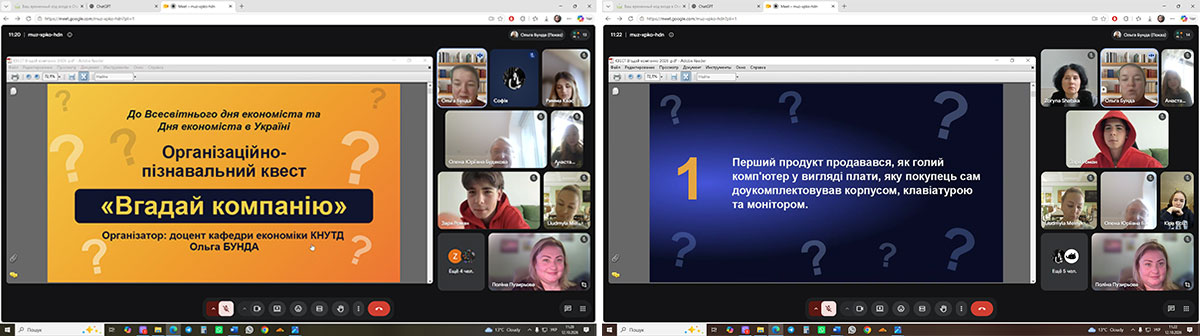
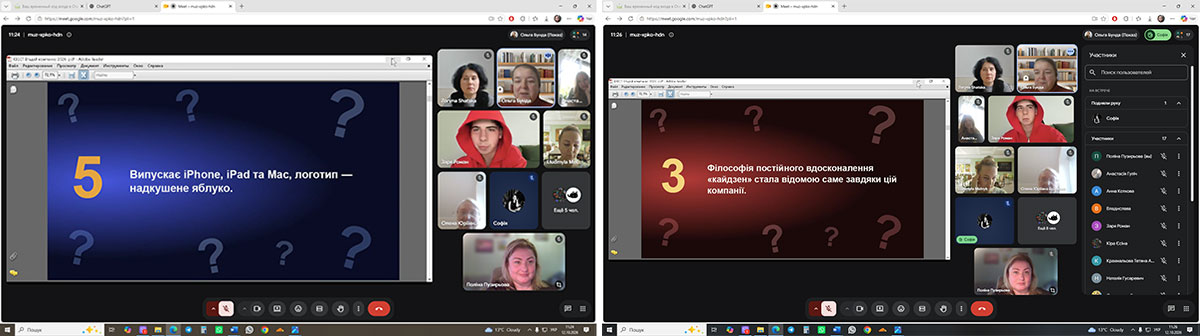
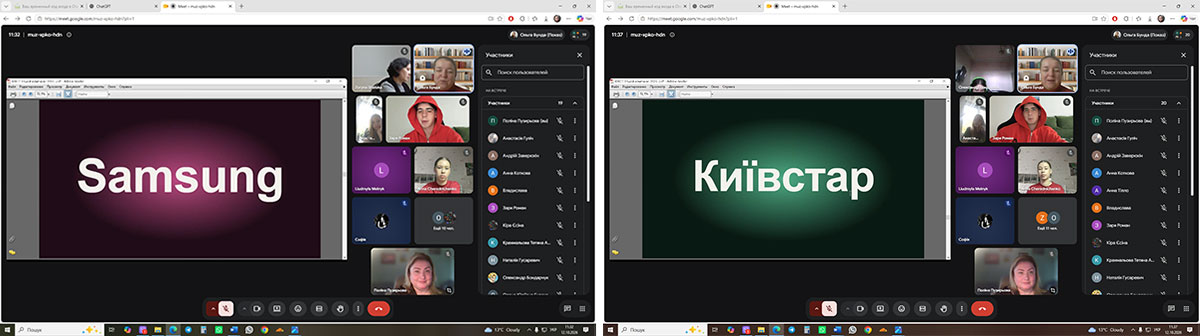
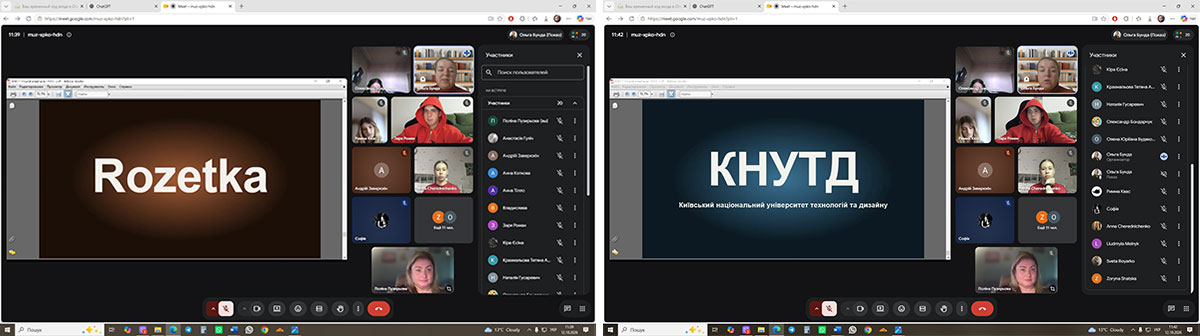
MONDAY, October 12 – The “Guess the Company” intellectual quest took place: let’s explore the world of economics!
The event was organized by Olga BUNDA, Ph.D. in Economics, Associate Professor in the Department of Economics, who created a unique journey into the world of modern entrepreneurship, corporate strategies, well-known brands, and international business.
During the quest, participants had to identify the names of well-known companies based on a series of clues that revealed details about their founding, their first products and services, their history, marketing decisions, innovations, and interesting facts from corporate life. Each subsequent clue helped bring them closer to the correct answer, encouraging students to analyze information, establish logical connections, and apply their knowledge of economics and entrepreneurship.
The interactive format of the quest made it possible to combine theoretical knowledge with practical examples of how businesses operate, stimulate cognitive activity, and demonstrate that economics is much more present in everyday life than it seems at first glance.
The first day of Economics Week set a dynamic and positive tone for the entire program, highlighting the importance of curiosity, creative thinking, and the constant expansion of one’s professional horizons!
TUESDAY, October 13 – The online quiz “Who Wants to Be an Economist?” took place: testing our knowledge and opening up new horizons!
The second day of Economics Week was dedicated to the online quiz “Who Wants to Be an Economist?” The quiz was organized by Olena BUDІAKOVA, Ph.D. in Economics, Associate Professor in the Department of Economics, who combined elements of intellectual competition, educational activities, and career guidance.
Participants had the opportunity to test their level of economic literacy and demonstrate their knowledge of basic economic concepts, the principles of a market economy, financial processes, entrepreneurship, and current trends in economic development. The quiz format required not only recalling learned information but also the ability to think logically, analyze the presented situations, compare alternative answer options, and make well-reasoned decisions.
A distinctive feature of the event was the combination of educational content with game elements, which helped increase motivation to study economic disciplines, foster intellectual engagement, and cultivate a positive attitude toward future professional careers.
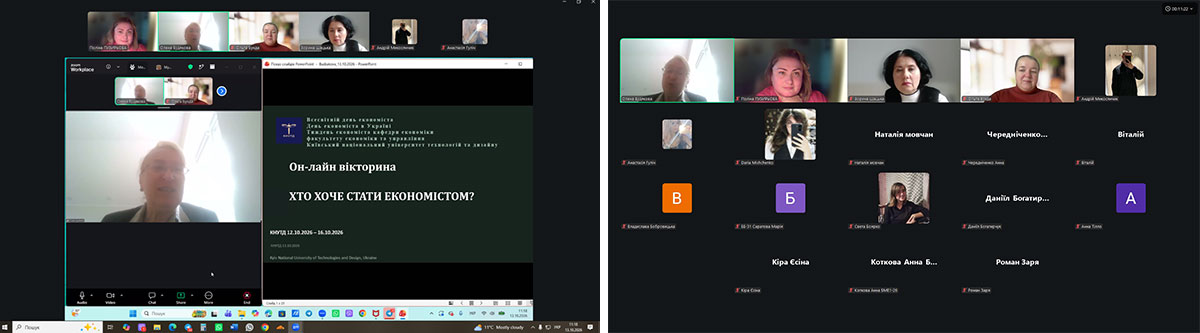
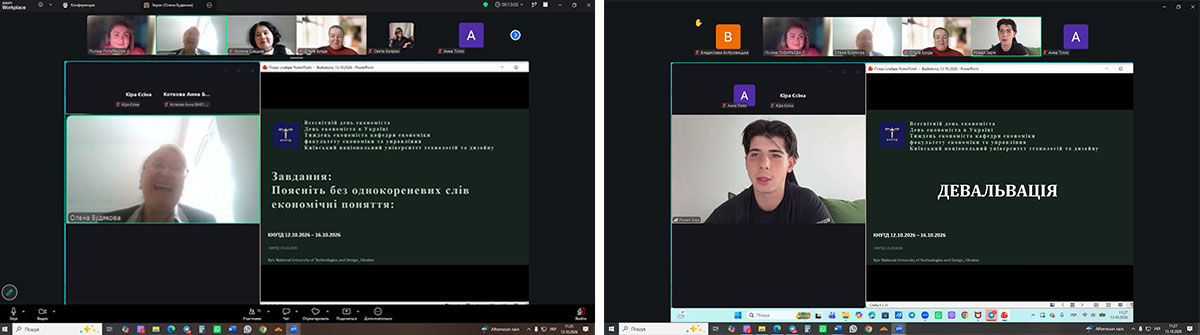
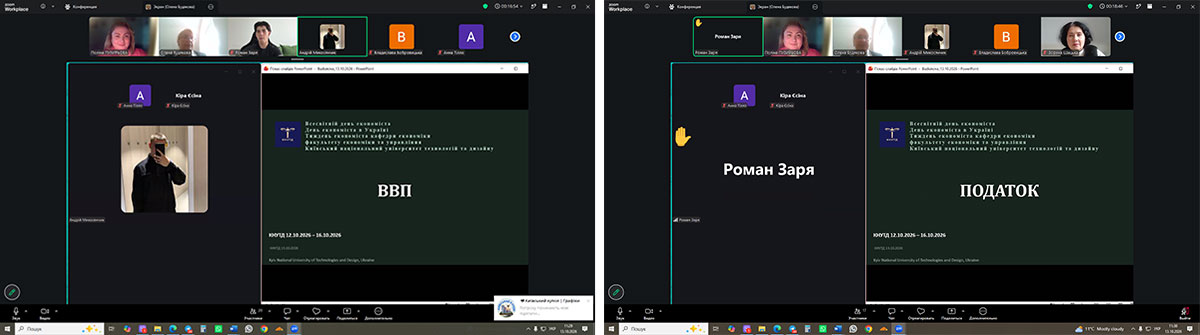
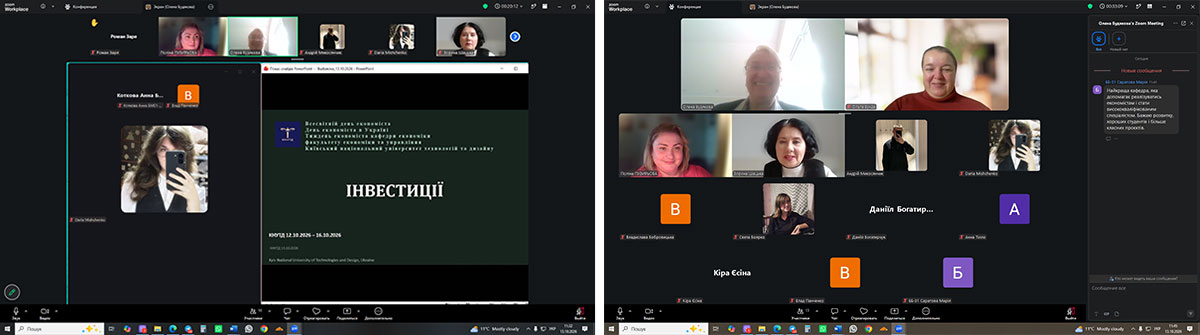
The online quiz once again confirmed that the profession of an economist requires not only a solid theoretical foundation but also analytical thinking, attentiveness, flexibility, and the ability to quickly navigate a changing economic environment.
WEDNESDAY, October 14 – The online game “Fact or Economic Myth?” took place: debunking stereotypes and learning to think critically!
The third day of Economics Week was dedicated to critical thinking and the search for economic truth. The event was organized by Polina PUZYROVA, Ph.D. in Economics, Professor, and Head of the Department of Economics, who, as part of the online game “Truth or Economic Myth?”, invited participants to examine familiar economic statements through the lens of scientific analysis and well-reasoned argumentation.
Today’s information landscape is saturated with economic opinions, forecasts, and popular beliefs that do not always correspond to the actual patterns of how the economy functions. That is precisely why the ability to distinguish reliable information from manipulation, stereotypes, and false conclusions is an extremely important skill for future economists.
During the game, participants analyzed common economic notions, assessed their validity, paid attention to cause-and-effect relationships, and learned to distinguish between facts, assumptions, and subjective assessments.
This approach fostered the development of economic literacy, information literacy, analytical abilities, and the skills needed to critically analyze socio-economic processes.
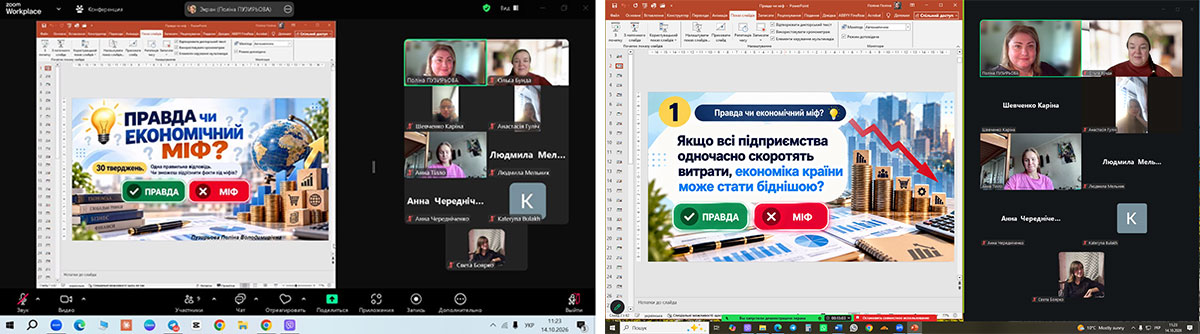
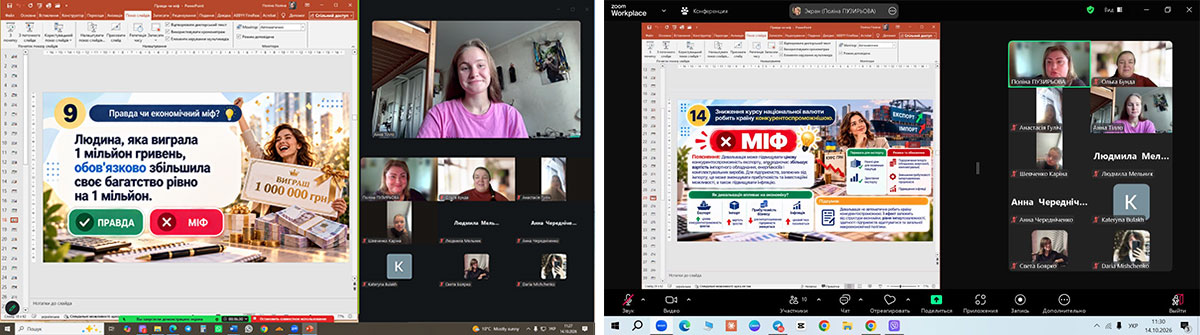
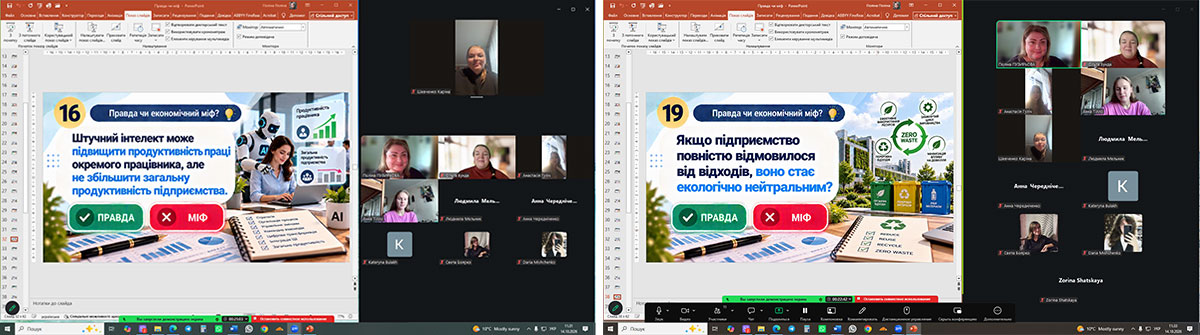
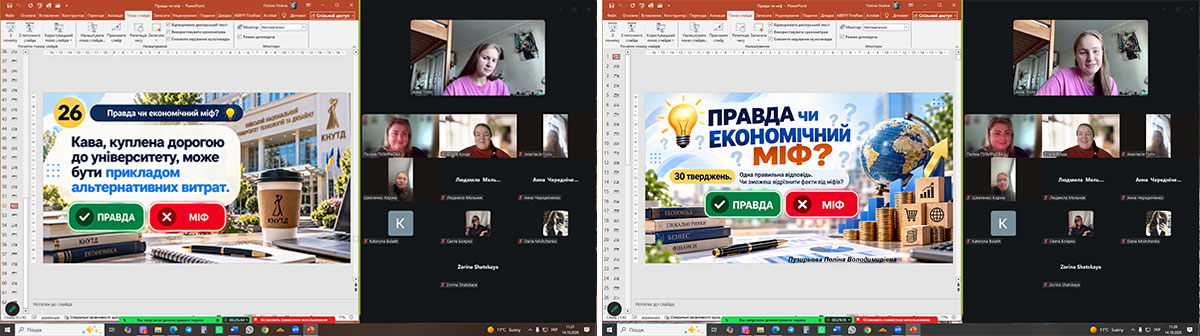
The event clearly demonstrated that economics is a science that requires evidence, logic, and systematic analysis, and that the ability to ask the right questions is often just as important as the ability to find the answers!
THURSDAY, October 15 – The “Economics Battle” took place: a realm of knowledge, competition, and intellectual triumphs!
The fourth day of Economics Week became a true test of economic knowledge, quick thinking, and the ability to apply acquired knowledge in a competitive intellectual setting. The event was organized by Lyudmila MELNYK, Ph.D. in Economics and Associate Professor of the Department, who brought together a spirit of competition, intellectual curiosity, and a desire for professional self-improvement among the participants. Participants had the opportunity to demonstrate their level of preparation, test their analytical skills, and show their quick thinking while solving economic problems.
The particular value of this format lies in its focus on developing the competencies required of a modern professional: the ability to quickly process information, defend one’s position, find creative solutions, and effectively interact with other participants.
The intellectual competition helped stimulate cognitive activity, foster healthy competition, and raise awareness of the importance of continuous professional development.
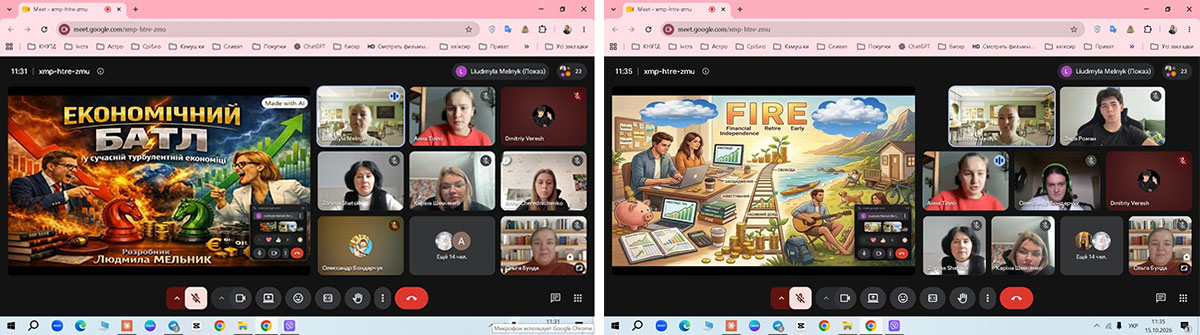
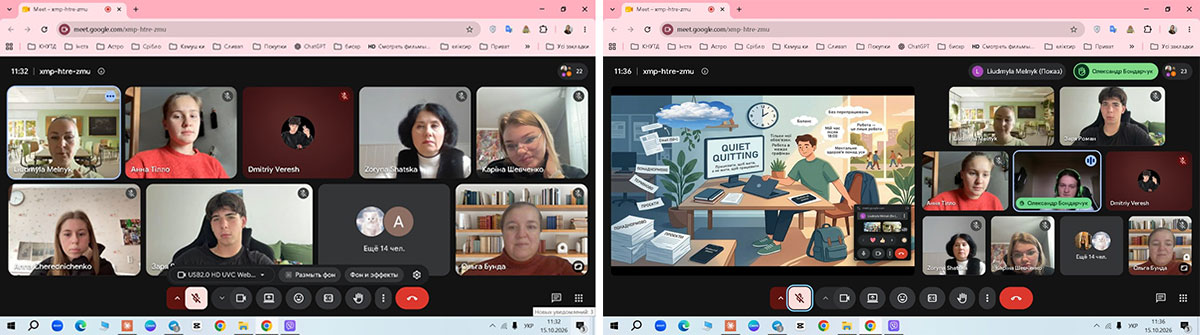
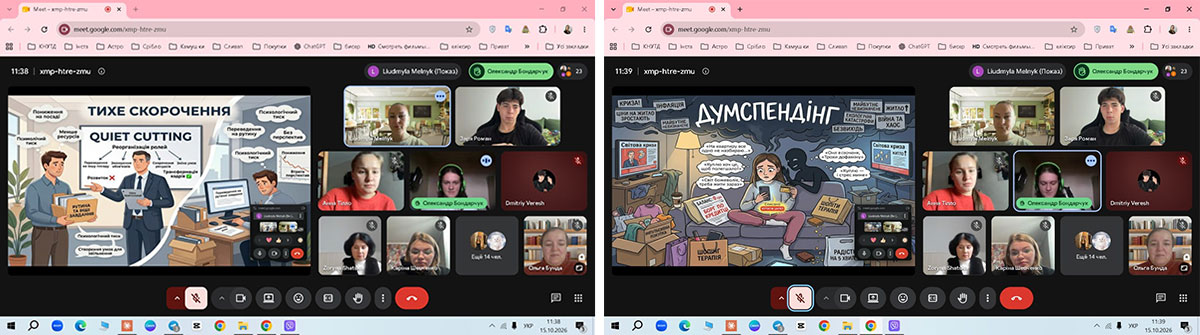
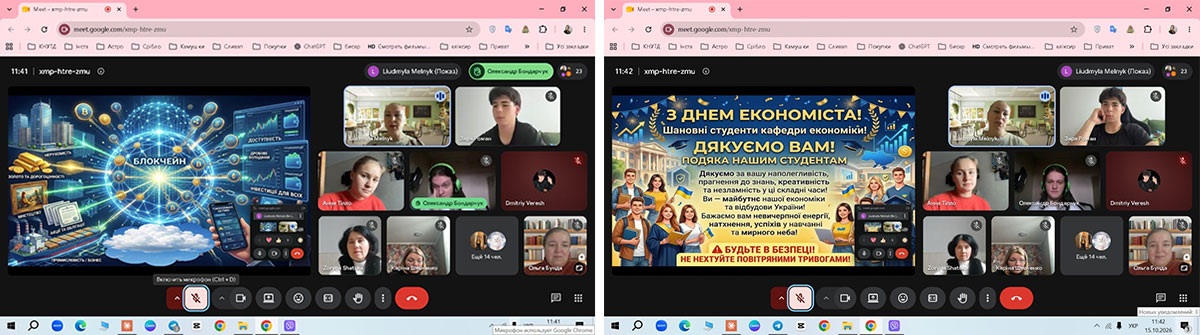
The “Economics Battle” served as yet another confirmation that learning can be substantive, dynamic, and engaging all at once, and that economic knowledge is a powerful tool for achieving personal and professional success.
FRIDAY, October 16 - the final day of Economics Week-was held under the theme “The Economy in the Face of Modern Challenges: From Telecommunications Resilience to the Monetization of Digital Attention!”
The final day of Economics Week was dedicated to an in-depth exploration of current trends in the development of the modern economy. The program featured two thematic lectures that explored important aspects of economic transformations amid war, digitalization, and the spread of new business models.
The first lecture focused on the specifics of how one of the strategically important sectors of the national economy-the telecommunications industry-operates. The speaker was Ilya GURINCHUK, a second-year graduate student in the Department of Economics, who presented on the topic “The Economy of Ukraine’s Telecommunications Sector in the Context of War” (supervised by Tetіana VLASІUK, Ph.D. in Economics, Associate Professor, Associate Professor in the Department of Economics, and Dean of the Faculty of Economics and Management).
The event was an important component of the department’s educational and research activities, aimed at fostering academic collaboration, disseminating contemporary economic knowledge, developing scientific thinking, and building the professional competencies of higher education students.
The focus was on the economic challenges facing Ukraine’s telecommunications sector amid a full-scale war, issues related to ensuring uninterrupted communications and the resilience of digital infrastructure, and the need for investment in its restoration and modernization.
Of particular importance were issues related to adapting telecommunications companies’ business models to crisis conditions, managing resources, ensuring economic efficiency, and formulating long-term development strategies.
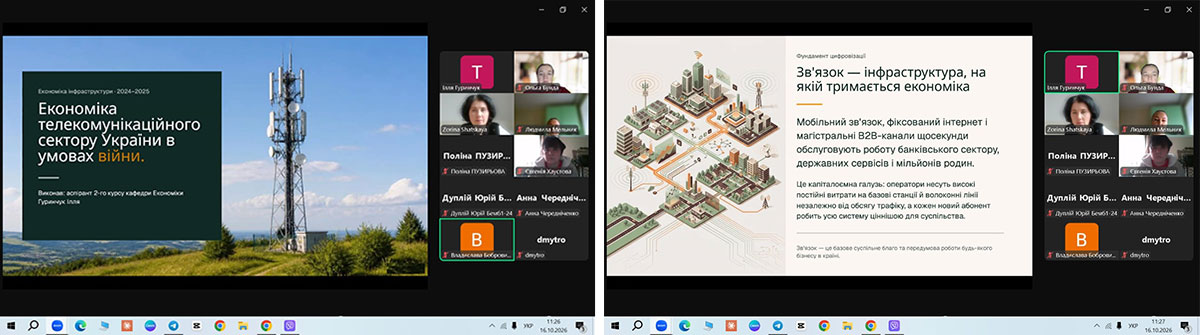
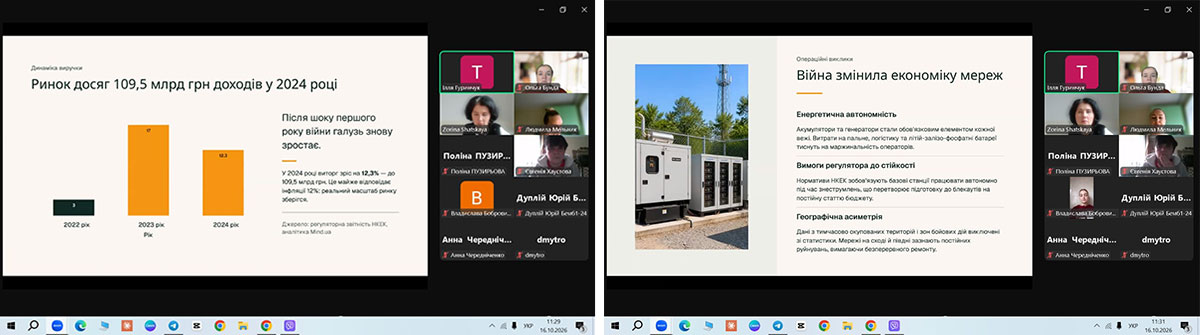
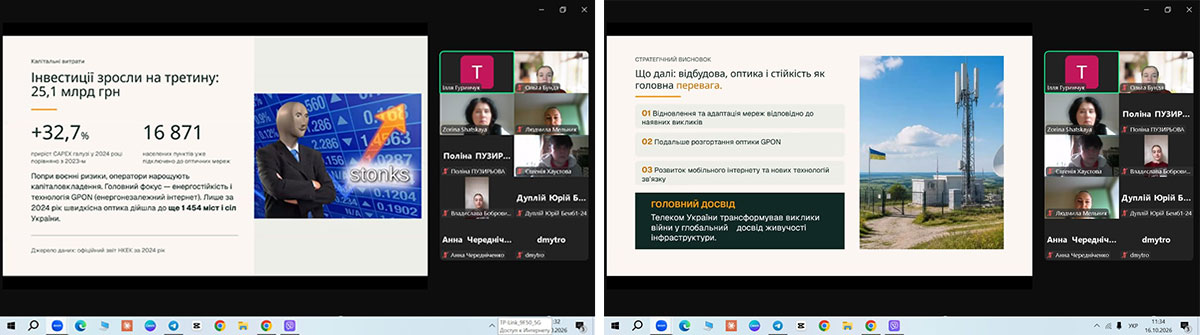
The lecture’s topic provided an opportunity to deepen understanding of the role of telecommunications not only as a service sector but also as a critically important element of economic security, the nation’s digital resilience, and the functioning of society in the face of military challenges.
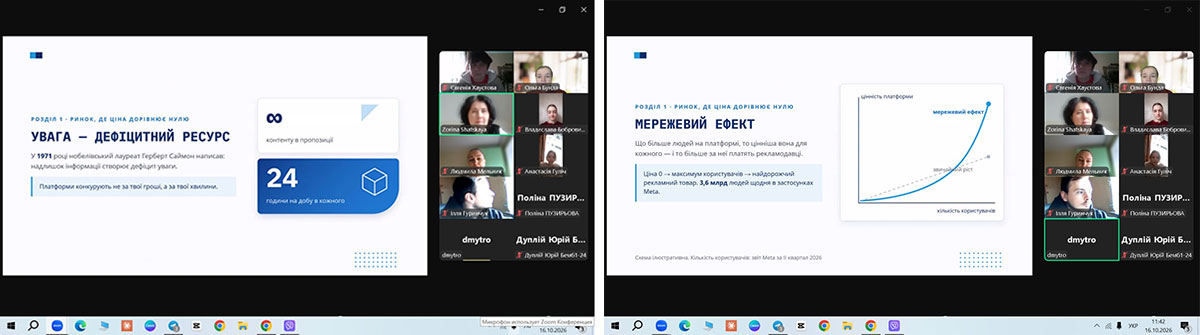
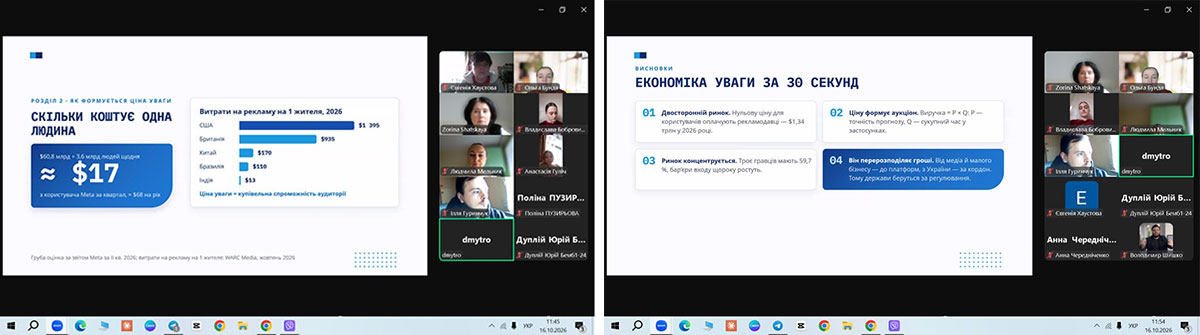
The second lecture introduced participants to the highly relevant topic of the attention economy-one of the defining phenomena of the modern digital society. The speaker was Dmytro RYBALCHENKO, a second-year graduate student in the Department of Economics, who presented on the topic “The Attention Economy: How Social Media Monetizes Our Time and Why ‘Free’ Comes at a High Cost” (supervised by Zoryna SHATSKA, Ph.D. in Economics, Professor in the Department of Economics).
The presentation focused on the economic nature of social media operations, the mechanisms for monetizing user activity, the characteristics of digital platforms’ advertising business models, and the transformation of human attention into a valuable economic resource. The discussion addressed the impact of social media algorithms on user behavior, the role of personal data in the digital economy, the economic value of time, and the hidden costs of using “free” digital services.
Of particular interest was an exploration of the paradox of the digital economy: a user who does not pay directly for access to a platform simultaneously creates economic value through their attention, activity, and data.
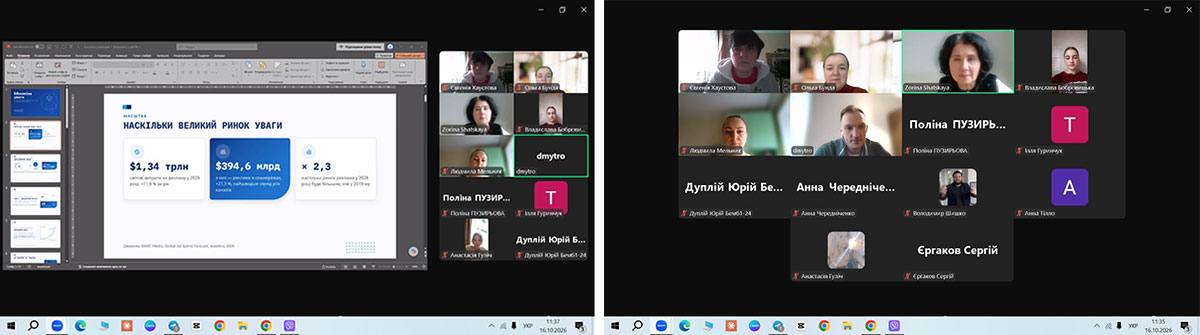
The final day of Economics Week convincingly demonstrated just how multifaceted modern economic science is and how closely it is linked to technological innovations, social transformations, national security, and the daily lives of every individual.
The Economics Week held by the Department of Economics at KNUTD became an important component of educational, scientific, and organizational-educational activities aimed at popularizing economic knowledge, increasing students’ interest in economic science, and developing the competencies of future professionals. The combination of intellectual quests, online quizzes, interactive games, economic competitions, and thematic lectures made it possible to present economics as a modern, dynamic, and practice-oriented field of knowledge that opens up broad opportunities for professional fulfillment.
Each of the events held had its own educational value, yet they were all united by a common goal: shaping an economic worldview, developing critical and analytical thinking, stimulating cognitive activity, and fostering an understanding of the role of economic knowledge in solving pressing societal problems. It is particularly important that such initiatives contribute to the development of a modern educational environment in which traditional academic approaches are organically complemented by innovative technologies, interactive teaching methods, and a practical understanding of real-world economic processes.
The Department of Economics extends its sincere gratitude to Tetіana VLASІUK, Dean of the Faculty of Economics and Management, for her support in organizing and conducting this event. The Department of Economics also expresses its sincere appreciation to all participants, organizers, and department staff for their active participation, creative approach, initiative, enthusiasm, and contribution to the Economics Week! May the knowledge gained, new experiences, and intellectual discoveries serve as a powerful stimulus for further professional development, scientific research, the implementation of innovative ideas, and the achievement of new heights! After all, economics is not just the science of resources, markets, and finance – it is the science of opportunities, choice, development, and the future!
The Department of Economics at KNUTD – we foster economic thinking, develop intellectual potential, and build the future together!
19.10.2026