
SCIENTIFIC SEMINAR OF THE DEPARTMENT OF FASHION TECHNOLOGY “FROM 3D MODELLING TO PARAMETRIC DESIGN: MODERN TECHNOLOGIES IN DIGITAL DESIGN”
On 29 October 2026, the Department of Fashion Technology of Kyiv National University of Technologies and Design (KNUTD) held an online scientific seminar entitled “From 3D Modelling to Parametric Design: Modern Technologies in Digital Design.”
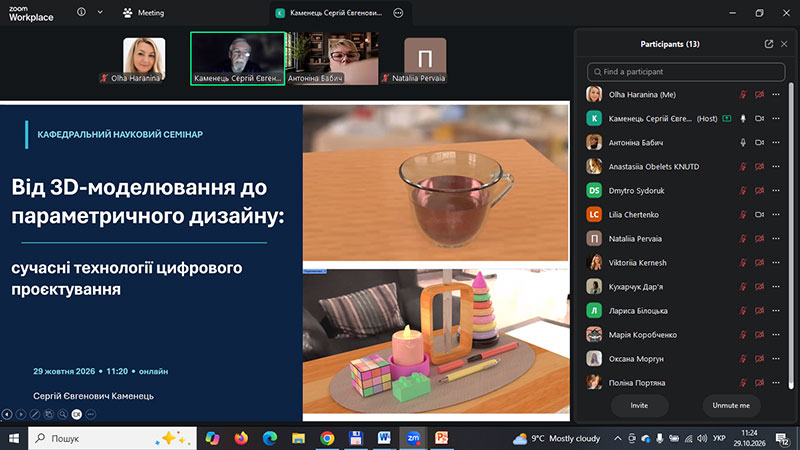
The seminar was moderated by Olha Haranina, Head of the Department of Fashion Technology, Doctor of Technical Sciences, Professor. In her opening remarks, she highlighted the Department’s achievements in this field of research, introduced the speaker, Serhii Kamenets, PhD in Technical Sciences, Associate Professor, and invited him to deliver his presentation.
Serhii Kamenets shared his enthusiasm for modern digital design technologies with the seminar participants. He noted that he had been working in this research area for many years, beginning with the IRIS software system, a computer-aided design (CAD) system for footwear, developed in 1989 by Oleksii Riabets and Oleksandr Piliaiev, researchers at the Department of Footwear and Leather Goods Technology (now the Department of Fashion Technology), under the supervision of Viktor Konoval, Doctor of Technical Sciences, Professor. At that time, the development of IRIS represented a major scientific breakthrough and a significant step forward in the technological modernisation of footwear designers’ workplaces in the light industry.
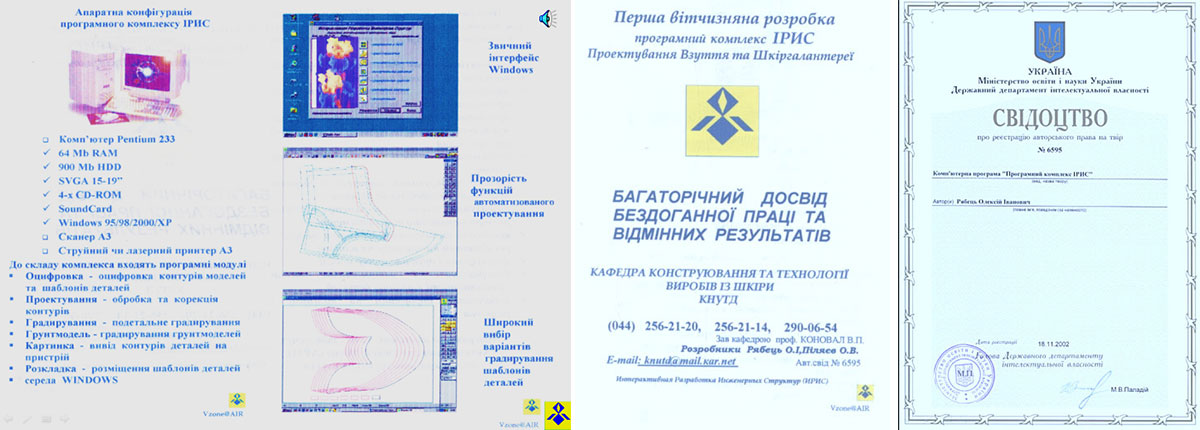
Today, modern digital design technologies are truly impressive in their capabilities, serving as a source of inspiration and encouraging both researchers and students to explore new opportunities, innovate and advance their knowledge and skills.
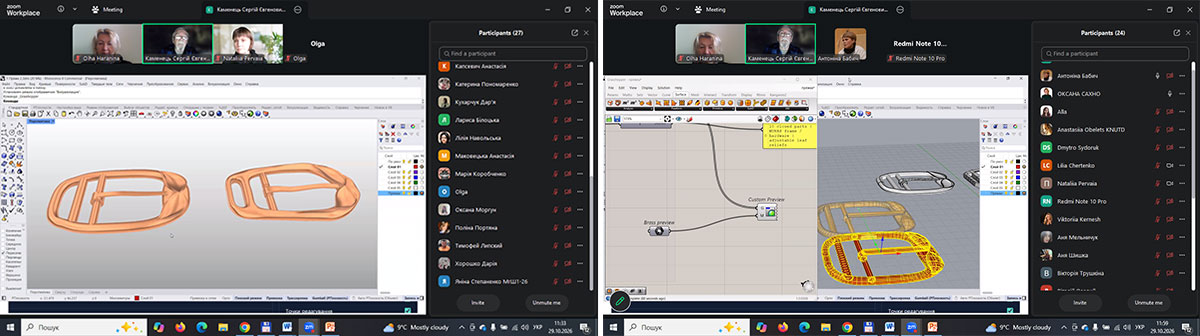
During the seminar, Serhii Kamenets introduced participants to modern digital design technologies, including NURBS, SubD and Mesh. He provided practical demonstrations highlighting the specific features and applications of each technology in the parametric modelling of objects. The presentation also featured examples of parameter-driven 3D model development and introduced participants to a library of modern digital design tools.


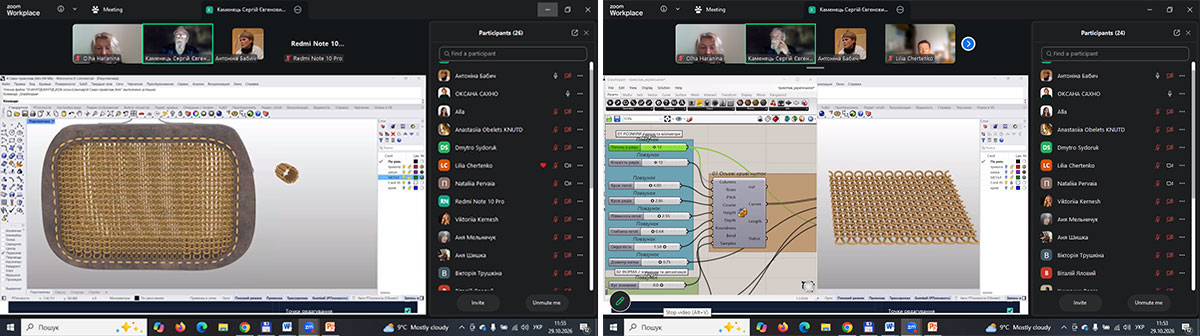
It was noted that these technologies can also be used to create both dense and openwork fabrics, knitted textiles and mesh structures, as well as to incorporate these digital developments into the 3D modelling and design of bags and footwear.
Thus, by mastering the modelling process step by step—from simple objects to increasingly complex forms—and continuously developing their skills, users can create not only models of fashion industry products but also entire industrial facilities and even cities.
To conclude the seminar, the speaker presented a selection of student projects developed at the Department of Fashion Technology as part of the courses “2D and 3D Modelling of Fashion Industry Products” and “Spatial Modelling of Fashion Industry Products,” both taught by Serhii Kamenets. The presented works demonstrated the students’ practical skills, creative potential and ability to apply modern digital design tools in developing innovative solutions for the fashion industry.
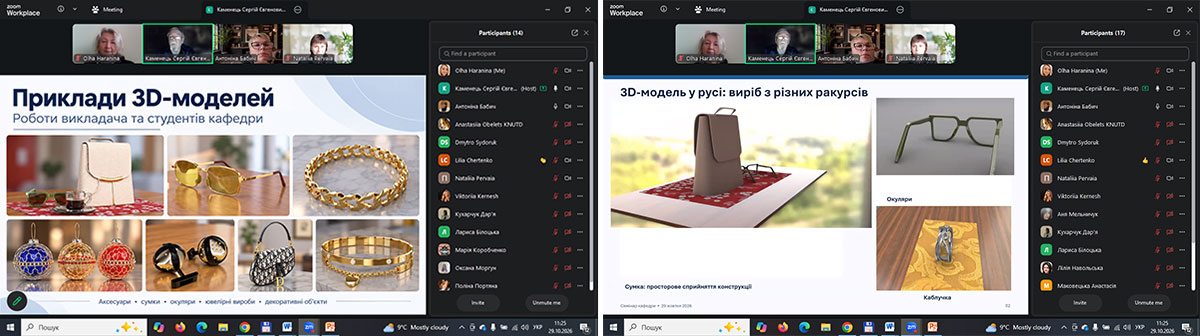
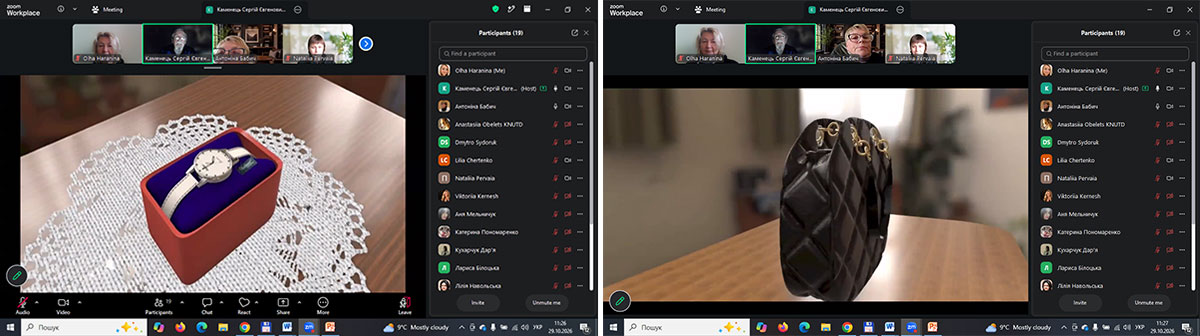
The scientific seminar was attended by Yana Redko, Dean of the Faculty of Fashion and Technologies; academic and teaching staff of the Department of Fashion Technology — Tymofii Lypskyi, Viktoriia Kernesh, Tetiana Dzykovych, Antonina Babych, Liliia Chertenko and Nataliia Pervaya; and representatives of the Department of Fashion and Style — Larysa Bilotska, Liliia Navolska, Vitalii Yalovyi and Alla Rubanka. The seminar also brought together postgraduate students of the Department of Fashion Technology and undergraduate and master's students of the Faculty.
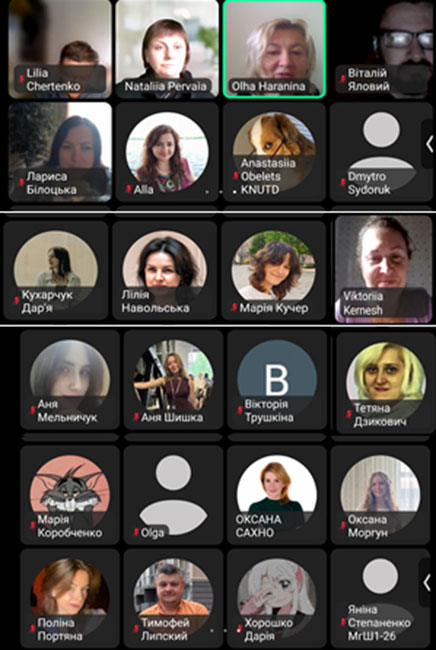
The discussion was joined by Nataliia Pervaya, Professor at the Department of Fashion Technology, Doctor of Technical Sciences; Antonina Babych and Liliia Chertenko, Associate Professors at the Department of Fashion Technology; as well as students who expressed interest in various aspects of modern digital design technologies.
The scientific seminar took place in a friendly and engaging atmosphere. Participants exchanged ideas and views on the application of modern digital design technologies in the development of fashion industry products. They also discussed opportunities to expand the laboratory facilities and enhance the practical component of the courses studied by students, particularly in the areas of 3D modelling and parametric design of fashion products.
02.11.2026