
ON THE PATH TO DIGITAL EUROPE: THE DEPARTMENT OF ECONOMICS HELD A ROUND TABLE DISCUSSION “CITIZEN DIGITAL SECURITY: COUNTERING DISINFORMATION, EUROPEAN DATA PROTECTION STANDARDS, AND MEDIA LITERACY ON UKRAINE’S PATH TO THE EU”
On November 9, the Department of Economics hosted a round table discussion entitled “Citizen Digital Security: Countering Disinformation, European Data Protection Standards, and Media Literacy on Ukraine’s Path to the EU” as part of a meeting of the “THE ECONOMIST HUB” Scientific Club. The event brought together students from all levels of higher education, faculty members of the Department, and invited guests.
The event provided a platform for an open discussion of pressing issues related to digital security, the development of information culture, personal data protection, and the enhancement of media literacy in the context of society’s digital transformation and Ukraine’s advancing European integration.
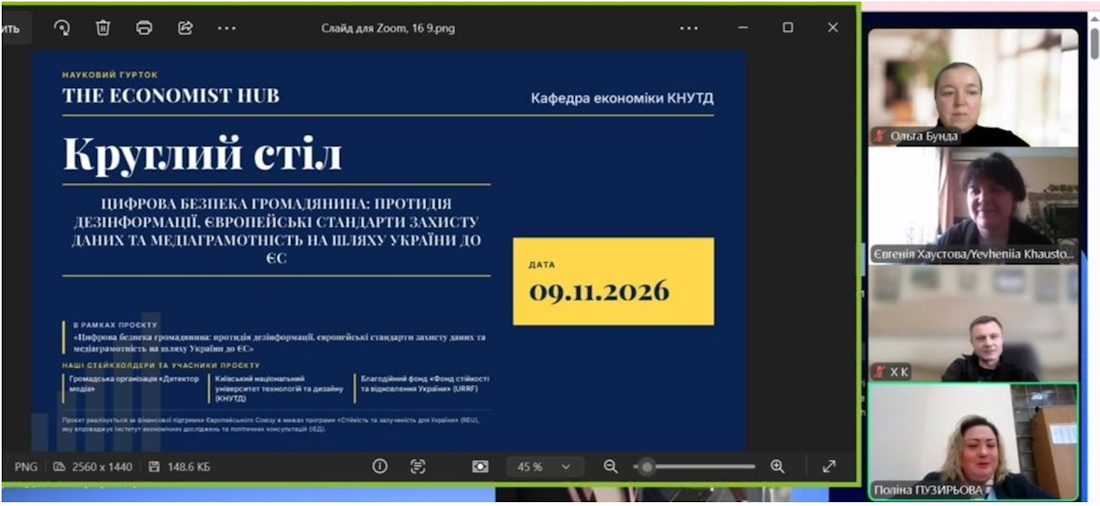
The Department’s stakeholder partners also delivered welcoming remarks: Volodymyr MARTSYNOVSKYI, Director of the Charitable Foundation “Ukraine Resilience and Recovery Fund”, and Halyna PETRENKO, Director of the non-governmental organization “Detector Media”.
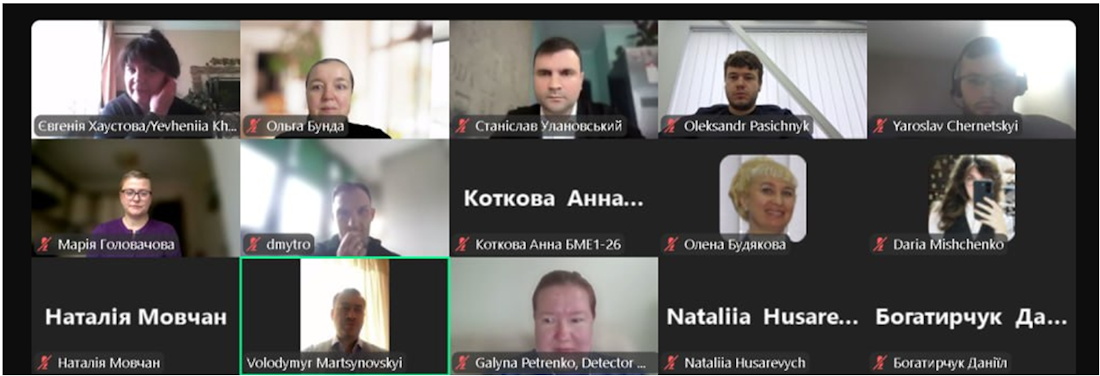
Special attention during the round table discussion was given to contemporary challenges in the information environment, including the spread of disinformation, manipulative content, and cyber threats, which have become particularly significant under martial law. Participants explored key approaches to identifying unreliable information, verifying information sources, critically evaluating digital content, and developing responsible behavior in the information space.
Master’s and PhD students majoring in C1 Economics and International Economic Relations actively participated in the round table discussion. They had the opportunity to present their perspectives on current digital security challenges, exchange ideas, engage in academic discussions, and propose practical approaches to improving citizens’ digital literacy.
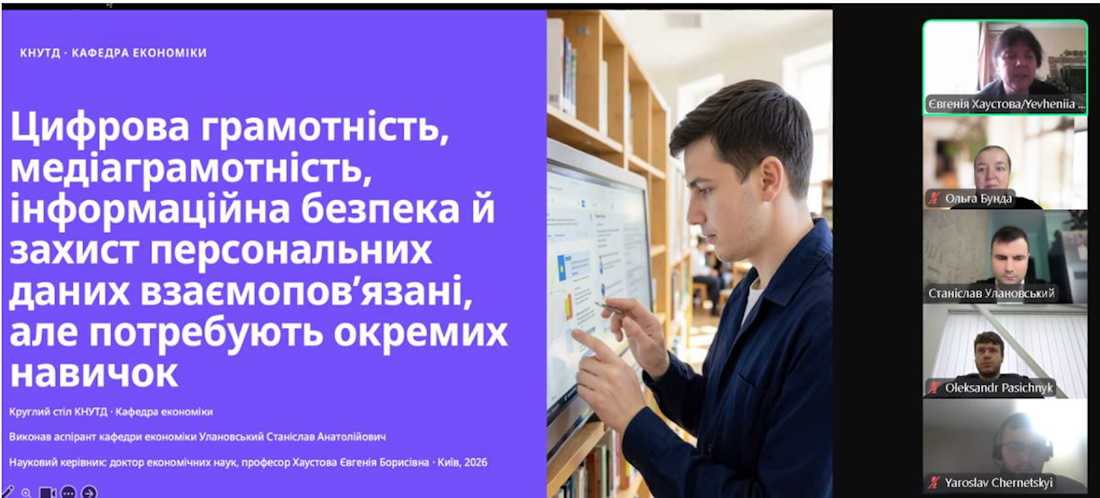
Stanislav ULANOVSKYI, a student of group DFE-25, delivered a presentation entitled “Digital Literacy, Media Literacy, Information Security, and Personal Data Protection Are Interconnected but Require Distinct Skills.” In his presentation, he explored the development of digital competencies in today’s information society. In particular, the speaker focused on the differences between digital literacy, media literacy, and information security, emphasizing the importance of critically evaluating information, identifying disinformation, protecting personal data, and following safe online practices. He also highlighted that the effective use of digital technologies requires not only technical knowledge but also a responsible attitude toward information, awareness of digital risks, and continuous improvement of practical skills.
Ihor KALINOVSKYI, a student of group MgKE-26, delivered a presentation entitled “Four Essential Digital Security Skills,” in which he highlighted the importance of key competencies required for safe and responsible engagement in today’s digital environment. The speaker paid particular attention to four interconnected components: digital literacy, media literacy, information security, and personal data protection. He emphasized the importance of effectively using digital technologies, critically evaluating information, identifying fake news and information manipulation, countering cyber threats, and ensuring the confidentiality of personal data. Practical aspects of the safe use of online resources, social media, and digital services were also discussed. The speaker stressed that developing these skills is essential for strengthening citizens’ digital resilience, fostering a culture of information security, and supporting Ukraine’s successful integration into the European digital space.
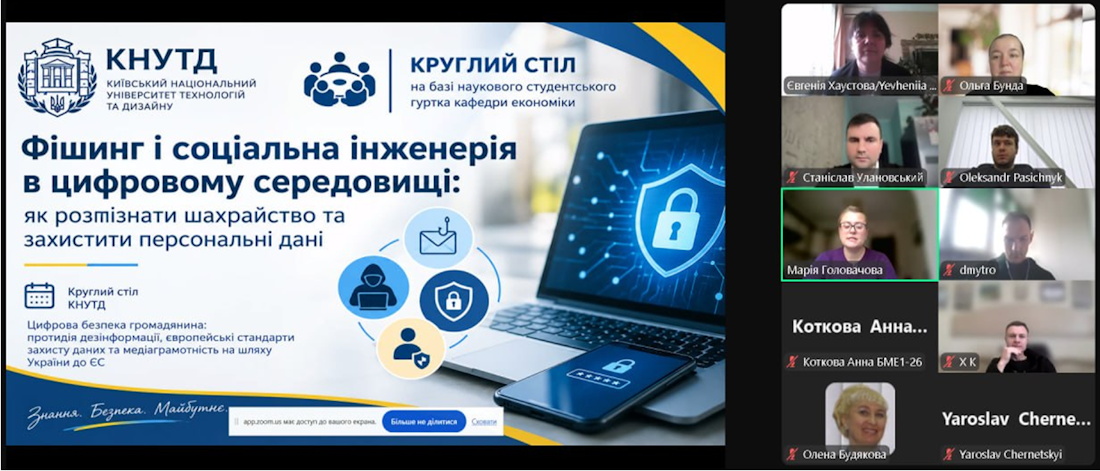
Mariia HOLOVACHOVA, a student of group MgZKE-26, delivered a presentation entitled “Phishing and Social Engineering in the Digital Environment: How to Recognize Fraud and Protect Personal Data,” focusing on current digital security threats and methods of preventing online fraud. In her presentation, Mariia explained the nature of phishing and social engineering as common methods of illegally obtaining confidential information through psychological manipulation and the exploitation of users’ trust. Particular attention was paid to the main warning signs of fraudulent emails, messages, fake websites, and misleading offers on social media. The speaker discussed practical methods of protecting personal and financial data, including verifying the reliability of information sources, using strong passwords, enabling two-factor authentication, and following safe online communication practices. She emphasized that raising public awareness of digital fraud techniques, developing critical thinking, and strengthening the ability to identify cyber threats promptly are essential for ensuring personal information security and building trust in digital services.
Yaroslav CHERNETSKYI, a student of group DFE-25, delivered a presentation entitled “European Principles of Data Protection: Economics, Law, and Security,” focusing on the development of the European personal data protection framework and its significance for the digital economy. In his presentation, he outlined the fundamental principles of the European Union’s General Data Protection Regulation (GDPR), including lawfulness, transparency, purpose limitation, data minimization, and confidentiality. Particular attention was paid to the interrelationship between the economic, legal, and security aspects of personal data processing, the responsibility of businesses for the proper storage and processing of personal data, and the economic consequences of violating information security requirements. Yaroslav CHERNETSKYI emphasized the importance of implementing European data protection standards in Ukraine, which would help increase public trust in digital services, strengthen the competitiveness of Ukrainian businesses, and create favorable conditions for Ukraine’s integration into the European Union’s Digital Single Market.
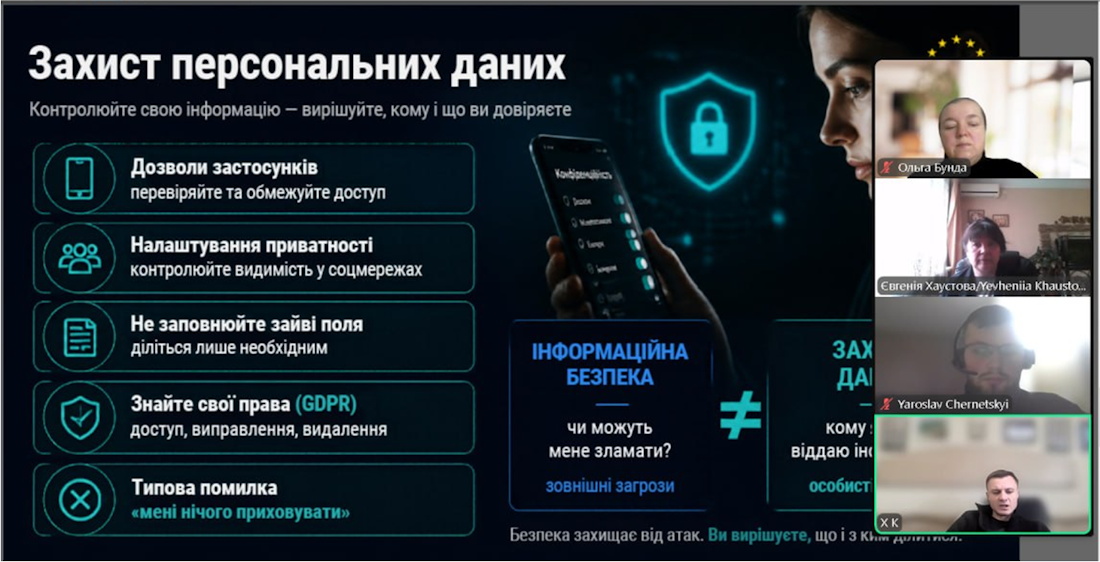
Students pursuing the first (bachelor’s) level of higher education in the specialties C1 “Economics and International Economic Relations” and C2 “Political Science” also actively participated in the activities of the scientific club and discussions of the presentations. By engaging in the academic discussion, students had the opportunity to exchange views on current challenges facing digital society, share their perspectives on information security, countering disinformation, and personal data protection. Such interdisciplinary interaction contributed to expanding students’ knowledge, developing critical thinking, strengthening academic communication skills, and raising awareness of the importance of digital literacy in the context of Ukraine’s European integration.
The round table discussion marked the beginning of a series of academic, educational, and awareness-raising events planned as part of the project “Citizen Digital Security: Countering Disinformation, European Data Protection Standards, and Media Literacy on Ukraine’s Path to the EU.” The project is implemented with the financial support of the European Union under the “Resilience and Engagement for Ukraine” programme, implemented by the Institute for Economic Research and Policy Consulting (IER). The initiative aims to enhance citizens’ digital literacy and information security awareness, develop critical thinking, strengthen skills in countering disinformation, promote European personal data protection standards, and deepen understanding of European values. The planned activities will contribute to fostering a culture of responsible behavior in the digital environment, strengthening society’s information resilience, and supporting Ukraine’s European integration aspirations.
The Department of Economics sincerely thanks all participants for their active engagement and productive contributions and invites everyone interested to join the upcoming project activities!
Together, let us enhance digital literacy, learn to counter disinformation, protect personal data, and build a safer information environment!
16.11.2026