
INTER-UNIVERSITY SCIENTIFIC AND PRACTICAL SEMINAR ON INTELLIGENT ROBOTICS "FROM SWARM TO CONVOY"
On November 12, 2026, an inter-university scientific-practical seminar titled "From Swarm to Convoy: Algorithms for Intelligent Behavior in Ground Robotic Systems" was held at the Academician Yurii Buhai International University of Science and Technology. The event focused on modern approaches to developing intelligent control systems for ground robotic complexes, as well as technologies for autonomous navigation and the coordination of robot groups.
The event was organized as part of efforts to develop inter-university scientific and educational cooperation, restore traditions of academic interaction between departments at higher education institutions, and facilitate the exchange of research findings in the fields of information technology, automation, and intelligent robotics.
The online seminar was attended by academic staff and students at both the first (bachelor’s) and second (master’s) levels of higher education from the fields of "Automation, Computer-Integrated Technologies, and Robotics" (G7) and "Software Engineering" (F2). The participants, representing the Department of Information and Computer Technologies at the Kyiv National University of Technologies and Design, were led by the Head of the Department, Vladyslava Skidan. Academic staff from other higher education institutions also took part.
The seminar was moderated by Oleksandr Holubenko, Head of the Department of Information-Communication and Oil and Gas Technologies at the Academician Yurii Buhai International University of Science and Technology.
The keynote speaker for the event was Roman Zinko, Doctor of Technical Sciences and Professor in the Department of Computer-Aided Design Systems at the Institute of Computer Science and Information Technology, Lviv Polytechnic National University.
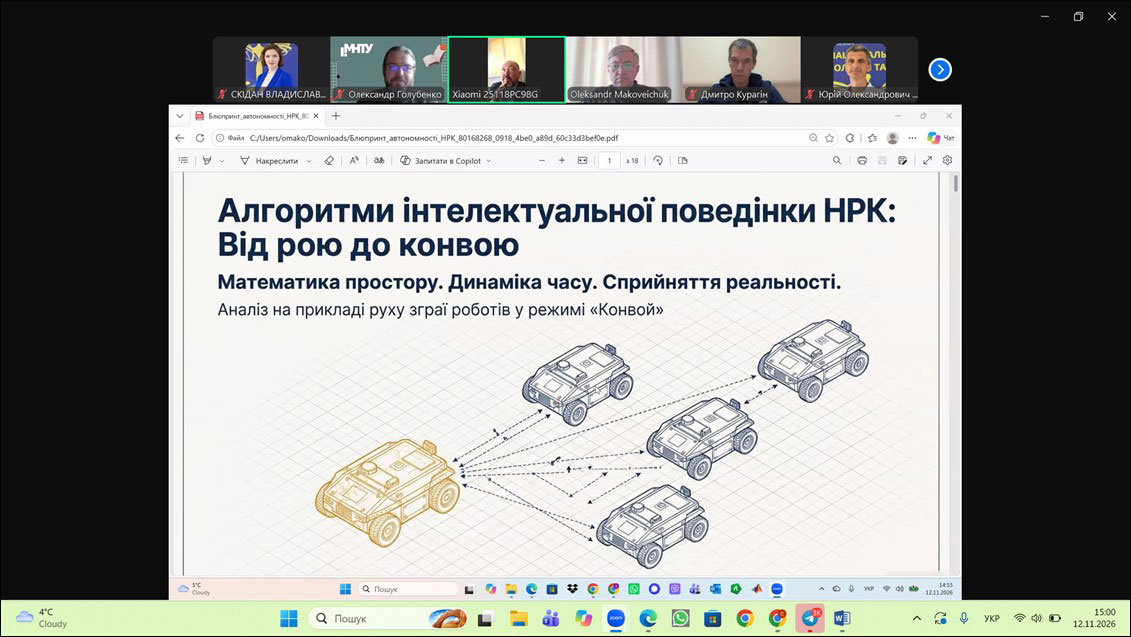
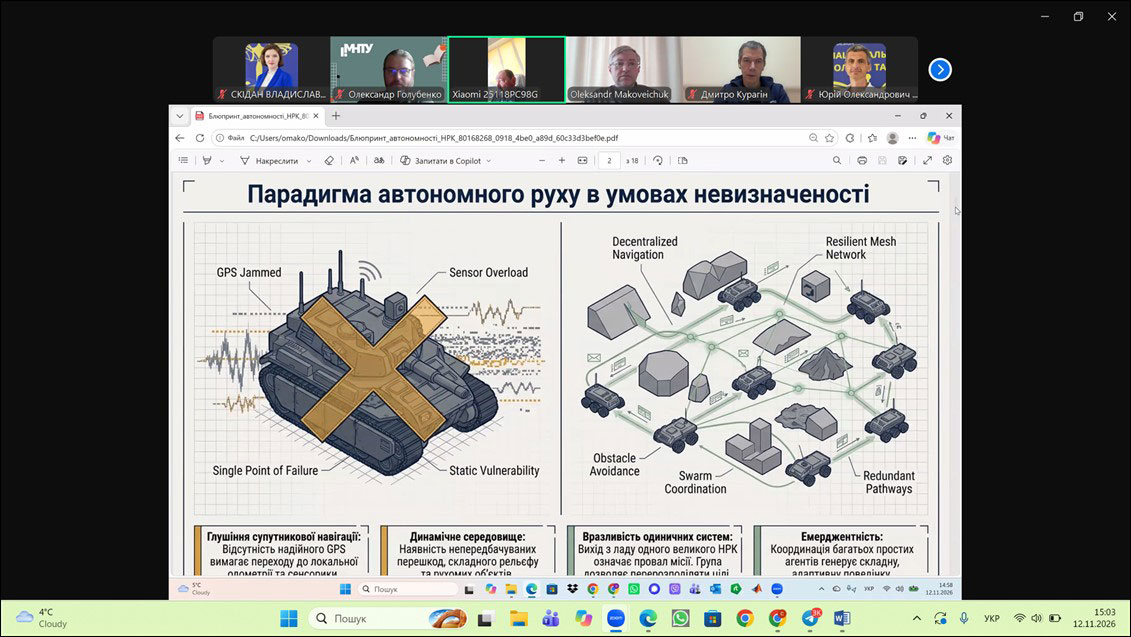
During a scientific presentation, Professor Roman Zinko introduced modern concepts for developing algorithms for the intelligent behavior of ground-based robotic systems, focusing on mathematical models of collective motion, principles of decentralized control, and ensuring the autonomy of robotic systems under conditions of uncertainty.
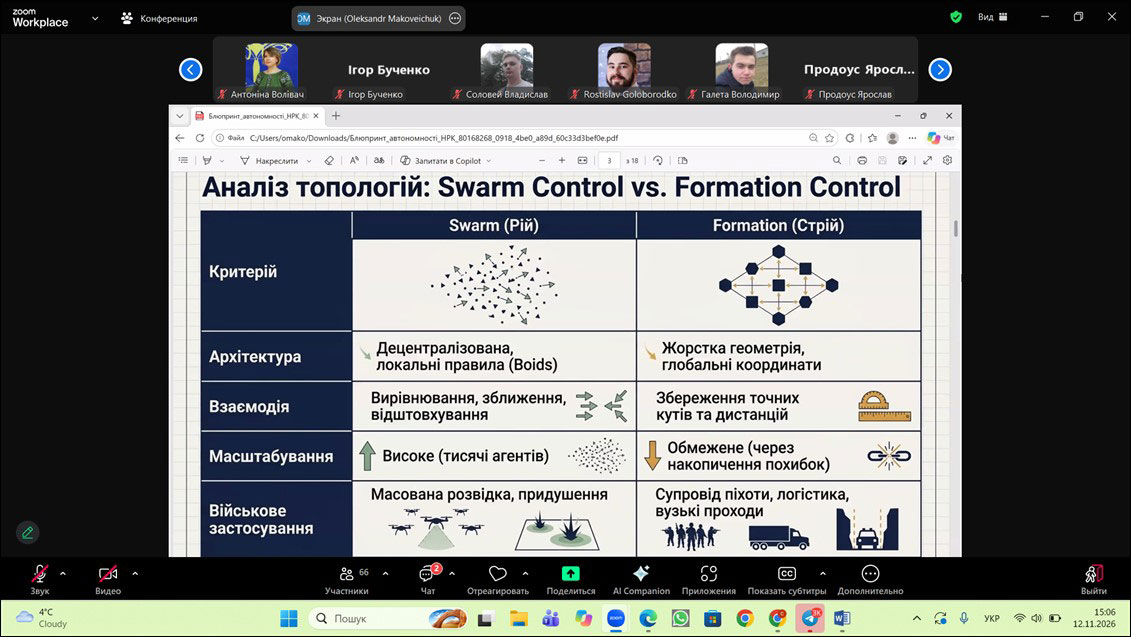
Particular attention was paid to a comparative analysis of technologies for swarm control, formation control, and the hybrid "follow-the-leader" model. Participants explored the specifics of organizing interaction between robotic platforms, algorithms for maintaining a defined group configuration, obstacle avoidance mechanisms, and methods for ensuring the stability of collective motion.
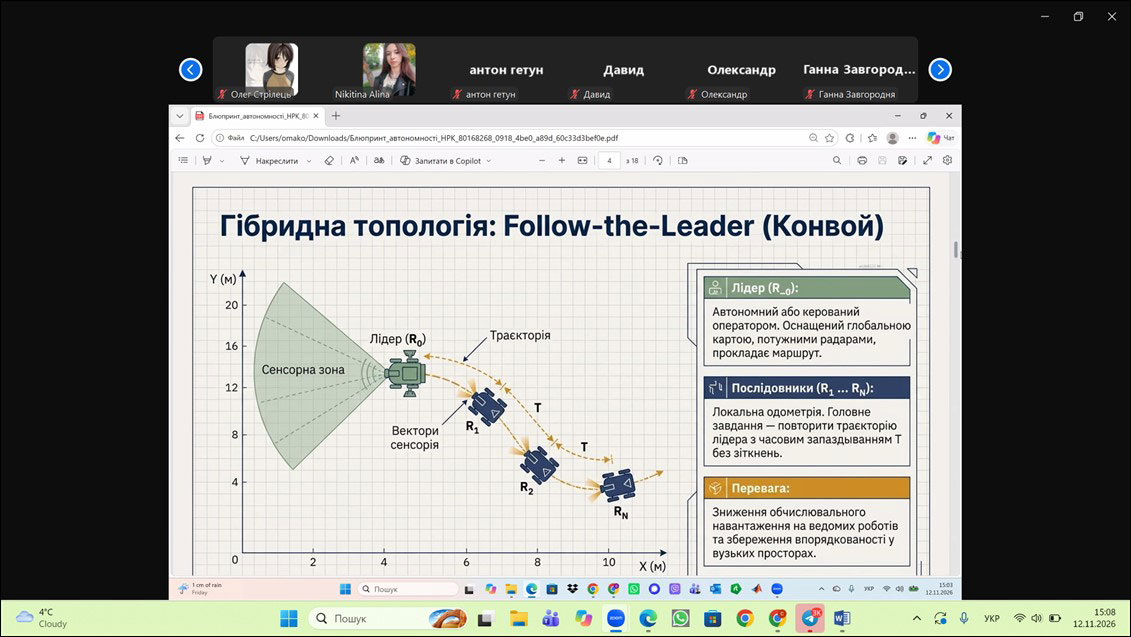
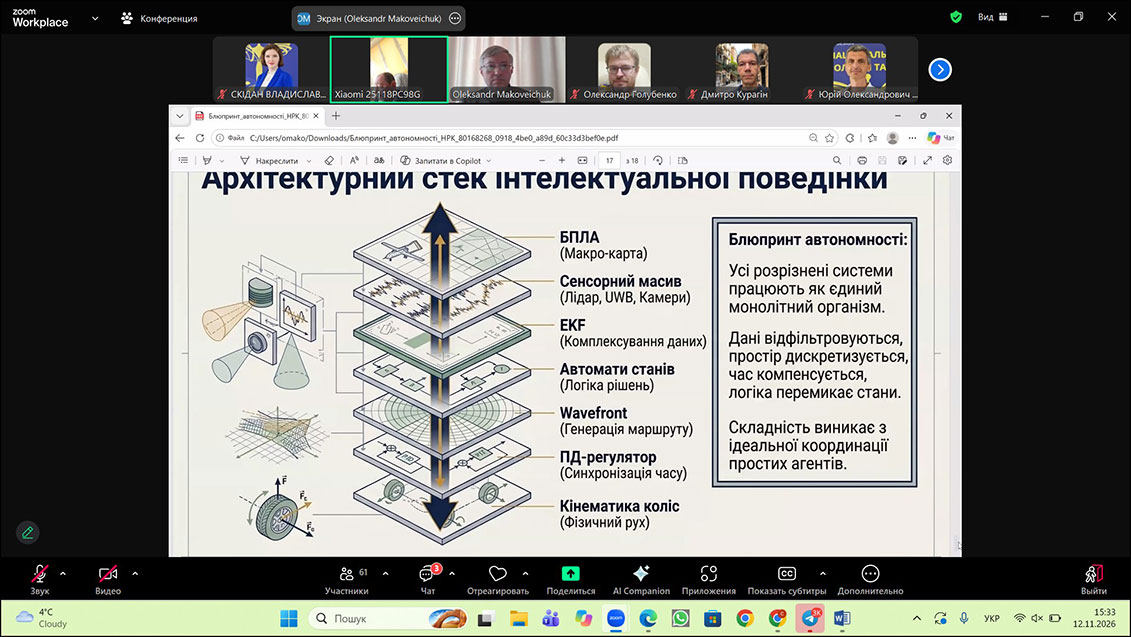
The seminar examined a multi-level architecture for the intelligent behavior of robotic systems, encompassing coordination logic, mathematical modeling of spatial movement, motion dynamics, and the processing of information from sensory devices.
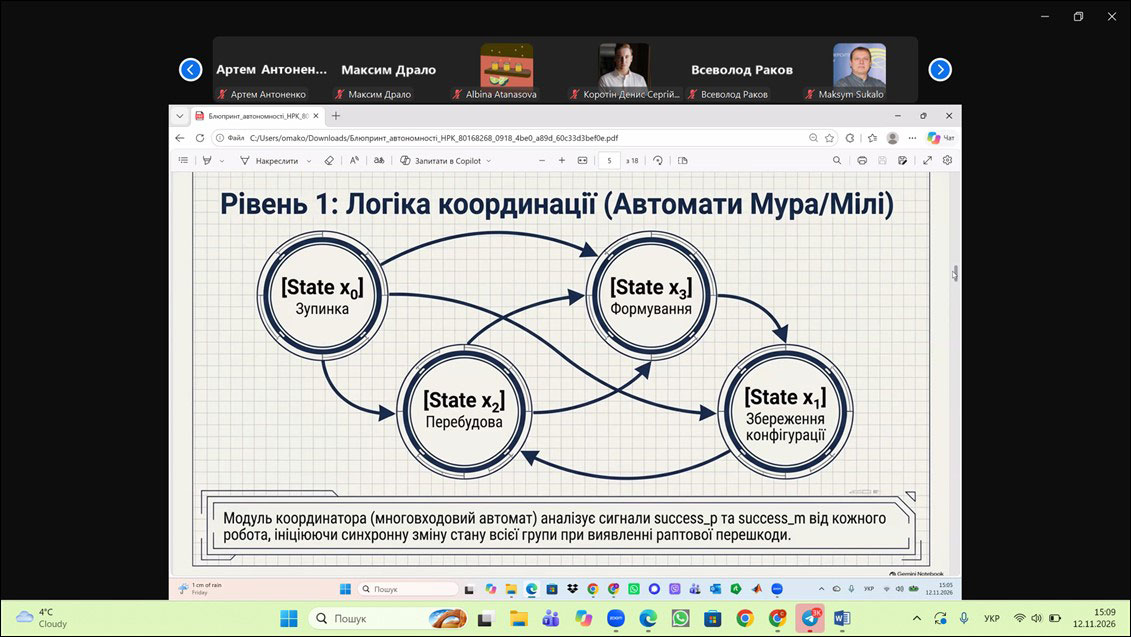
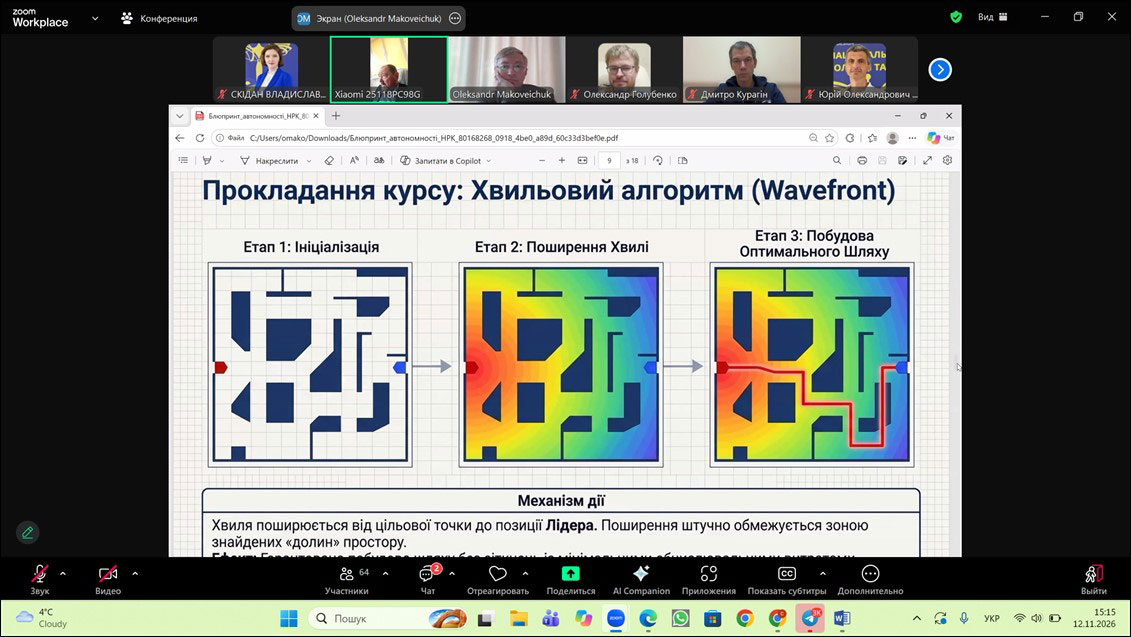
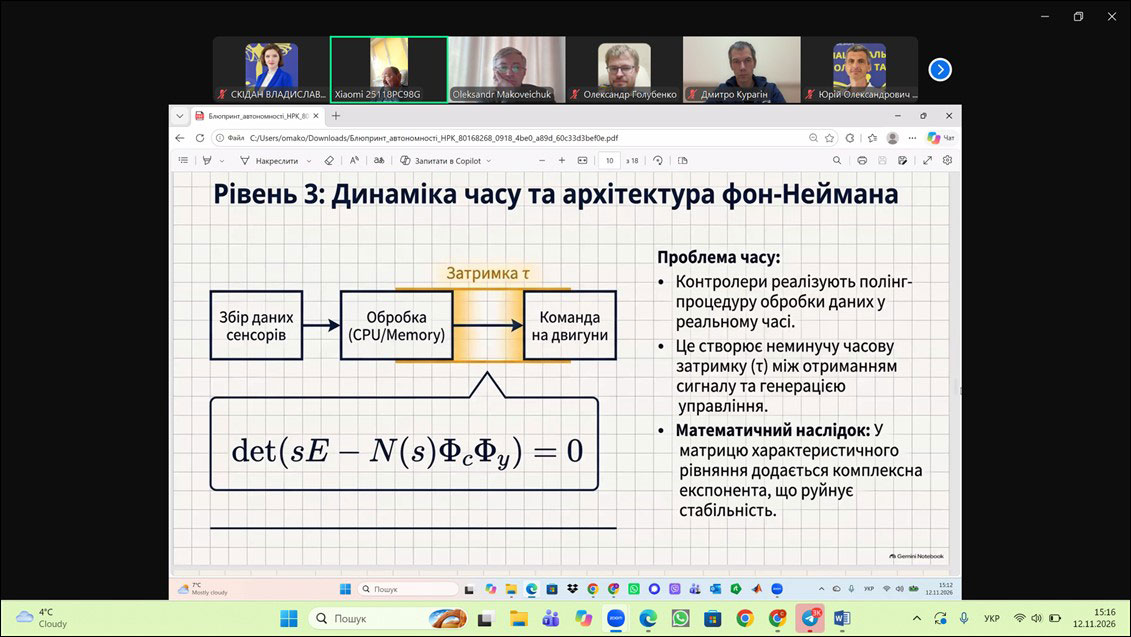
A specific section of the presentation was devoted to the application of cellular automata, wavefront algorithms for optimal route planning, kinematic motion models, and methods for compensating time delays in autonomous control systems. The approaches presented demonstrated the potential to enhance navigation efficiency, adaptability, and reliability in robotic systems operating within complex and dynamic environments.
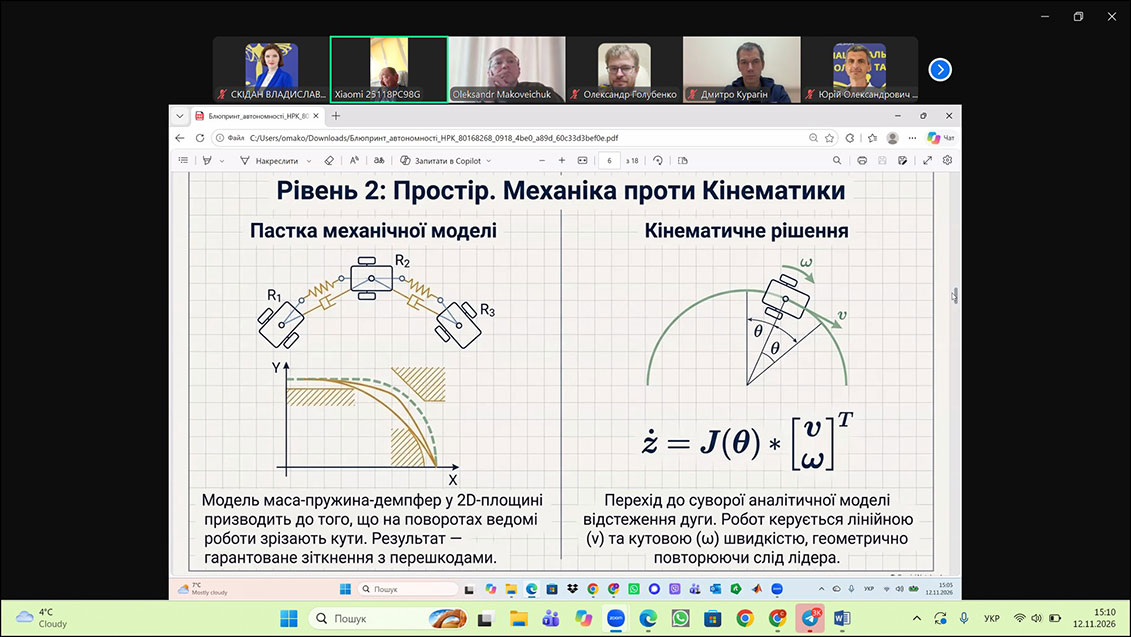
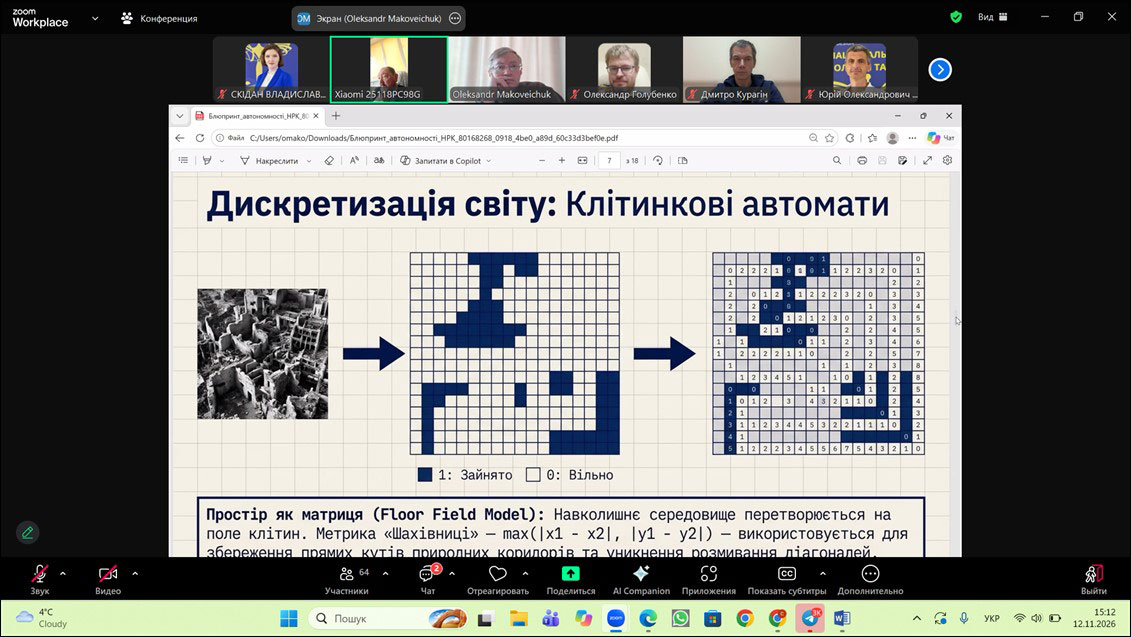
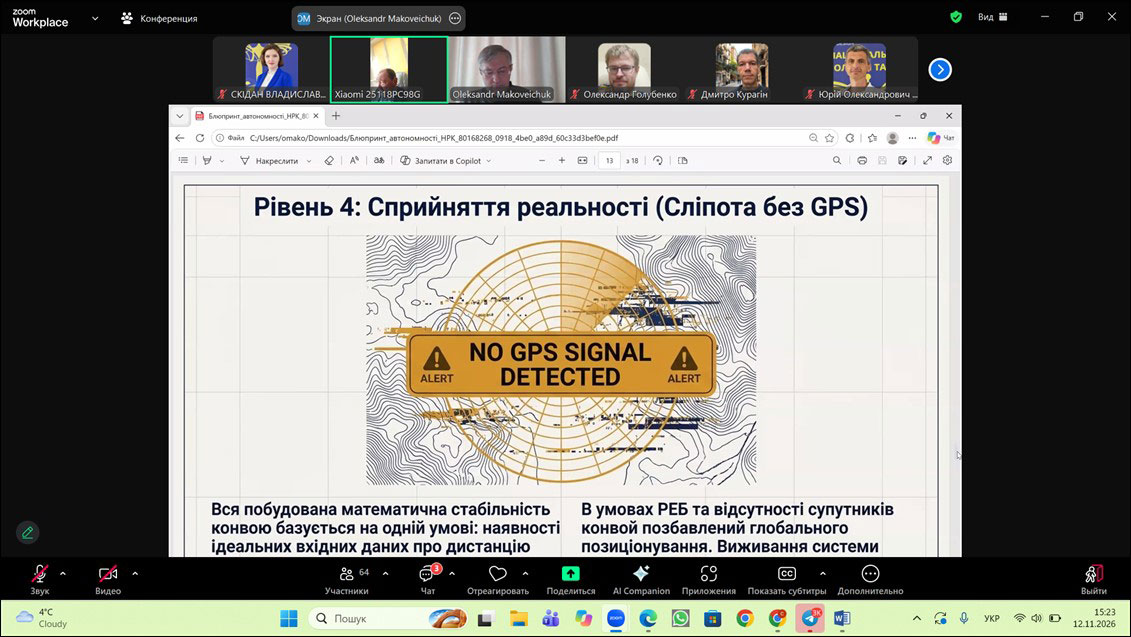
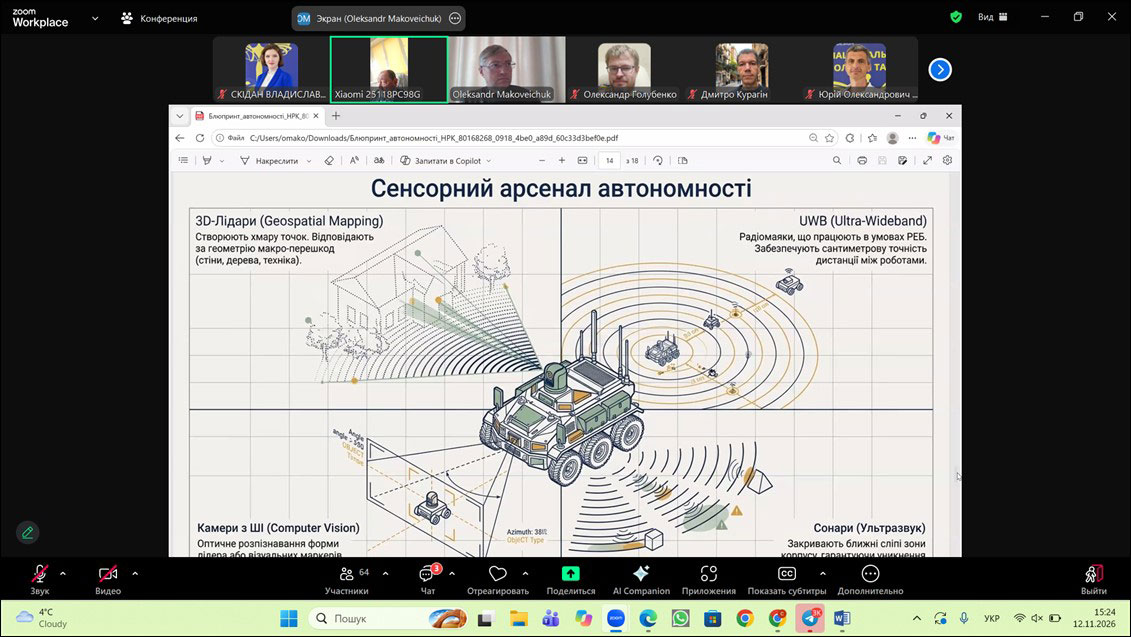
Significant interest was directed toward the challenges of ensuring autonomous navigation in the absence of satellite positioning (GPS) signals, as well as the use of computer vision, sensor fusion, LiDAR, cameras, and other environmental perception technologies. The technological solutions examined hold substantial practical value for the development of intelligent mobile robotic platforms capable of operating under conditions of limited connectivity, uncertainty, and external interference.
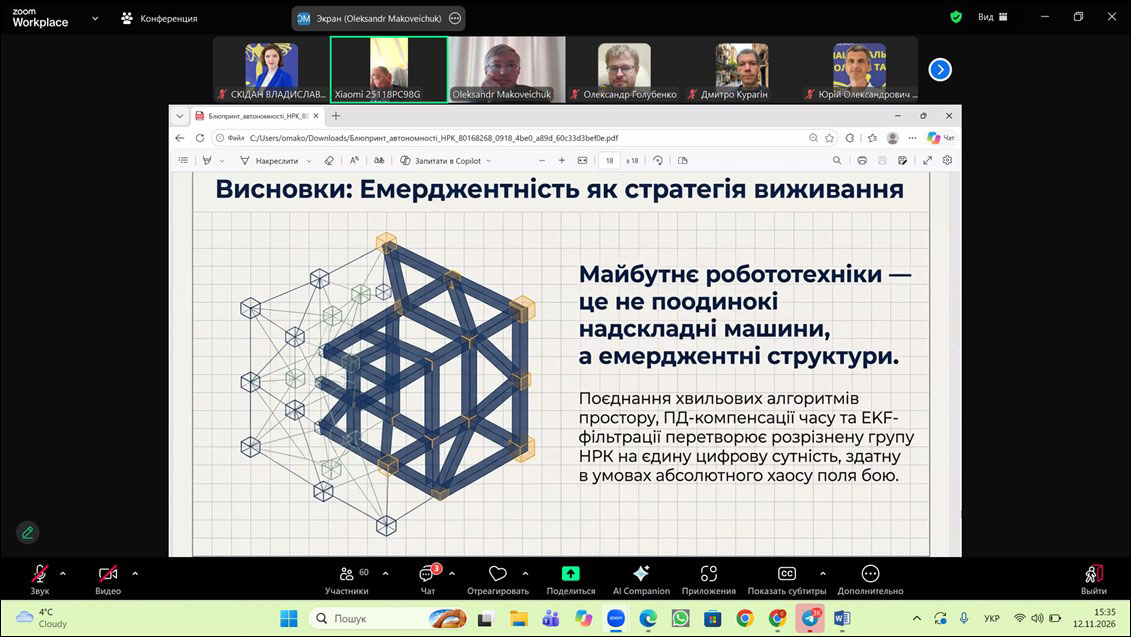
During the seminar, discussions also covered the prospects for integrating modern artificial intelligence algorithms, mathematical modeling, computer vision, and automated control for the development of next-generation robotic systems.
Participation in such scientific and practical events fosters the deepening of inter-university cooperation, the advancement of scientific research, the exchange of professional expertise, and the integration of current scientific and technical achievements into the educational process. The materials presented are of practical value for the training of higher education students in the fields of "Automation, Computer-Integrated Technologies, and Robotics" and "Software Engineering" specifically regarding the study of intelligent systems, artificial intelligence algorithms, the programming of robotic complexes, and the design of complex software and hardware systems.
The Department of Information and Computer Technologies at the Kyiv National University of Technologies and Design expresses its sincere gratitude to the seminar organizers and Professor Roman ZINKO for his insightful scientific presentation, the sharing of relevant research findings, and his contribution to the development of inter-university scientific and educational cooperation.
16.11.2026