
OPEN LECTURE “DIGITAL TECHNOLOGIES WITHOUT BORDERS”
On November 17, 2026, faculty and staff of the Department of Information and Computer Technologies at Kyiv National University of Technologies and Design, as well as students pursuing first-cycle (bachelor’s) and second-cycle (master’s) degrees in the majors F2 “Software Engineering” and G7 “Automation, Computer-Integrated Technologies and Robotics,” led by Department Chair Vladyslava SKIDAN, participated online in the first open lecture in the series “Digital Technologies Without Borders,” launched by the Department of Information and Computer Technologies and Mathematics at the Educational and Scientific Institute “Ukrainian Engineering and Pedagogical Academy” of V. N. Karazin Kharkiv National University.
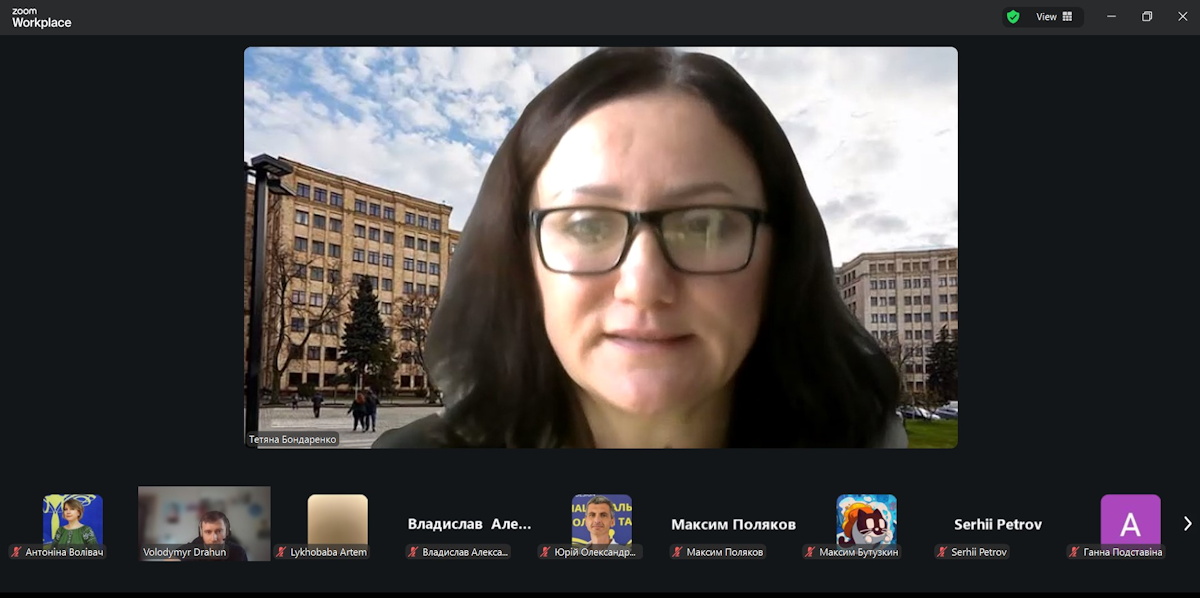
The event was moderated by Tetiana BONDARENKO, Doctor of Pedagogical Sciences and professor in the Department of Information and Computer Technologies and Mathematics at the Educational and Scientific Institute “Ukrainian Engineering and Pedagogical Academy” of V. N. Karazin Kharkiv National University.
The first meeting was devoted to the topical issue “Digital Signatures in Action: Ensuring the Authenticity and Security of Electronic Documents” and covered both theoretical and practical aspects of using cryptographic technologies to ensure information security.
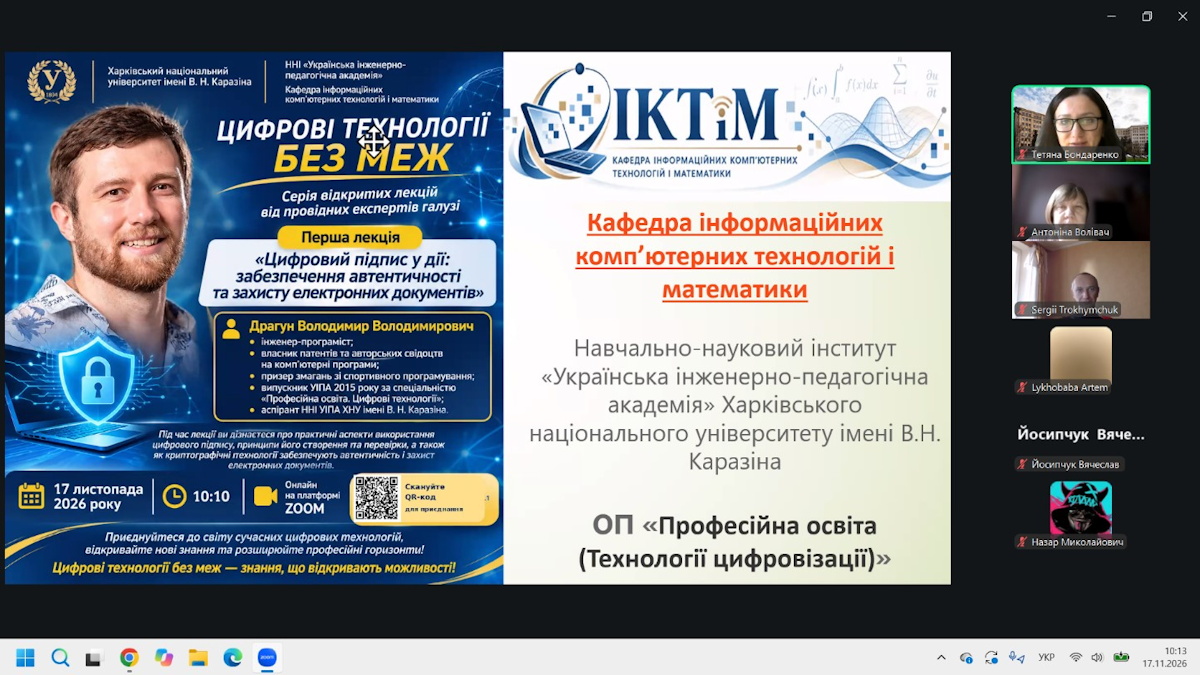
The speaker for the lecture was Volodymyr DRAGUN a software engineer, holder of patents and copyright certificates for computer programs, a prize winner in programming competitions, and a 2015 graduate of the UIPA with a degree in “Vocational Education. Digital Technologies,” and currently a graduate student at the UIPA Educational and Research Institute of V. N. Karazin Kharkiv National University.
During the lecture, participants were given a step-by-step introduction to the purpose of digital signatures, the principles behind their operation, and the technological mechanisms used to protect electronic documents.
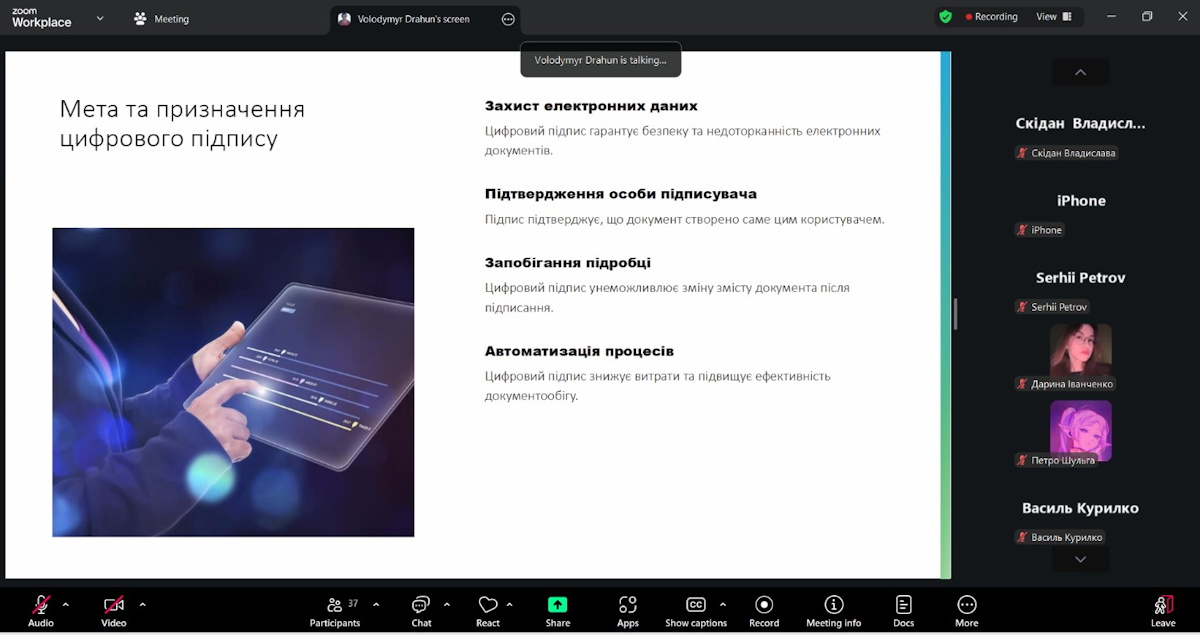
At the beginning of the meeting, Volodymyr Dragun explained the purpose and function of digital signatures, emphasizing their role in ensuring the security of electronic data, verifying the signer’s identity, preventing document forgery, and automating electronic document management processes.
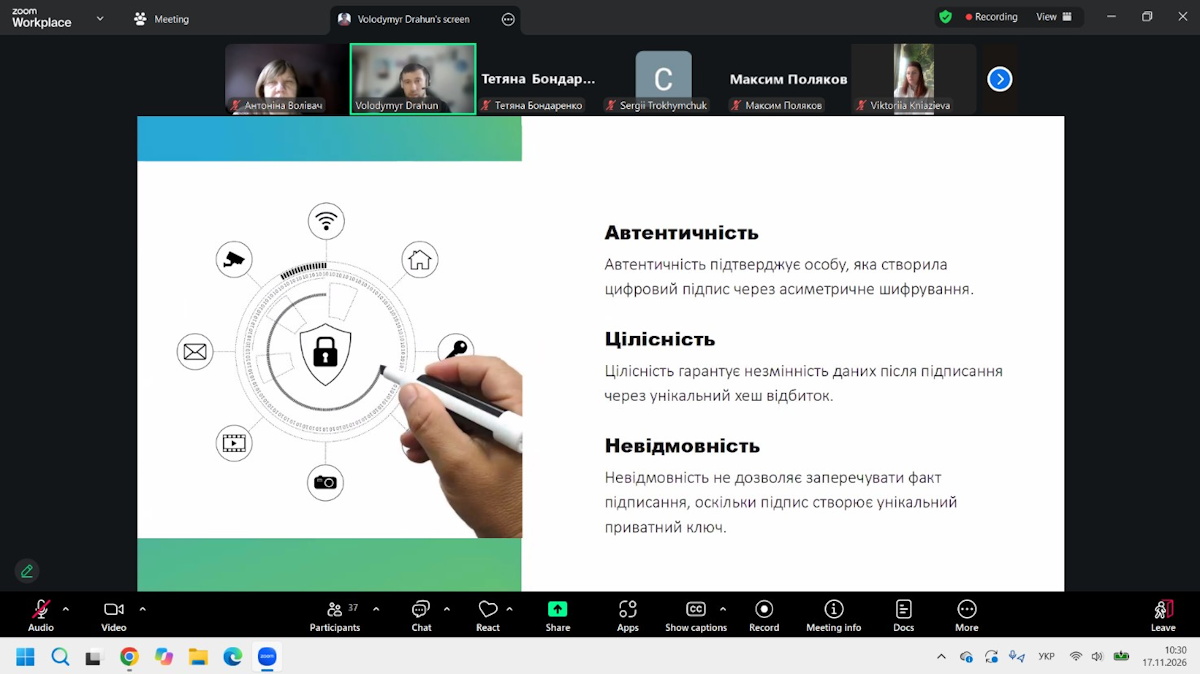
Special attention was paid to the key properties of digital signatures: authenticity, integrity, and non-repudiation. Participants learned how a digital signature makes it possible to verify the signer’s identity, guarantee that a document remains unchanged after signing, and ensure that the fact of its signing can be verified.
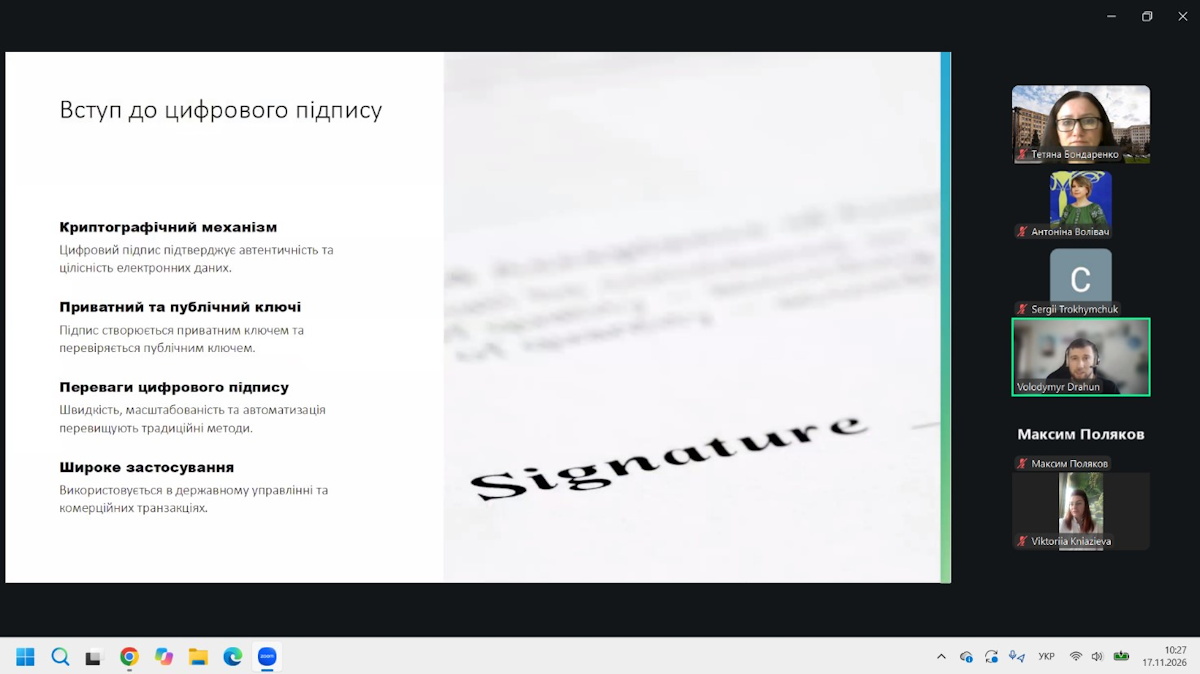
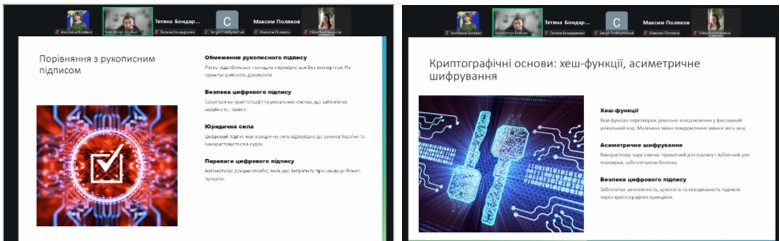
The speaker also discussed the differences between handwritten and digital signatures, highlighting the limitations of traditional signatures and the advantages of digital ones, including cryptographic protection, the ability to verify document integrity, legal validity, and business process automation. The next section covered the cryptographic foundations of digital signatures. Specifically, it addressed the principles of hash functions, which generate a digital fingerprint of a document, and asymmetric cryptography, which involves the use of a pair of interrelated keys: a private key and a public key. The speaker emphasized the need to keep the private key confidential and explained how the public key is used to verify a digital signature.
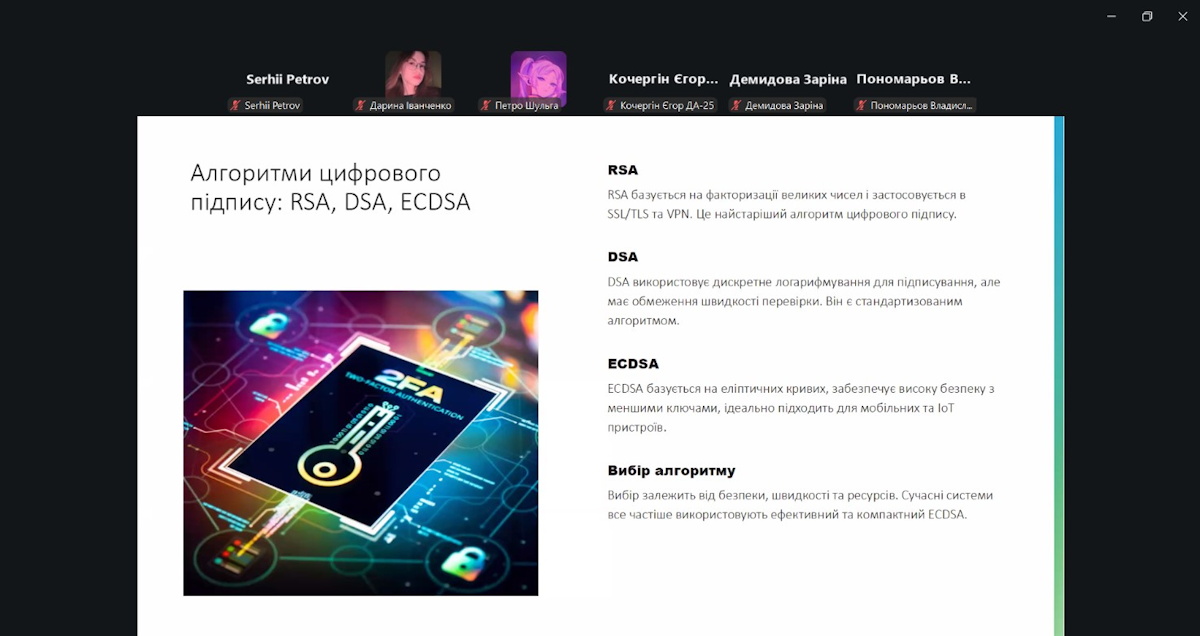
The speaker paid particular attention to the RSA, DSA, and ECDSA digital signature algorithms, explaining the mathematical foundations of how they work. Specifically, RSA is based on the difficulty of factoring large numbers, DSA on the difficulty of the discrete logarithm problem, and ECDSA uses elliptic curve cryptography. The presentation also covered the specifics of applying these algorithms and the criteria for selecting them, taking into account security and efficiency requirements.
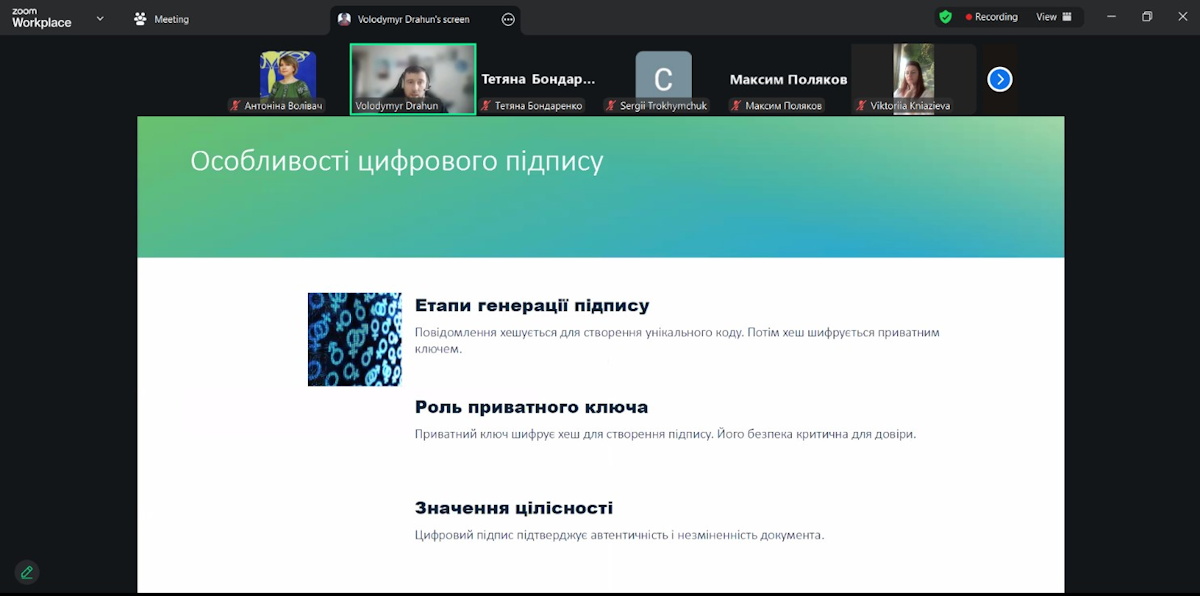
The practical portion of the lecture focused on the mechanisms for creating and verifying digital signatures. The speaker explained the sequence of steps involved in generating a signature, which includes hashing the document and using a private key. Emphasis was placed on the creation of a digital signature and ensuring the ability to verify the document’s authorship.
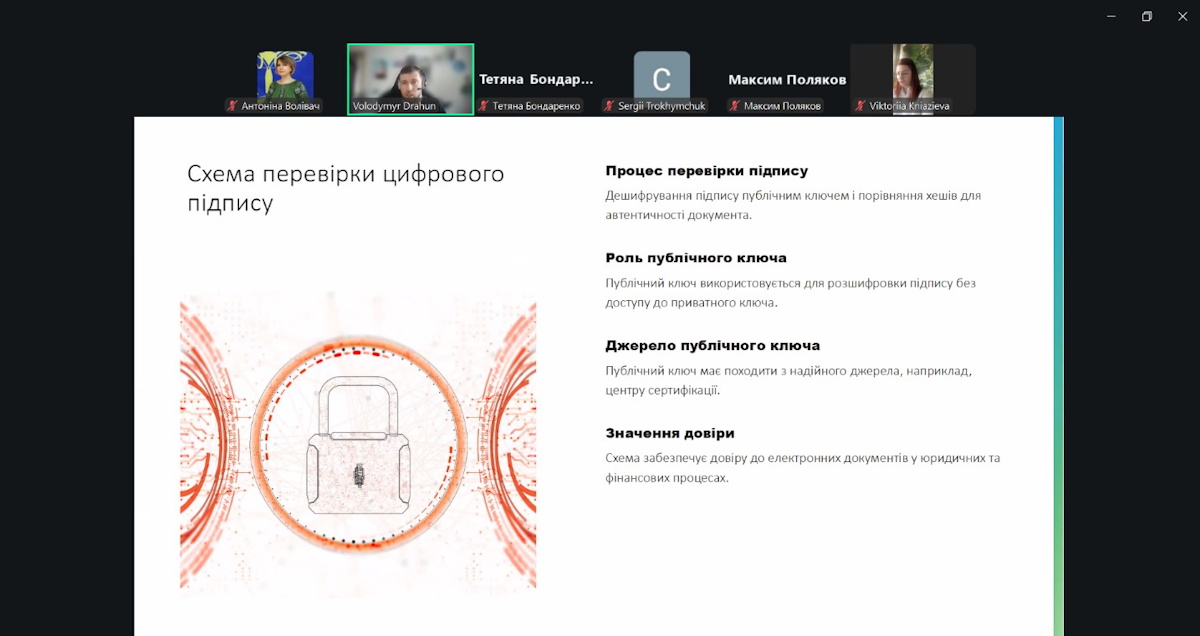
While discussing the digital signature verification process, the speaker demonstrated the principle of using a public key, recalculating the document’s hash value, and comparing the results. This mechanism makes it possible to verify that the signature matches the document and to detect any changes to its content that may have occurred after signing.
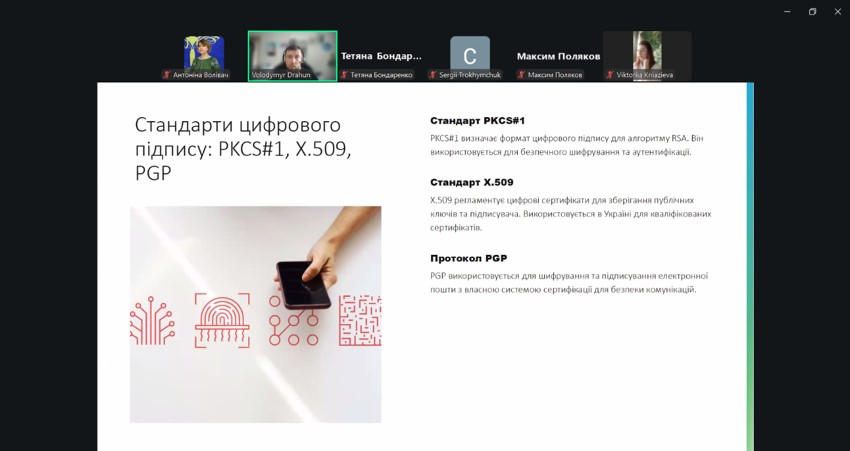
A separate section of the lecture was devoted to digital signature standards, including PKCS#1, X.509, and PGP. Participants learned about the purpose of these standards and technologies in implementing cryptographic protection, generating digital certificates, and ensuring the secure exchange of electronic documents.
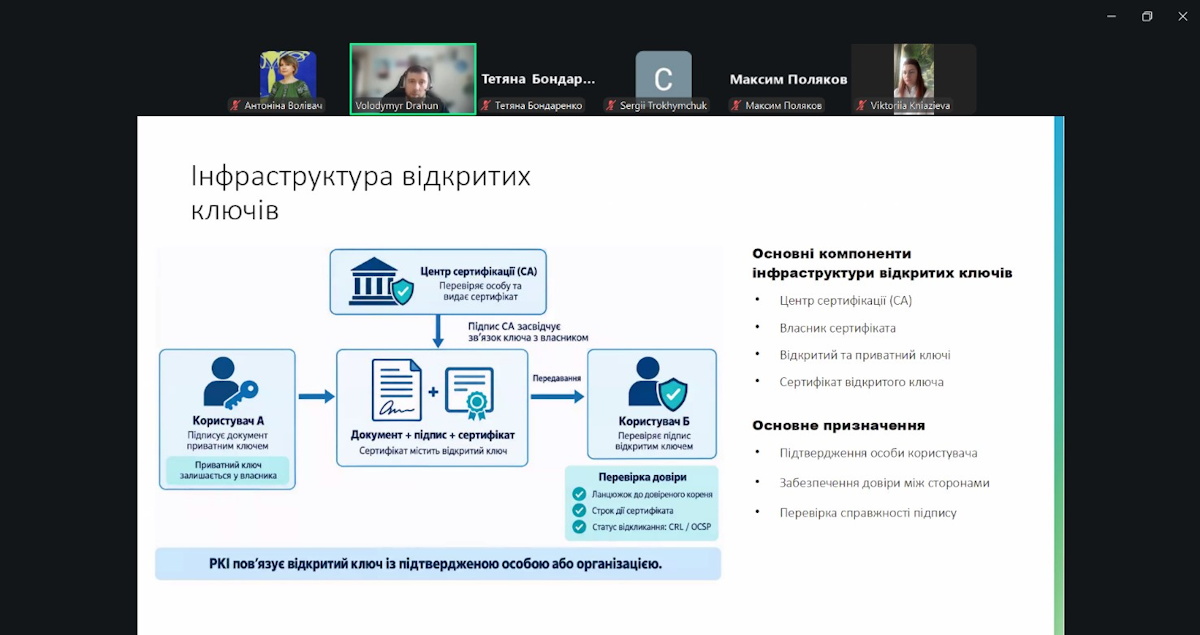
A key topic of the lecture was public key infrastructure (PKI). Using a block diagram as an example, the speaker explained the principles governing the interaction between the user, the electronic document, and the certification authority (CA). The lecture covered the functions of a certification authority in verifying a user’s identity and issuing a digital certificate, as well as the role of the public key and certificate in establishing trust in a digital signature.
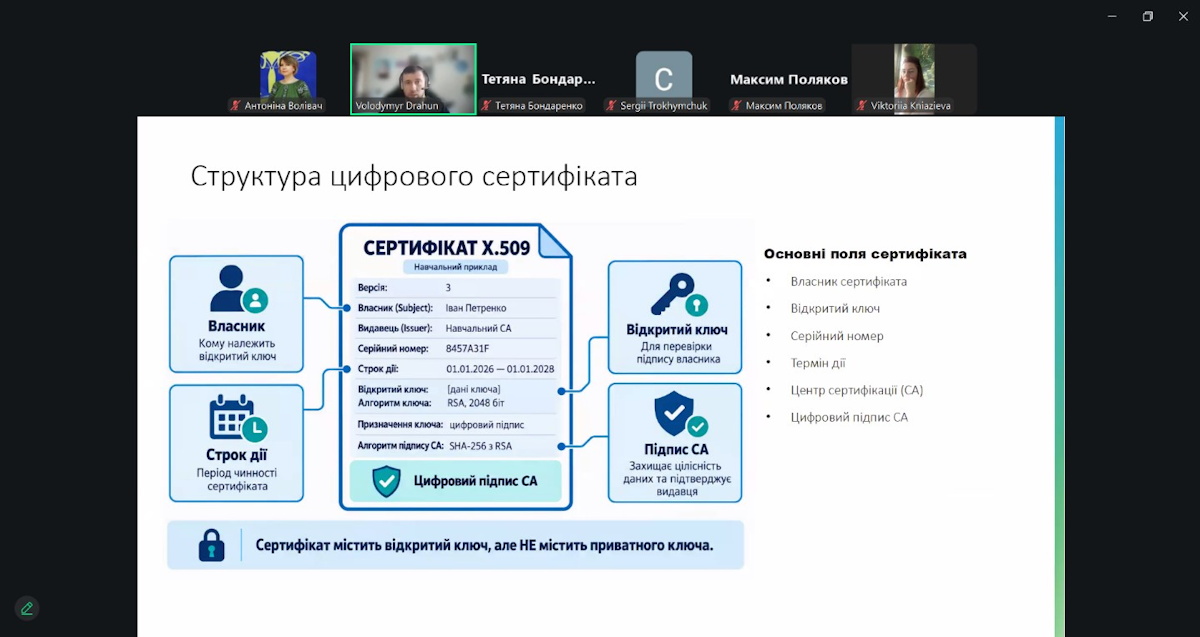
The participants also learned about the structure of an X.509 digital certificate. In particular, they examined its main information fields: certificate holder details, issuer information, serial number, validity period, public key, and the certification authority’s digital signature. It was specifically emphasized that a digital certificate confirms that the public key belongs to the respective holder but does not contain the private key.
In concluding the discussion of this topic, the speaker summarized the sequence of key steps in creating and verifying a digital signature from generating the document’s hash value and creating the signature using a private key to verifying it with a public key and comparing hash values to confirm the document’s integrity. Information on the standards, formats, and infrastructure required for the practical application of cryptographic mechanisms was also organized.
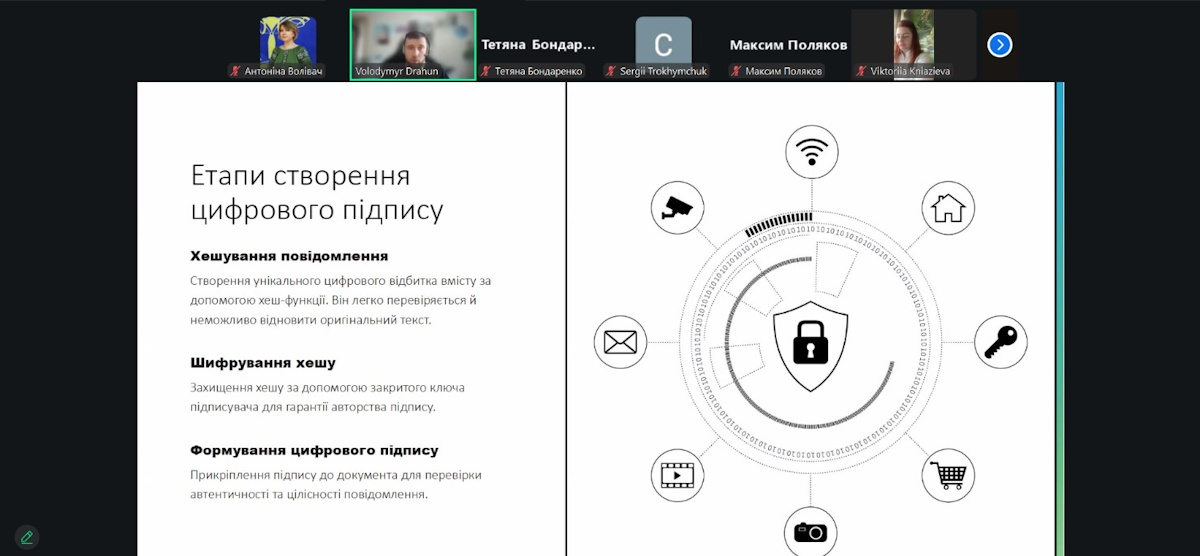
The lecture covered the key aspects of how digital signatures work, from their purpose and cryptographic principles to algorithms, digital certificates, and the public-key infrastructure.
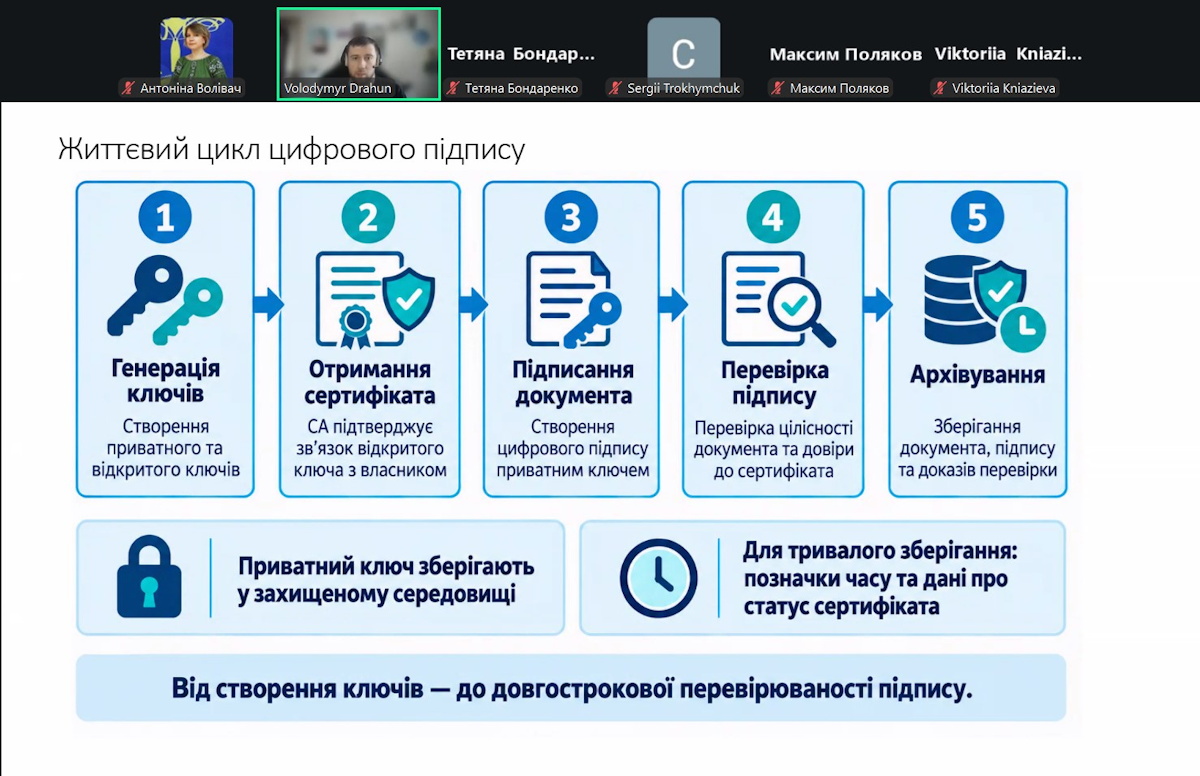
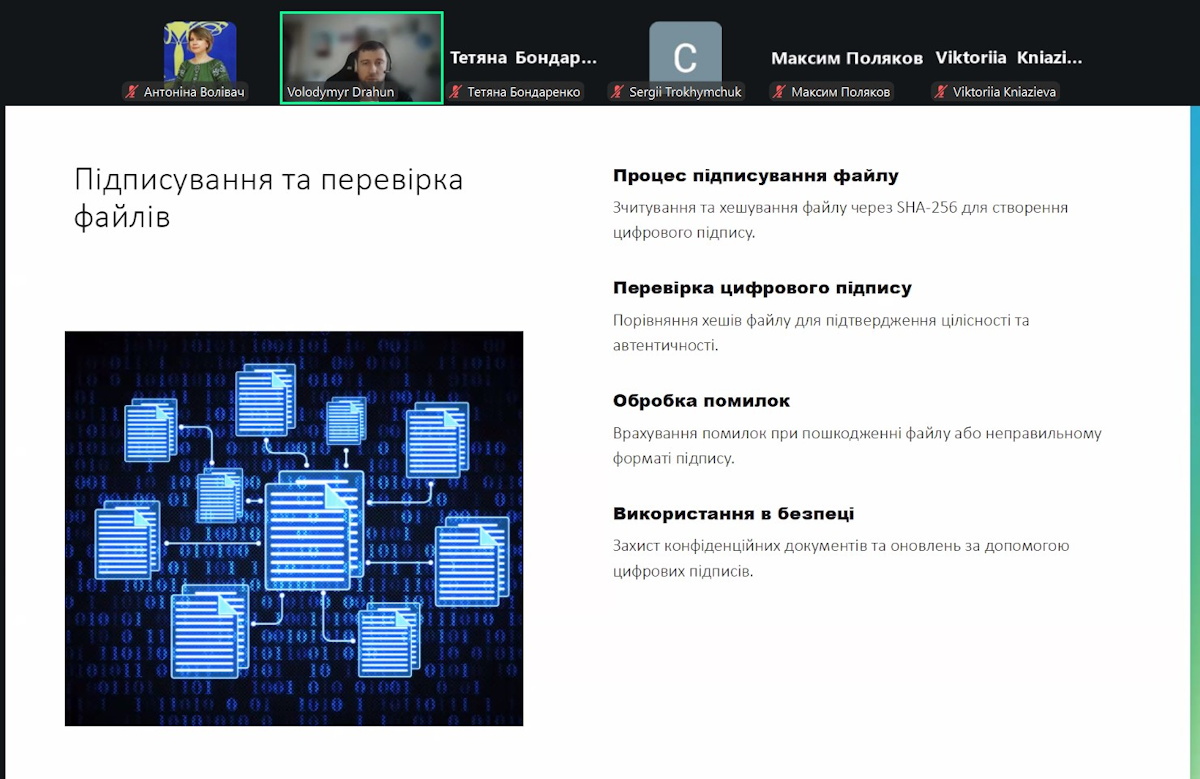
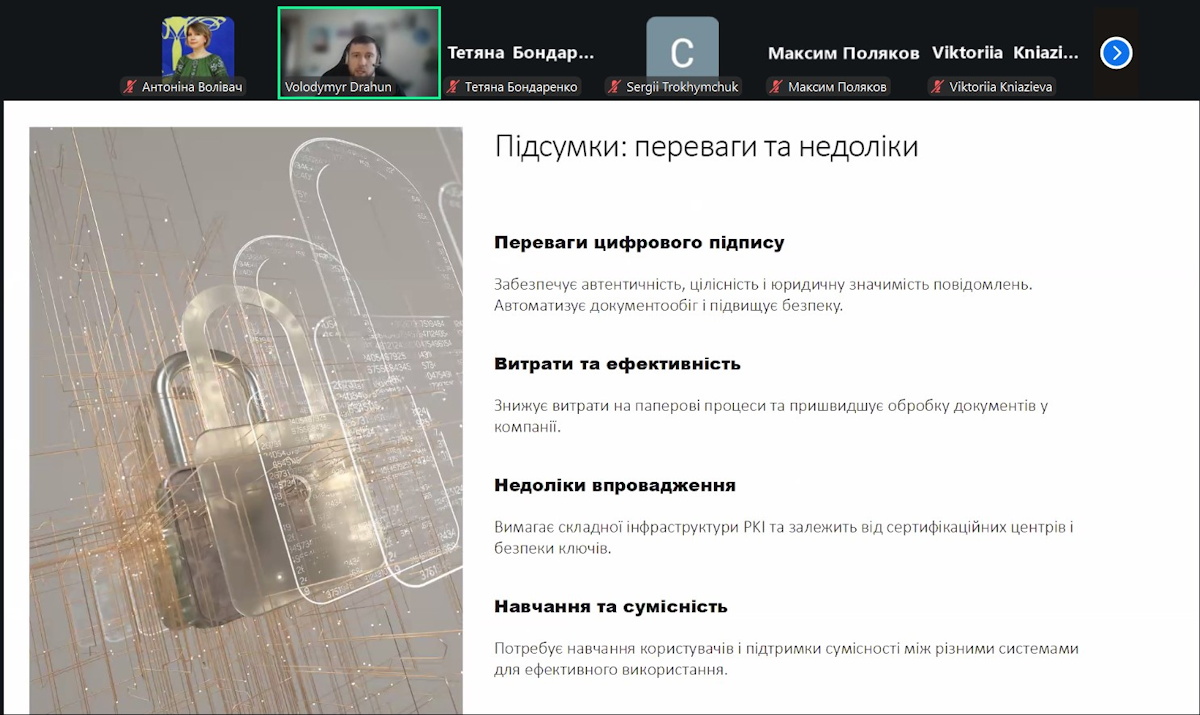
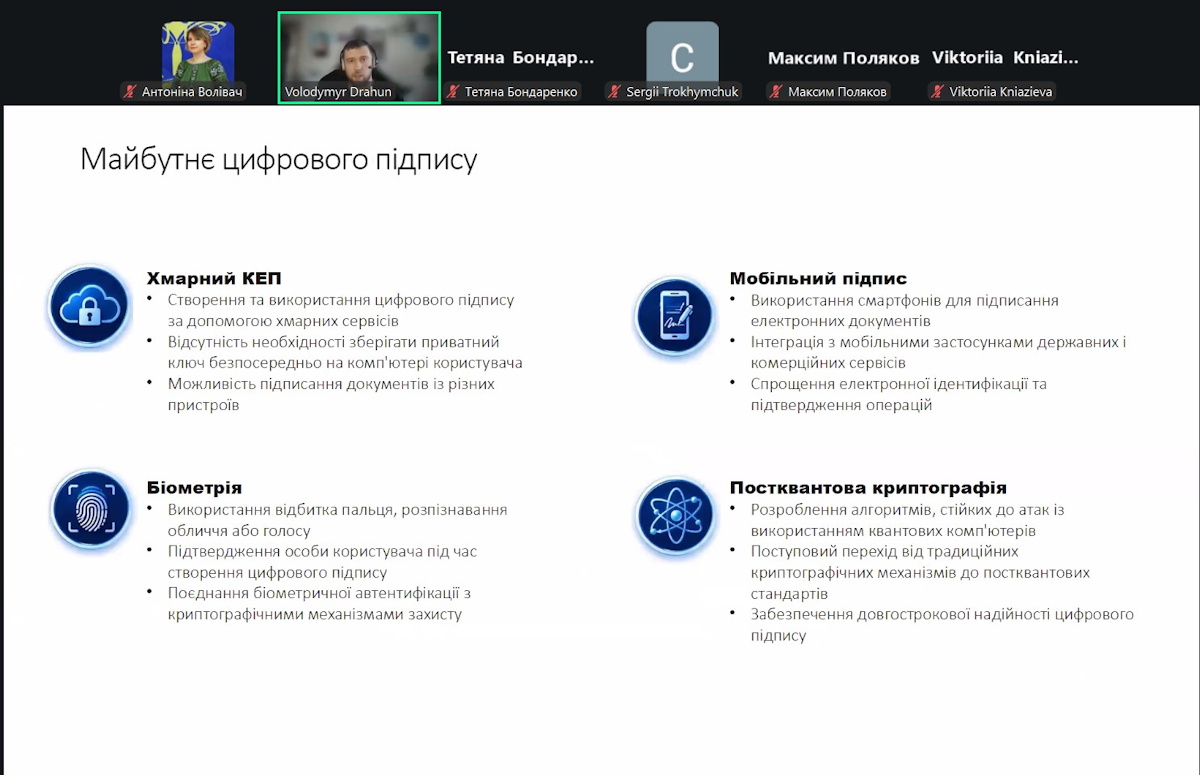
The issues discussed are directly related to the professional training of students pursuing the F2 “Software Engineering” and G7 “Automation, Computer-Integrated Technologies, and Robotics” majors. An understanding of cryptographic mechanisms, authentication principles, data integrity, and information security is a crucial component of the professional competencies of future specialists in the fields of secure software development, the implementation of digital services, and the operation of modern information and control systems.
Participation in the open lecture provided an opportunity for faculty members and students of the Department of Information and Computer Technologies to deepen their professional knowledge, learn about the latest technological solutions, and take part in an interuniversity exchange of experiences.
The Department of Information and Computer Technologies at KNUTD would like to express its sincere gratitude to the organizers for the opportunity to participate in this informative and timely educational initiative, to moderator Tetiana BONDARENKO for organizing and facilitating the meeting, and to speaker Volodymyr DRAGUN for his informative lecture, his clear explanation of complex cryptographic mechanisms, and the opportunity to learn about practical experiences in their application.
Thank you for the opportunity to participate in modern educational initiatives that promote professional development, expand digital competencies, and strengthen cooperation among universities!
19.11.2026