
WORK OF THE DEPARTMENT OF PHILOLOGY AND TRANSLATION'S STUDENT ACADEMIC CLUBS “LANGUAGE AND FAKE NEWS: HOW TO RECOGNIZE MANIPULATION”
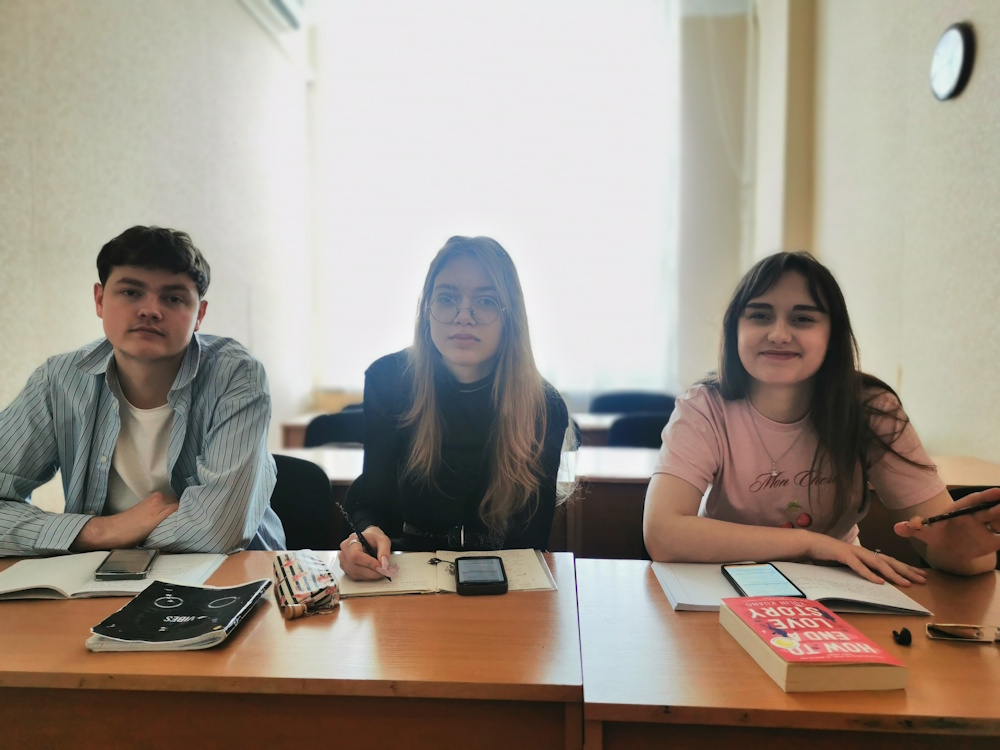
On May 8, 2026, a meeting of the student academic club “School of Young Linguists” took place at the Department of Philology and Translation. The meeting was devoted to the topic “Language and Fake News: How to Recognize Manipulation.”
The meeting was opened by the head of the club, Associate Professor Maryna Vyshnevska, who emphasized the relevance of studying linguistic mechanisms of manipulation in the contemporary information space. It was noted that language in media and social networks functions not only as a means of transmitting information but also as a tool for shaping public opinion, influencing emotions, evaluations, and audience behavior. Particular attention was paid to the role of critical thinking and linguistic competence in recognizing disinformation, manipulative messages, and fake news.
Students of groups BAM-23, BAM-24, and BMR1-25 actively discussed the topic, focusing on the following aspects:
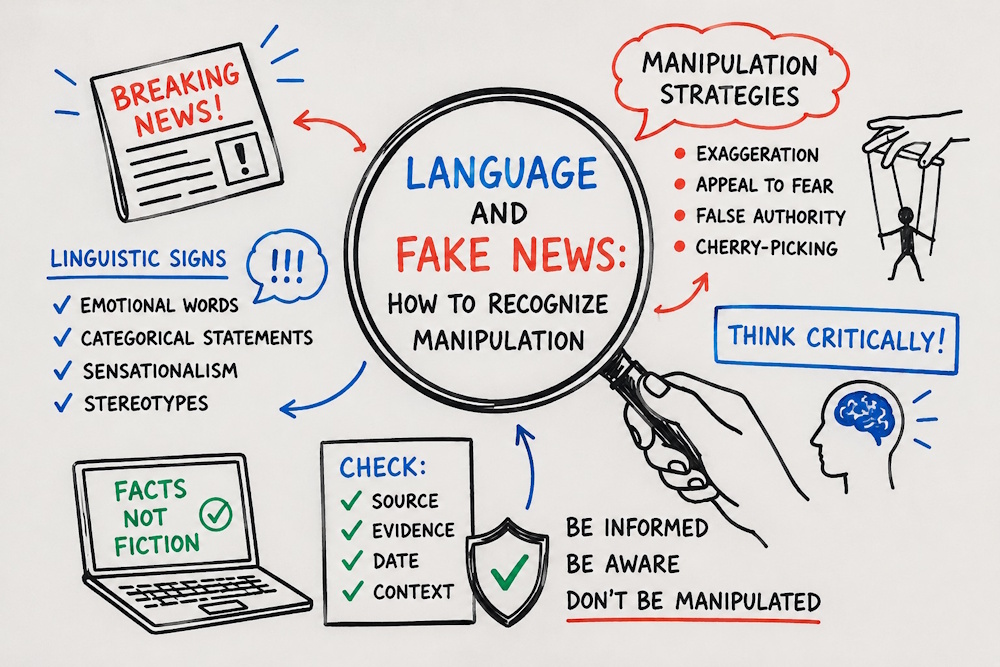
• linguistic features of fake messages, including emotionally colored vocabulary, categorical statements, sensationalism, and the use of stereotypes;
• manipulative strategies in media discourse and social networks;
• the influence of headlines, visual content, and repetitive linguistic patterns on information perception;
• the role of fact-checking, critical source analysis, and digital literacy in counteracting disinformation.
The participants analyzed examples from social media posts, news resources, and advertising messages in Ukrainian and English, identifying linguistic means of influencing audiences. Special consideration was given to the use of emotional triggers, manipulation through fear and authority, as well as the spread of fake news during periods of social instability.
The discussion demonstrated that the study of linguistic aspects of manipulation is an important area of contemporary linguistics and media communication. The meeting was held in an atmosphere of active and thoughtful academic discussion and demonstrated a high level of student engagement with the issues of information security, critical thinking, and responsible media consumption.
08.05.2026