
WORK OF THE DEPARTMENT OF PHILOLOGY AND TRANSLATION’S STUDENT ACADEMIC CLUBS “THE LANGUAGE OF SOCIAL MEDIA: FROM POSTS TO SHORT-FORM VIDEOS”
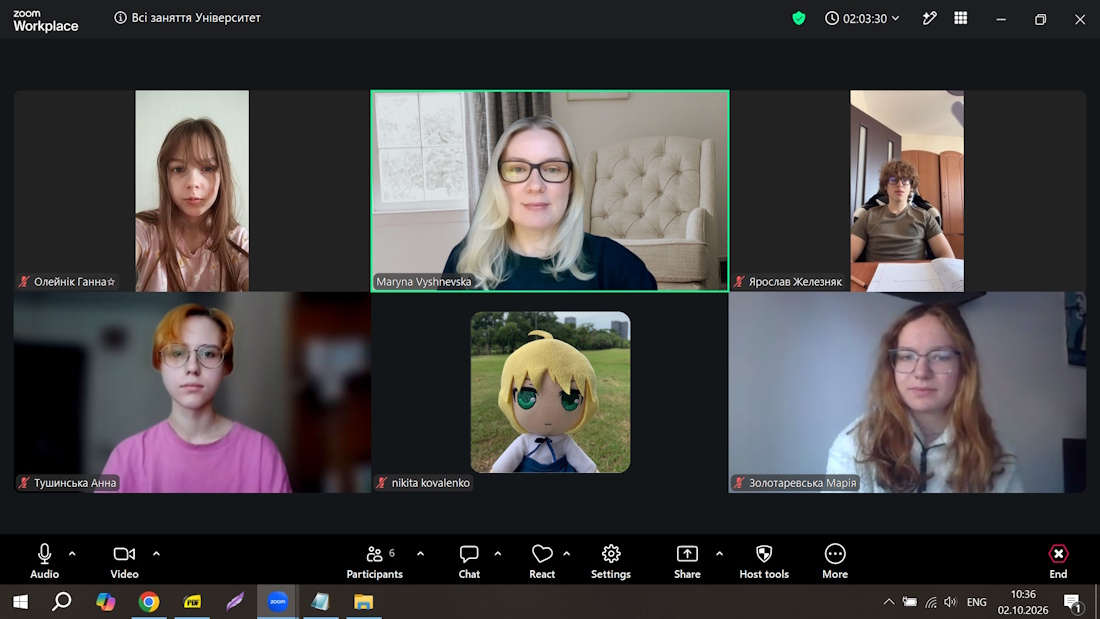
On October 2, 2026, the Department of Philology and Translation held a meeting of the “School of Young Linguists” student academic club. The meeting was dedicated to the topic: “The Language of Social Media: From Posts to Short-Form Videos.”
The meeting was opened by the club’s supervisor, Associate Professor Maryna Vyshnevska, who emphasised that social media has become one of the most dynamic environments for the development of contemporary language. The evolution of digital formats – from extended written posts to short-form videos – affects how messages are constructed, which linguistic means are selected, and how users interact with their audiences.
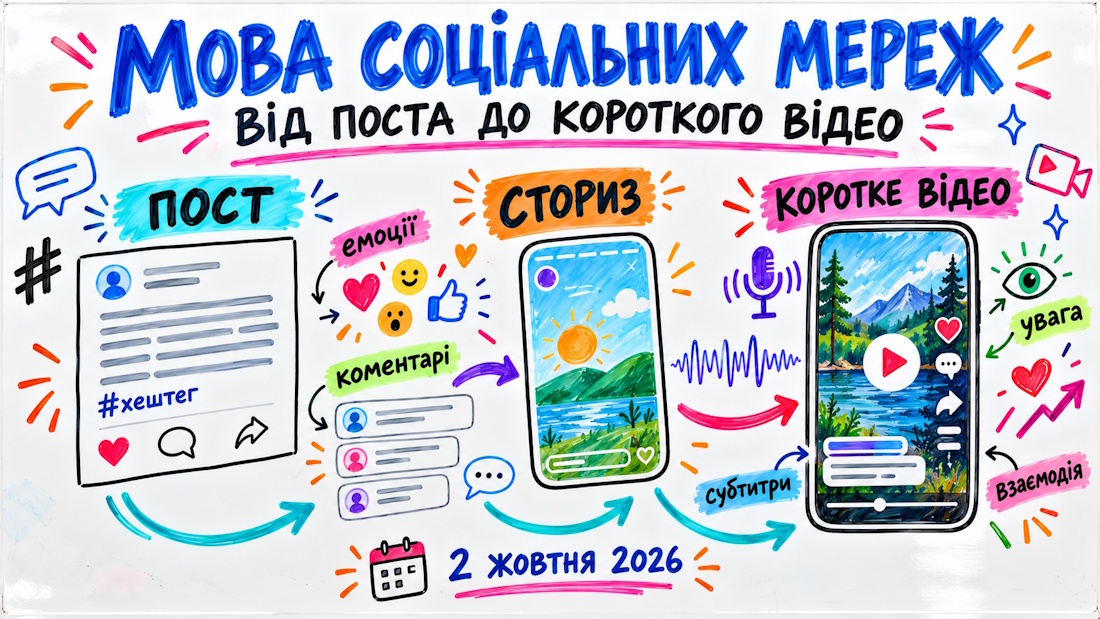
The participants discussed the language features of posts, comments, stories, and short-form videos on social media. Particular attention was paid to the following aspects:
- the lexical, grammatical, and stylistic features of digital communication;
- the brevity, emotional expressiveness, and conversational nature of online messages;
- the use of slang, neologisms, Anglicisms, abbreviations, hashtags, and emojis;
- the role of headlines, opening phrases, and verbal “hooks” in attracting the audience’s attention;
- the combination of spoken language, written text, music, and visual content in short-form videos;
- the influence of social media algorithms on the form, subject matter, and style of content;
- issues of language culture, information accuracy, and authorial responsibility.
During the practical part of the meeting, the participants analysed examples of social media posts and scripts for short-form videos, identified techniques used to attract and maintain attention, and compared different ways of presenting the same message across digital formats. The students also transformed an extended written post into a short video script by selecting concise wording, an engaging opening, and a clear call to action.
The participants concluded that the language of social media is characterised by dynamism, multimodality, and continuous adaptation to new communication formats. The transition from written posts to short-form videos does not mean that text is disappearing: language continues to play an important role in headlines, subtitles, captions, and scripts, but it is becoming more concise, expressive, and oriented towards an immediate audience response.
The meeting took place in an atmosphere of active discussion and contributed to a deeper understanding of current trends in digital communication. The participants noted that the critical analysis of social media language is an important component of the professional training of contemporary philologists and translators.
02.10.2026