
WORK OF THE DEPARTMENT OF PHILOLOGY AND TRANSLATION’S STUDENT ACADEMIC CLUBS “ARTIFICIAL INTELLIGENCE AS AN AUTHOR AND CONVERSATIONAL PARTNER: LINGUISTIC FEATURES OF AI-GENERATED TEXTS”
On September 4, 2026, the Department of Philology and Translation held a meeting of the “School of Young Linguists” student academic club. The meeting was dedicated to the topic: “Artificial Intelligence as an Author and Conversational Partner: Linguistic Features of AI-Generated Texts.”
The meeting was opened by the club’s supervisor, Associate Professor Maryna Vyshnevska, who emphasized the relevance of studying AI-generated texts in view of the rapid expansion of generative technologies in professional, educational, and everyday communication.
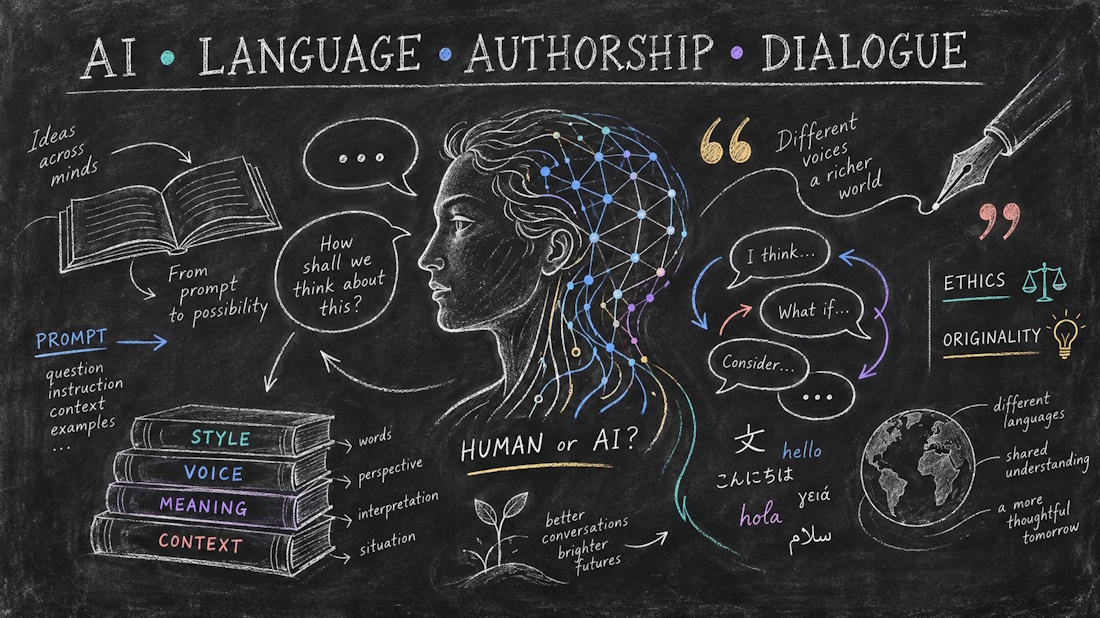
The participants discussed the distinctive features of using artificial intelligence as a tool for text generation and as a communication partner. Particular attention was paid to the following aspects:
- lexical, grammatical, and stylistic features of AI-generated texts;
- the ability of artificial intelligence to reproduce various genres, styles, and communicative roles;
- linguistic features that may help identify a text generated by artificial intelligence;
- issues of authorship, originality, and academic integrity;
- the advantages and risks of using generative artificial intelligence in the professional activities of philologists and translators.
During the practical part of the meeting, the participants compared human-written and AI-generated texts, analysing their structure, vocabulary, coherence, and stylistic naturalness. Particular attention was also given to the extent to which AI can convincingly imitate an author’s individual style and maintain a dialogue in accordance with a given context.
The participants concluded that AI-generated texts can be grammatically correct, well-structured, and stylistically adapted. However, they are often characterised by formulaic language, excessive generalisation, and the absence of an author’s genuine personal experience. The use of artificial intelligence requires critical evaluation of AI-generated content, fact-checking, and adherence to the principles of academic integrity.
The meeting took place in an atmosphere of engaged discussion and contributed to a deeper understanding of the transformations that contemporary language, authorship, and communication are undergoing under the influence of generative artificial intelligence.

04.09.2026