WORK OF THE DEPARTMENT OF PHILOLOGY AND TRANSLATION’S STUDENT ACADEMIC CLUBS “THE LANGUAGE OF WAR: NAMING PRACTICES, METAPHORS AND EUPHEMISMS IN CONTEMPORARY MEDIA DISCOURSE”
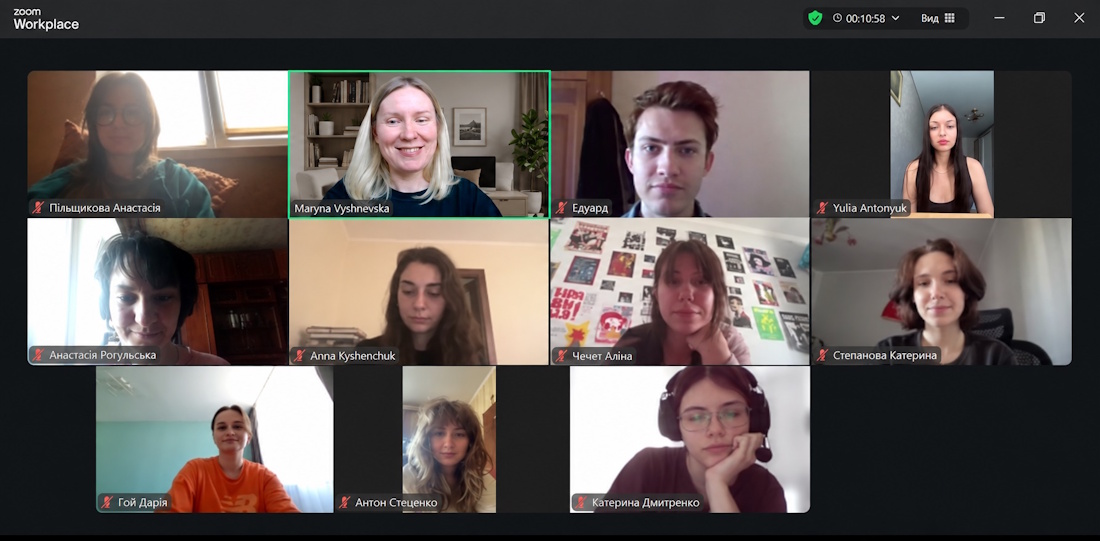
On October 16, 2026, the Department of Philology and Translation held a meeting of the “School of Young Linguists” student academic club. The meeting was dedicated to the topic: “The Language of War: Naming Practices, Metaphors and Euphemisms in Contemporary Media Discourse.”
The meeting was opened by the club’s supervisor, Associate Professor Maryna Vyshnevska, who emphasised that, in times of war, language not only describes events but also shapes their public perception. The choice of words in a media report can determine the audience’s attitude towards the participants and consequences of military actions, intensify the emotional impact of a text or, conversely, conceal responsibility and distort reality.
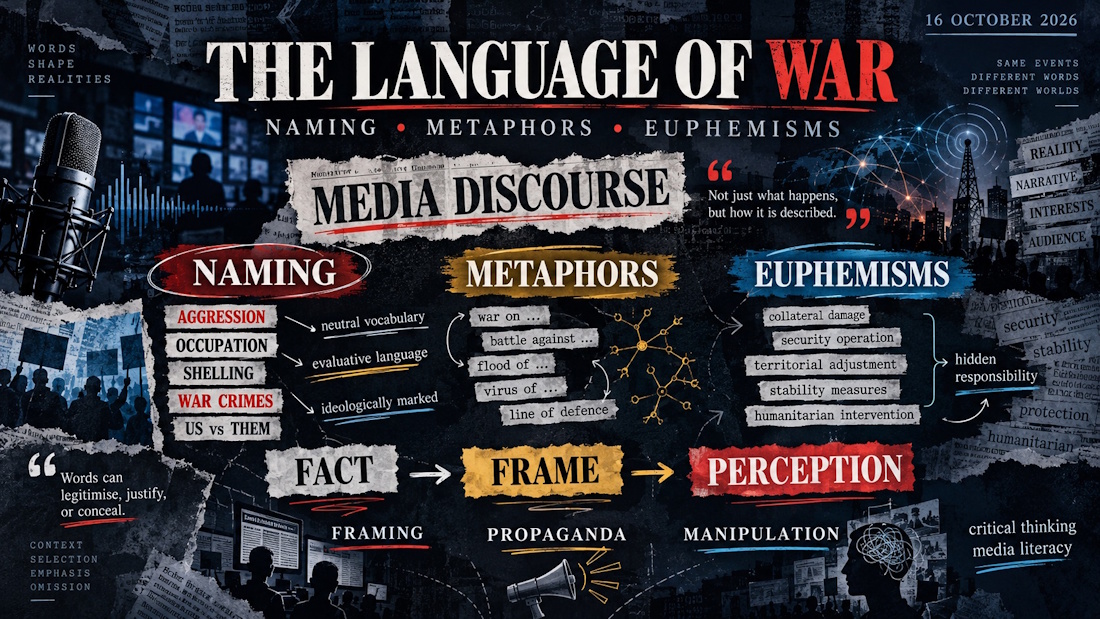
The participants examined the principal linguistic means used to represent war in contemporary Ukrainian and international media. Particular attention was paid to the following aspects:
- the terms used to refer to participants in the war, military events and temporarily occupied territories;
- the differences between neutral, evaluative and ideologically marked vocabulary;
- the metaphorical representation of war in headlines, news reports and opinion journalism;
- the use of euphemisms to soften, conceal or justify military actions;
- the role of vocabulary in constructing images of “us” and “them”;
- the influence of propaganda and manipulative language strategies on the perception of information;
- issues of accuracy, ethics and responsibility in journalistic language.
During the practical part of the meeting, the participants analysed excerpts from media texts, compared different ways of naming the same events and determined how changing particular words affected the interpretation of a message. The students identified metaphors, euphemisms and evaluative naming practices in headlines and news reports and distinguished factual reporting from linguistic manipulation.
Particular attention was given to euphemisation as one of the most dangerous instruments of propaganda. The participants noted that replacing precise references to aggression, occupation, shelling and war crimes with neutral or vague expressions can minimise the scale of events, obscure cause-and-effect relationships and remove responsibility from those who carry out these actions.
The participants concluded that a critical understanding of media messages requires an analysis not only of their content but also of their linguistic form. Naming practices, metaphors and euphemisms are important means of constructing the media representation of war; therefore, recognising them helps readers resist disinformation and linguistic manipulation.
The meeting took place in an atmosphere of active and meaningful discussion and contributed to the development of the students’ media literacy and critical thinking. The participants noted that a responsible attitude towards language is particularly important for future philologists and translators who will work with information in the context of war and wider social challenges.
16.10.2026