
MODERN INFORMATION TECHNOLOGIES IN PRACTICE: DEVELOPMENT OF AN EDUCATIONAL AND RESEARCH WEATHER STATION TESTBENCH
On September 7, 2026, as part of the activities of the "Modern Information Technologies" research group at the Department of Information and Computer Technologies of the Kyiv National University of Technologies and Design, students under the academic supervision of Department Head Vladyslava Skidan and Senior Lecturer Vladyslav Pylypenko participated in an innovative, practice-oriented project focused on developing the hardware component for an automated weather station research and training testbed. The project involves the creation of an integrated hardware-software system for the automated collection, transmission, processing, and visualization of meteorological data, utilizing modern microcontroller technologies, sensor modules, digital interfaces, and wireless communication tools. This initiative is aimed at developing students' research and practical competencies, fostering skills in the design and integration of hardware-software systems, and incorporating the outcomes of students' scientific and technical creative work into the educational process.
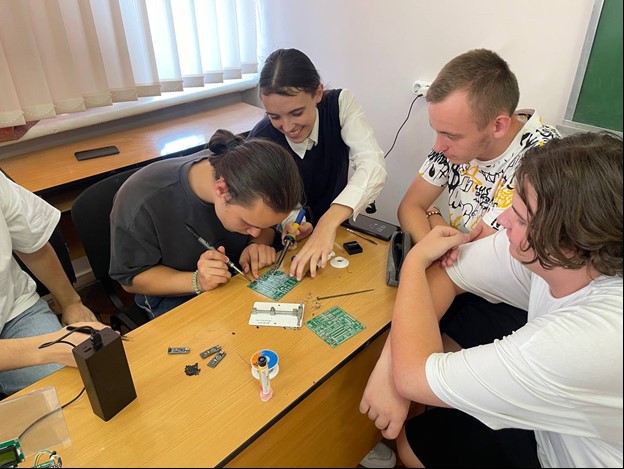
The primary objective of the practical phase was the fabrication and initial testing of an electronic circuit board, which will subsequently serve as the central component of the data collection and transmission system. During this process, the club members independently handled the assembly and soldering of electronic components, connected the microcontroller and auxiliary modules, verified electrical connections, and tested the functionality of the hardware platform.
Particular attention was paid to the integration of hardware components with software, specifically the organization of data exchange between the microcontroller and a personal computer via a USB interface, as well as the provision of wireless communication capabilities using a Bluetooth module. This approach establishes a technological foundation for the further development of embedded software, the implementation of algorithms for processing sensor data, and the creation of user interfaces for interaction with the information system.
An important outcome of the work was the development of practical competencies in circuit design, microcontroller programming, hardware-software integration, and the testing of electronic devices. During the project, the participants gained experience in executing the sequential stages of developing a technical solution—from mounting electronic components and verifying the functionality of the hardware platform to preparing it for subsequent software integration.
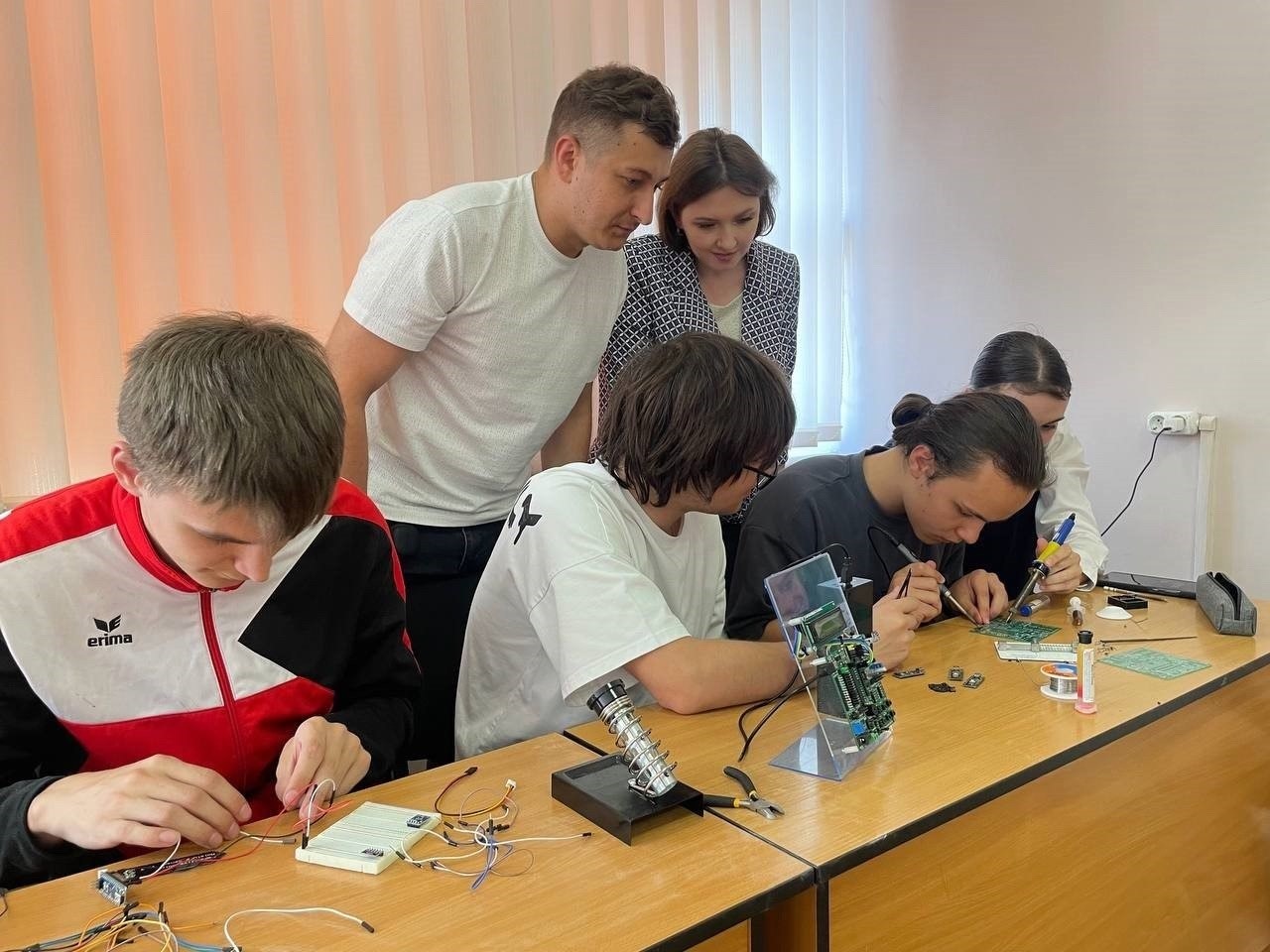
The next stage of the project involves the creation of a fully functional research and educational weather station testbed, equipped with sensors for temperature, relative humidity, and atmospheric pressure. Plans include implementing software mechanisms for acquiring and transmitting measurement data, performing initial data processing, storing the data, and visualizing it through graphs, digital indicators, and dashboards. The development of a software application for monitoring meteorological parameters via a personal computer or mobile device is also envisioned.
The creation of such a system opens up opportunities for exploring Internet of Things (IoT) technologies, embedded systems, wireless communications, automated data collection, and intelligent data analysis. In the future, this educational platform can be utilized for laboratory exercises, student research projects, software application development, and experimental studies in the fields of information technology and automation.
The implementation of this project serves as an example of effectively combining the research activities of higher education students with the practical application of modern information technologies. Participation in such initiatives fosters the development of engineering thinking, research skills, and the ability to solve complex applied technical problems; it also facilitates the formation of interdisciplinary competencies at the intersection of electronics, software engineering, and intelligent information systems.
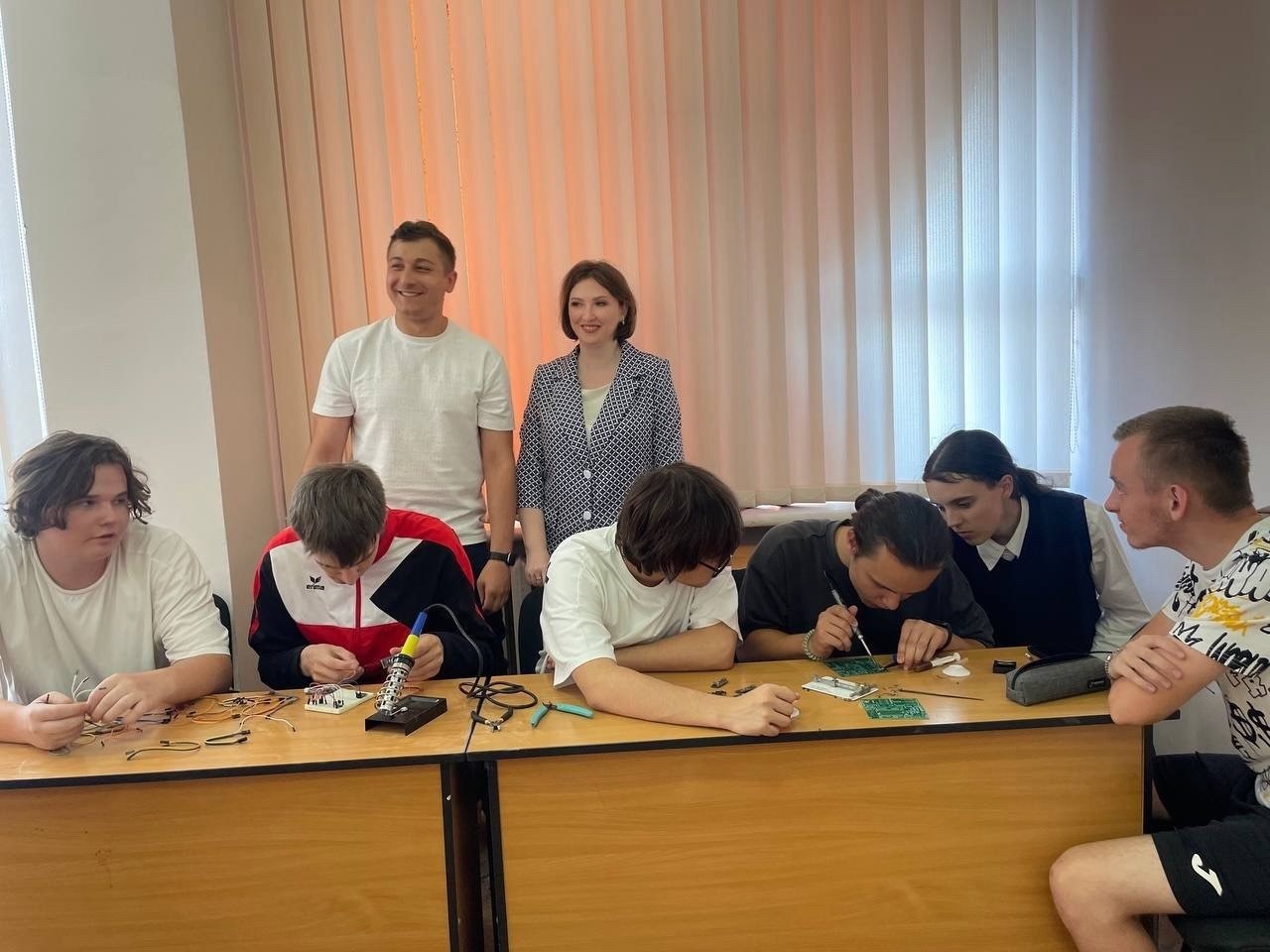
The activities of the "Modern Information Technologies" research group are aimed at engaging students in scientific and technical creative work, developing the innovative potential of the student body, and creating conditions for the practical implementation of their own technological ideas. Such projects contribute to enhancing the practical training of future IT professionals and integrating the results of student research into the educational process.
26.10.2026