
THE SCIENTIFIC CLUB MEETING – “FROM UNIVERSITY TO WORKPLACE: COMMUNICATION SKILLS FOR A SUCCESSFUL CAREER”
On 5 November 2026, the Department of Philology and Translation of the Faculty of Arts and Creative Industries at KNUTD held another meeting of the scientific club “Vocational Education and Foreign Language Communication”, dedicated to the topic “From University to Workplace: Communication Skills for a Successful Career”.
The head of the scientific club, Associate Professor Kseniia Kugai, invited students to reflect on how well university education prepares them for real-life professional communication. Answering lecturers’ questions, giving presentations, and working on collaborative projects provide valuable experience. However, communicating with employers, colleagues, or clients often requires different approaches.
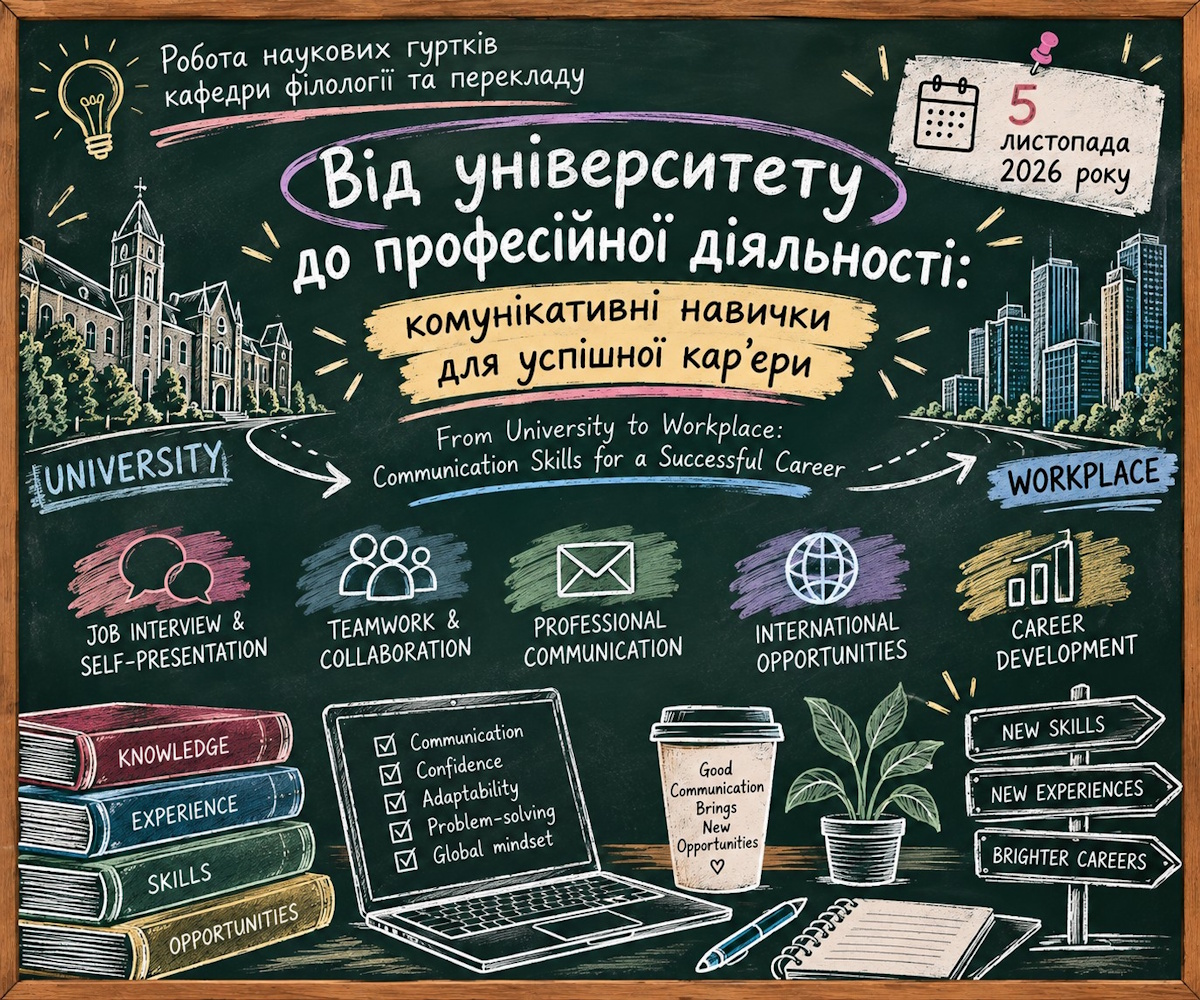
One of the main topics was the readiness of future professionals for their first job interview. Students focused on how to present their strengths, describe their academic experience and practical skills, and explain their interest in a particular position. Equally important were the abilities to ask relevant questions, listen attentively, and respond confidently to unexpected situations.
The discussion also covered everyday workplace communication, including discussing tasks with colleagues, participating in meetings, making suggestions, and responding constructively to feedback. Students compared different ways of phrasing messages and examined how tone, word choice, and sentence structure influence how a message is perceived.
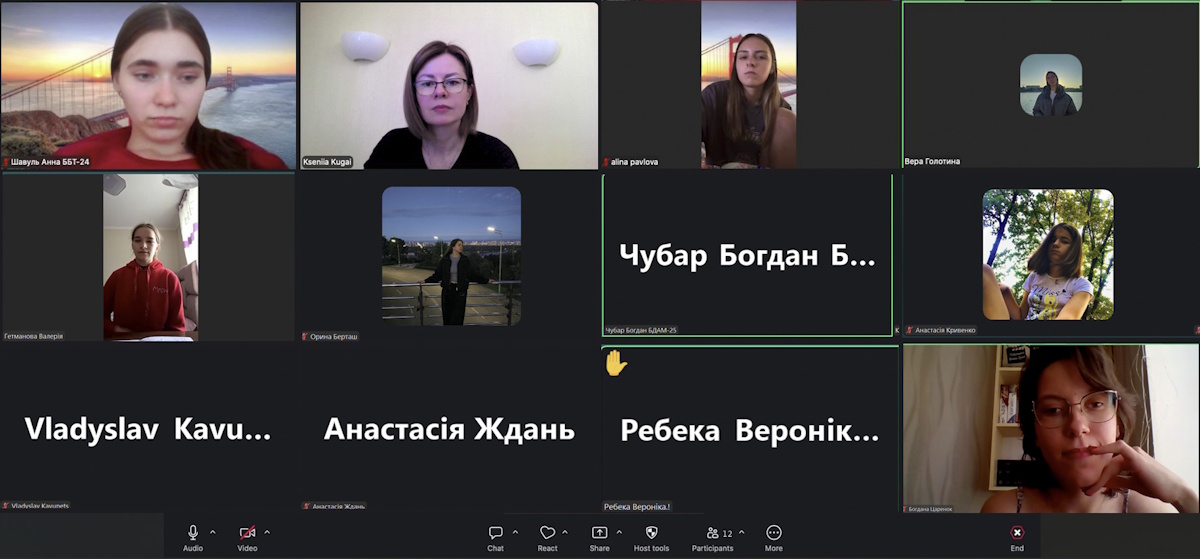
The practical part involved working with professional communication scenarios in English. Students took on the roles of job applicants and interviewers, prepared short self-presentations, and practised expressing opinions, agreeing or disagreeing politely, asking for clarification, and providing feedback. These activities allowed them to compare the language used in academic settings with that appropriate for professional communication.
Another aspect of the meeting was the use of English in an international workplace. While knowledge of professional terminology is undoubtedly important, effective interaction also requires an awareness of cultural differences, adherence to business etiquette, and the ability to adapt one's language to specific situations.
Towards the end of the meeting, students identified the communication skills they would like to improve before entering the workforce. These included communicating confidently in English, public speaking, engaging in professional discussions, supporting their opinions with arguments, and working effectively in a team.
The meeting encouraged students to view communication training not only as part of their university education but also as a practical tool they will need in their future careers.
05.11.2026