SUMMARY OF THE PESAB PROJECT RESULTS
ERASMUS-JMO-2023-HEI-TCH-RSCH, 101127252 – “Promoting European Skills and Approaches for a Sustainable Bioeconomy in the Context of Ukraine’s Acute Challenges” (PESAB)
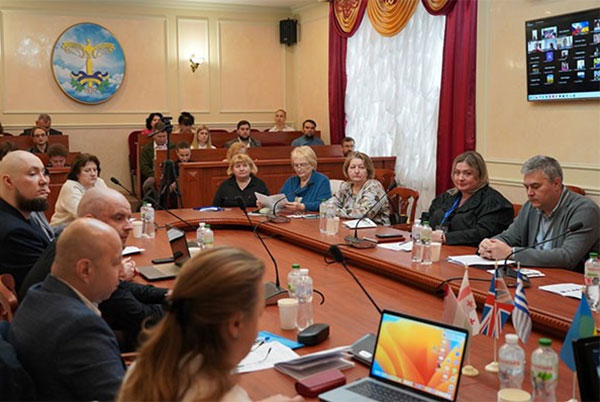
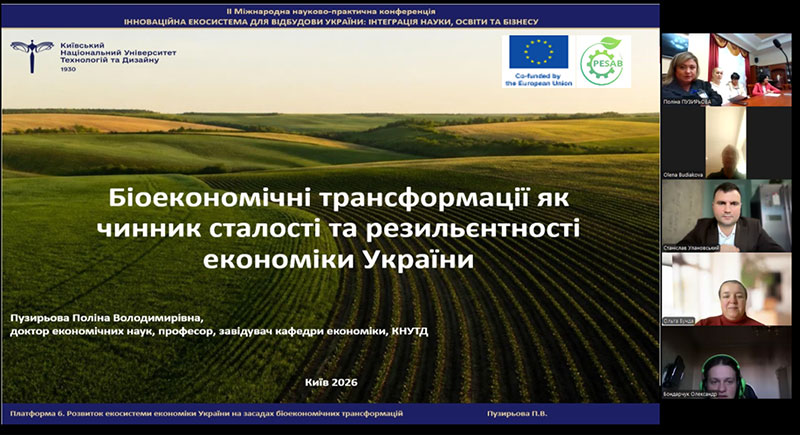
The ERASMUS-JMO-2023-HEI-TCH-RSCH Grant Project Team, 101127252 – “Promoting European Skills and Approaches for a Sustainable Bioeconomy in the Context of Ukraine’s Acute Challenges” (PESAB) held a final scientific and practical seminar to discuss the project’s results, involving representatives of students, experts, academic and teaching staff, scholars, young researchers, business representatives, civil society organizations, and representatives of state and municipal authorities.
The purpose of the scientific and practical seminar was to analyze and evaluate the results of the Erasmus+ Jean Monnet project.
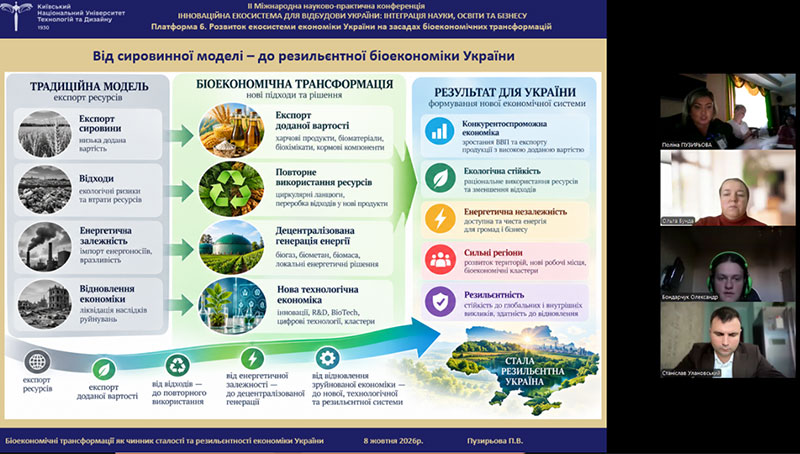
During the scientific and practical seminar, participants discussed the main results of the Erasmus+ Jean Monnet grant project (PESAB), focusing on the implementation of European approaches to the development of a sustainable bioeconomy, the promotion of sustainable development principles, and the development of relevant competencies among students, researchers, and business representatives.
Particular attention was paid to the practical significance of the results obtained, as well as the possibilities for integrating them into the educational process, research activities, and economic practice in the context of Ukraine’s current socioeconomic and environmental challenges. Seminar participants exchanged views on the prospects for using the developed teaching materials, fostering cross-sectoral cooperation, and further disseminating European experience in the field of sustainable bioeconomy.
The final scientific and practical seminar served as an important step in summarizing the results of the PESAB project, helped strengthen cooperation between the academic community, the business sector, civil society, and government agencies, and identified opportunities for the further use of the project’s results to support Ukraine’s sustainable development and European integration.
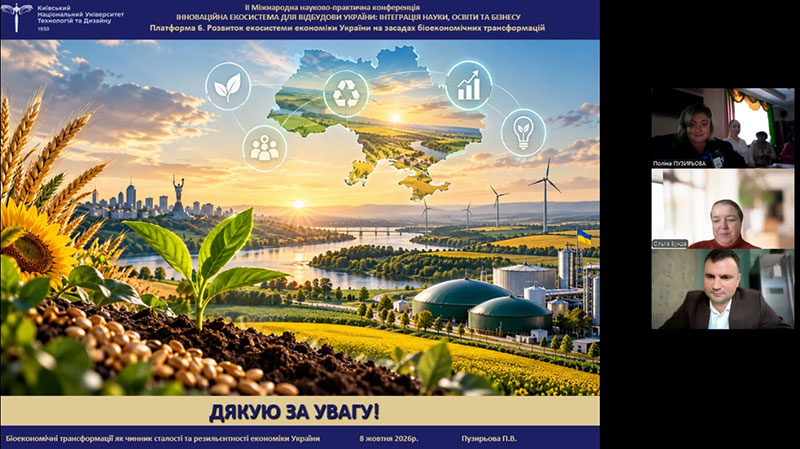
Regular quarterly and final reports on the project’s implementation were discussed.
1. The project’s results achieved PESAB’s objectives.
2. Presentation materials for the Grant Agreement, as well as a set of media and promotional materials, were prepared
https://en.knutd.edu.ua/grants/pesab/pesab-about/
A PESAB webpage was created on the university’s website.
https://en.knutd.edu.ua/grants/pesab/
https://knutd.edu.ua/grants/pesab/
PESAB social media accounts have been set up:
https://www.facebook.com/profile.php?id=61554709687162&locale=hu_HU
https://www.instagram.com/erasmus_pesab/
A kick-off meeting of the project organizers was held, along with a consultation with Erasmus+ representatives in Kyiv; 20 participants:
https://www.youtube.com/live/gfN6igvLqmo
3. Teaching and methodological materials were developed for Ukraine’s first module, “European Knowledge for the Sustainable Development of the Bioeconomy in Ukraine.”
A package of teaching and methodological materials, as well as online courses (videos + texts + assignments), was developed and made publicly available:
https://en.knutd.edu.ua/grants/pesab/ed-c/
https://knutd.edu.ua/grants/pesab/ed-c/
The “Teacher’s Handbook on Teaching Methods for Sustainable Bioeconomy” (ISBN 978-617-7763-66-5) has been prepared, printed, and made publicly available: https://er.knutd.edu.ua/handle/123456789/33540
An open-access electronic teaching manual for the module “European Knowledge for a Sustainable Bioeconomy” (ISBN 978-617-7763-31-3) has been prepared, printed, and made available online in accordance with European principles and values
https://drive.google.com/file/d/17vOpVsRVWxTVLZdB8EahPK58rEMbv2r6/view
The textbook “European Knowledge for a Sustainable Bioeconomy in Ukraine” includes teaching and learning materials for the corresponding courses (“Strategies of Sustainable Bioeconomy of the European Union,” “Biomass Use in the EU and Ukraine,” and “Bioeconomics and Trade in the Context of International Relations between Ukraine and the EU ”)
https://knutd.edu.ua/grants/pesab/ed-c/
Video lectures have been developed and posted on the YouTube channel:
1) Strategies of Sustainable Bioeconomy of the European Union.
URL: https://www.youtube.com/watch?v=6twzULixaNo
2) Sustainable biomass potentials of the EU and Ukraine. URL:
https://www.youtube.com/watch?v=Ib4mR7Ob-KA
3) Bioeconomics and trade in the context of international relations between Ukraine and the EU.
URL:https://www.youtube.com/watch?v=cvj5v-idcCg
Online presentations for each module (three) have been developed and made publicly available.
URL: https://knutd.edu.ua/grants/pesab/ed-c/.
An online survey and test have been developed and administered for each module:
MODULE 1. STRATEGIES OF SUSTAINABLE BIOECONOMY OF THE EUROPEAN UNION
MODULE 2. BIOMASS USE IN THE EU AND UKRAINE
MODULE 3. BIOECONOMICS AND TRADE IN THE CONTEXT OF INTERNATIONAL RELATIONS BETWEEN UKRAINE AND THE EU
The educational module “European Knowledge for a Sustainable Bioeconomy” was developed and implemented in educational activities; over 1,000 students completed the module between 2024 and 2026, and the program is scheduled to continue in the future.
4. Certified training sessions for teachers on teaching methods for the sustainable bioeconomy as a tool for dissemination were prepared and conducted.
https://drive.google.com/file/d/1VASMIqYZKUkKx5Jfgi8ntG8-gPfE12a7/view
5. A short-term course titled “Sustainable Development and the Bioeconomy in Ukraine and the European Union” was held for college students and vocational school students.
https://knutd.edu.ua/grants/pesab/
6. Research was conducted in the field of sustainable bioeconomy based on an interdisciplinary approach:
https://en.knutd.edu.ua/grants/pesab/publications/
A monograph and three scientific articles included in the Scopus scientometric database were published, along with nine articles in Ukrainian professional journals:
https://knutd.edu.ua/grants/pesab/publications/
Monograph “Green Transformation and Sustainable Bioeconomy,” 496 pp. ISBN 978-617-7763-34-4
https://er.knutd.edu.ua/bitstream/123456789/27008/1/ZTSB_mono_2024.pdf
Chapter in a monograph published in Poland:
https://er.knutd.edu.ua/handle/123456789/29361
7. Organized and conducted scientific conferences, roundtables, master classes, and scientific-practical seminars.
A package of media and promotional materials, as well as materials for roundtables, scientific, and practical seminars, was developed:
https://en.knutd.edu.ua/grants/pesab/pesab-comanda/
8. As a result of project monitoring—including initial, interim, and final surveys; a final self-assessment; messages from the discussion chat; self-analysis; the results of analyzing questions after each course; feedback; and mutual communication among participants via the university website and social media—a Final Report was compiled.
Evaluation of the PESAB Project
1) Initial evaluation of the PESAB project “Promoting European Skills and Approaches for a Sustainable Bioeconomy in the Context of Ukraine’s Current Challenges”
https://docs.google.com/forms/d/e/1FAIpQLScVGJt43O98k9chJT0cUqtrajE-N6G7YFYz7Piye7R1UWPMEA/viewform
2) Ongoing monitoring of the implementation of the PESAB project “Promoting of European skills and approaches for sustainable bioeconomy in the conditions of Ukrainian acute challenges” (for teaching and academic staff)
https://docs.google.com/forms/d/e/1FAIpQLSfpPVlKYFcGNj8qBvRD-BHPRUgSKV4MdWhVHn8Z7KQBynpvfg/viewform
3) Final evaluation of the PESAB project “Promoting of European skills and approaches for sustainable bioeconomy in the conditions of Ukrainian acute challenges” and its outcomes (for teaching and academic staff)
https://docs.google.com/forms/d/e/1FAIpQLSdsSN7zdWiEGKmXfRy_310Rw4m81cUbC0vKFUELA3Z4BYGWuA/viewform
Survey for Students:
MODULE 1. STRATEGIES OF SUSTAINABLE BIOECONOMY OF THE EUROPEAN UNION
MODULE 2. BIOMASS USE IN THE EU AND UKRAINE
MODULE 3. BIOECONOMICS AND TRADE IN THE CONTEXT OF INTERNATIONAL RELATIONS BETWEEN UKRAINE AND THE EU
24.11.2026