SUMMARY OF THE PESAB PROJECT RESULTS
ERASMUS-JMO-2023-HEI-TCH-RSCH, 101127252 – “Promoting European Skills and Approaches for a Sustainable Bioeconomy in the Context of Ukraine’s Acute Challenges” (PESAB)
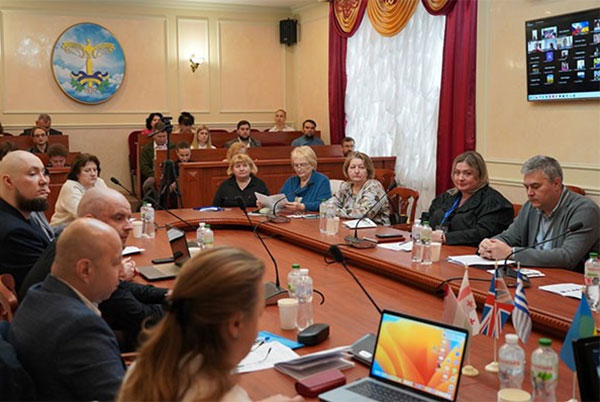
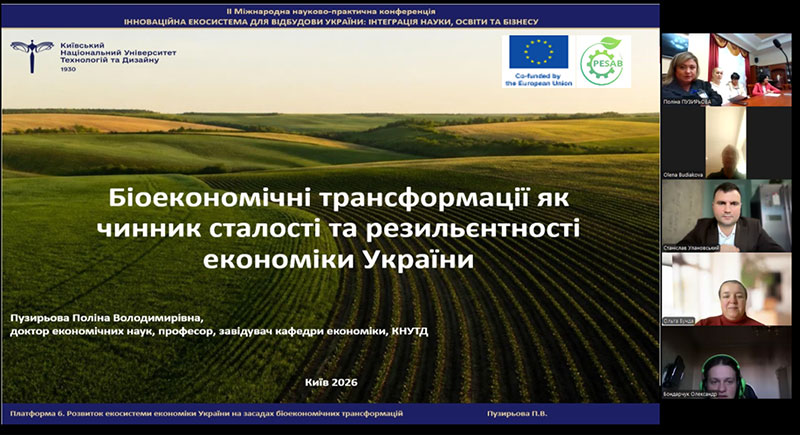
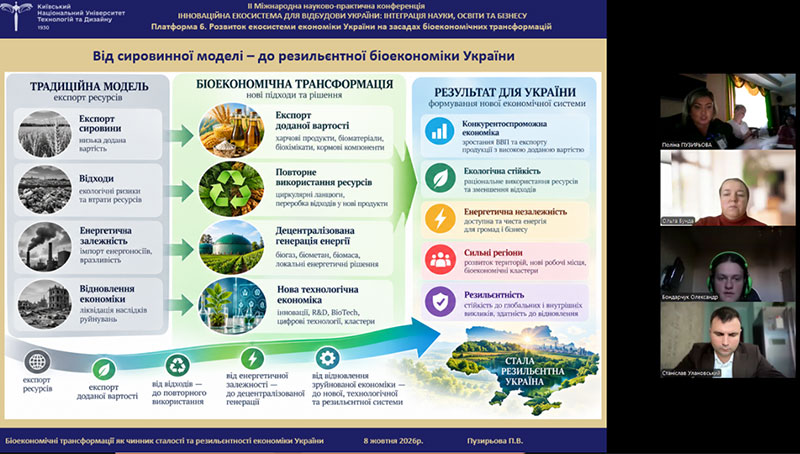
The ERASMUS-JMO-2023-HEI-TCH-RSCH Grant Project Team, 101127252 – “Promoting European Skills and Approaches for a Sustainable Bioeconomy in the Context of Ukraine’s Acute Challenges” (PESAB) held a final scientific and practical seminar to discuss the project’s results, involving representatives of students, experts, academic and teaching staff, scholars, young researchers, business representatives, civil society organizations, and representatives of state and municipal authorities.
The purpose of the scientific and practical seminar was to analyze and evaluate the results of the Erasmus+ Jean Monnet project.
During the scientific and practical seminar, participants discussed the main results of the Erasmus+ Jean Monnet grant project (PESAB), focusing on the implementation of European approaches to the development of a sustainable bioeconomy, the promotion of sustainable development principles, and the development of relevant competencies among students, researchers, and business representatives.
Particular attention was paid to the practical significance of the results obtained, as well as the possibilities for integrating them into the educational process, research activities, and economic practice in the context of Ukraine’s current socioeconomic and environmental challenges. Seminar participants exchanged views on the prospects for using the developed teaching materials, fostering cross-sectoral cooperation, and further disseminating European experience in the field of sustainable bioeconomy.
The final scientific and practical seminar served as an important step in summarizing the results of the PESAB project, helped strengthen cooperation between the academic community, the business sector, civil society, and government agencies, and identified opportunities for the further use of the project’s results to support Ukraine’s sustainable development and European integration.
Regular quarterly and final reports on the project’s implementation were discussed.
1. The project’s results achieved PESAB’s objectives.
2. Presentation materials for the Grant Agreement, as well as a set of media and promotional materials, were prepared
https://en.knutd.edu.ua/grants/pesab/pesab-about/
A PESAB webpage was created on the university’s website.
https://en.knutd.edu.ua/grants/pesab/
https://knutd.edu.ua/grants/pesab/
PESAB social media accounts have been set up:
https://www.facebook.com/profile.php?id=61554709687162&locale=hu_HU
https://www.instagram.com/erasmus_pesab/
A kick-off meeting of the project organizers was held, along with a consultation with Erasmus+ representatives in Kyiv; 20 participants:
https://www.youtube.com/live/gfN6igvLqmo
3. Teaching and methodological materials were developed for Ukraine’s first module, “European Knowledge for the Sustainable Development of the Bioeconomy in Ukraine.”
A package of teaching and methodological materials, as well as online courses (videos + texts + assignments), was developed and made publicly available:
https://en.knutd.edu.ua/grants/pesab/ed-c/
https://knutd.edu.ua/grants/pesab/ed-c/
The “Teacher’s Handbook on Teaching Methods for Sustainable Bioeconomy” (ISBN 978-617-7763-66-5) has been prepared, printed, and made publicly available: https://er.knutd.edu.ua/handle/123456789/33540
Textbook_Handbook.pdf
An open-access electronic teaching manual for the module “European Knowledge for a Sustainable Bioeconomy” (ISBN 978-617-7763-31-3) has been prepared, printed, and made available online in accordance with European principles and values
https://drive.google.com/file/d/17vOpVsRVWxTVLZdB8EahPK58rEMbv2r6/view
The textbook “European Knowledge for a Sustainable Bioeconomy in Ukraine” includes teaching and learning materials for the corresponding courses (“Strategies of Sustainable Bioeconomy of the European Union,” “Biomass Use in the EU and Ukraine,” and “Bioeconomics and Trade in the Context of International Relations between Ukraine and the EU ”)
https://knutd.edu.ua/grants/pesab/ed-c/
Video lectures have been developed and posted on the YouTube channel:
1) Strategies of Sustainable Bioeconomy of the European Union.
URL: https://www.youtube.com/watch?v=6twzULixaNo
2) Sustainable biomass potentials of the EU and Ukraine. URL:
https://www.youtube.com/watch?v=Ib4mR7Ob-KA
3) Bioeconomics and trade in the context of international relations between Ukraine and the EU.
URL:https://www.youtube.com/watch?v=cvj5v-idcCg
Online presentations for each module (three) have been developed and made publicly available.
URL: https://knutd.edu.ua/grants/pesab/ed-c/.
An online survey and test have been developed and administered for each module:
MODULE 1. STRATEGIES OF SUSTAINABLE BIOECONOMY OF THE EUROPEAN UNION
Tests for Module 1
MODULE 2. BIOMASS USE IN THE EU AND UKRAINE
Tests for Module 2
MODULE 3. BIOECONOMICS AND TRADE IN THE CONTEXT OF INTERNATIONAL RELATIONS BETWEEN UKRAINE AND THE EU
Tests for Module 3
The educational module “European Knowledge for a Sustainable Bioeconomy” was developed and implemented in educational activities; over 1,000 students completed the module between 2024 and 2026, and the program is scheduled to continue in the future.
4. Certified training sessions for teachers on teaching methods for the sustainable bioeconomy as a tool for dissemination were prepared and conducted.
https://drive.google.com/file/d/1VASMIqYZKUkKx5Jfgi8ntG8-gPfE12a7/view
5. A short-term course titled “Sustainable Development and the Bioeconomy in Ukraine and the European Union” was held for college students and vocational school students.
https://knutd.edu.ua/grants/pesab/
6. Research was conducted in the field of sustainable bioeconomy based on an interdisciplinary approach:
https://en.knutd.edu.ua/grants/pesab/publications/
A monograph and three scientific articles included in the Scopus scientometric database were published, along with nine articles in Ukrainian professional journals:
https://knutd.edu.ua/grants/pesab/publications/
Monograph “Green Transformation and Sustainable Bioeconomy,” 496 pp. ISBN 978-617-7763-34-4
https://er.knutd.edu.ua/bitstream/123456789/27008/1/ZTSB_mono_2024.pdf
Chapter in a monograph published in Poland:
https://er.knutd.edu.ua/handle/123456789/29361
7. Organized and conducted scientific conferences, roundtables, master classes, and scientific-practical seminars.
A package of media and promotional materials, as well as materials for roundtables, scientific, and practical seminars, was developed:
https://en.knutd.edu.ua/grants/pesab/pesab-comanda/
8. As a result of project monitoring—including initial, interim, and final surveys; a final self-assessment; messages from the discussion chat; self-analysis; the results of analyzing questions after each course; feedback; and mutual communication among participants via the university website and social media—a Final Report was compiled.
Evaluation of the PESAB Project
1) Initial evaluation of the PESAB project “Promoting European Skills and Approaches for a Sustainable Bioeconomy in the Context of Ukraine’s Current Challenges”
https://docs.google.com/forms/d/e/1FAIpQLScVGJt43O98k9chJT0cUqtrajE-N6G7YFYz7Piye7R1UWPMEA/viewform
2) Ongoing monitoring of the implementation of the PESAB project “Promoting of European skills and approaches for sustainable bioeconomy in the conditions of Ukrainian acute challenges” (for teaching and academic staff)
https://docs.google.com/forms/d/e/1FAIpQLSfpPVlKYFcGNj8qBvRD-BHPRUgSKV4MdWhVHn8Z7KQBynpvfg/viewform
3) Final evaluation of the PESAB project “Promoting of European skills and approaches for sustainable bioeconomy in the conditions of Ukrainian acute challenges” and its outcomes (for teaching and academic staff)
https://docs.google.com/forms/d/e/1FAIpQLSdsSN7zdWiEGKmXfRy_310Rw4m81cUbC0vKFUELA3Z4BYGWuA/viewform
Survey for Students:
MODULE 1. STRATEGIES OF SUSTAINABLE BIOECONOMY OF THE EUROPEAN UNION
Test for Module 1
MODULE 2. BIOMASS USE IN THE EU AND UKRAINE
Test for Module 2
MODULE 3. BIOECONOMICS AND TRADE IN THE CONTEXT OF INTERNATIONAL RELATIONS BETWEEN UKRAINE AND THE EU
Test for Module 3
SHORT-TERMCOURSE FOR COLLEGE AND UNIVERSITY STUDENTS ON THE TOPIC OF «GREEN TRANSFORMATION AND SUSTAINABLEBIOECONOMY» WITHIN THE FRAMEWORK OF ERASMUS-JMO-2023-MODULE «PROMOTING EUROPEAN SKILLS AND APPROACHES TO A SUSTAINABLE BIOECONOMY IN THE CONTEXTCURRENT CHALLENGES IN UKRAINE» (PESAB)
On 28 October 2025, in accordance with the Grant Agreement within the framework of the Jean Monnet Erasmus+ module ‘Promoting European Skills and Approaches to a Sustainable Bioeconomy in the Context of Contemporary Challenges in Ukraine’ (PESAB) the Department of Economics of the Kyiv National University of Technologies and Design held a short-term course for students of the Professional College of Arts and Design of KNUTD and students of the Department of Economics, specialising in 051 Economics / C1 Economics and International Economic Relations, on the topic of ‘Green Transformation and Sustainable Bioeconomy’ in a blended format.
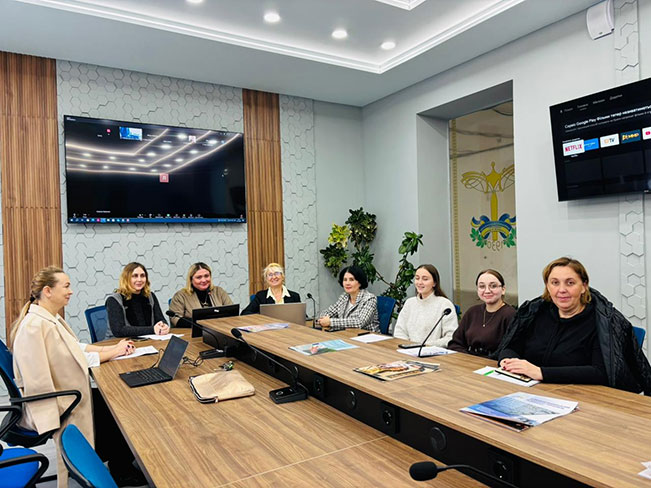
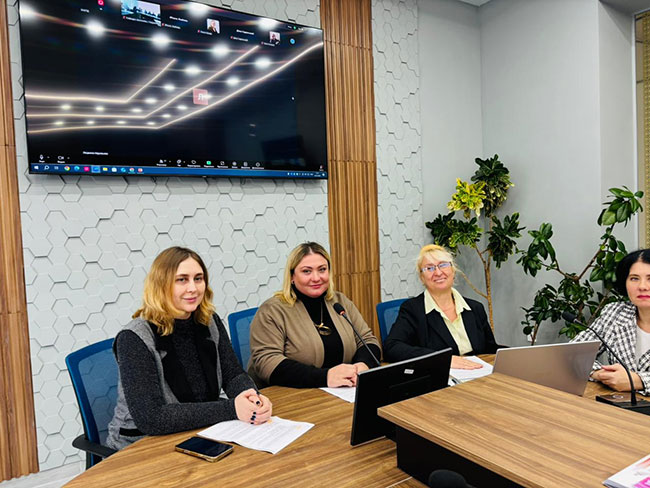
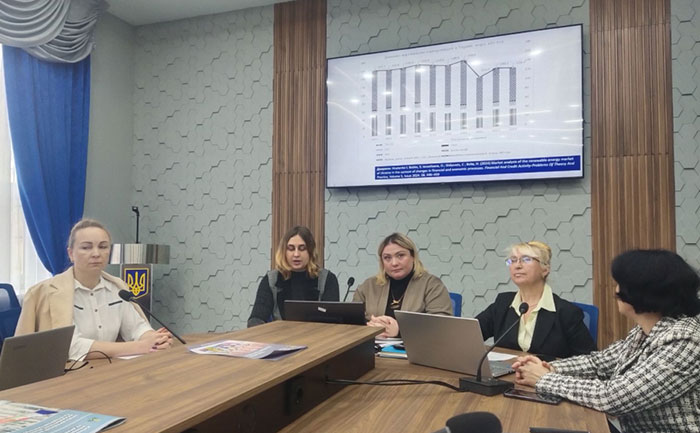
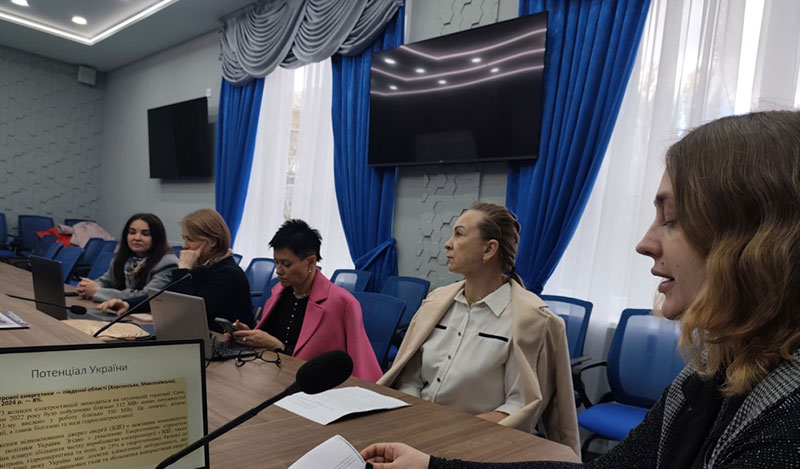
Speaker Svitlana BEBKO, Doctor of Economics, Professor, Professor of Marketing, gave a presentation on «Overview and Prospects of the Ukrainian Renewable Energy Market» and spoke about renewable energy sources as a factor in Ukraine's energy independence. She emphasised the further development of renewable energy sources, which can contribute to the flexibility and sustainability of Ukraine's energy security and significant socio-economic and environmental benefits for the country's post-war reconstruction and European integration.
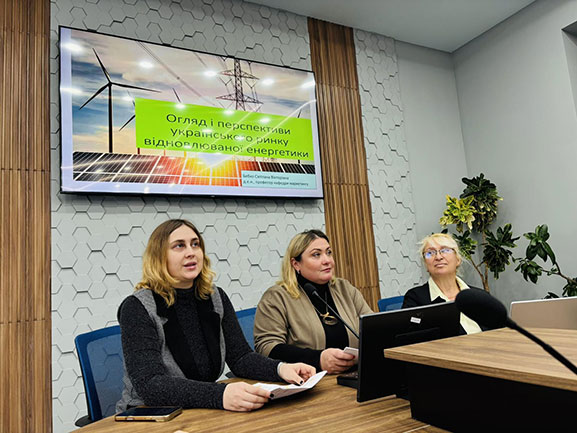
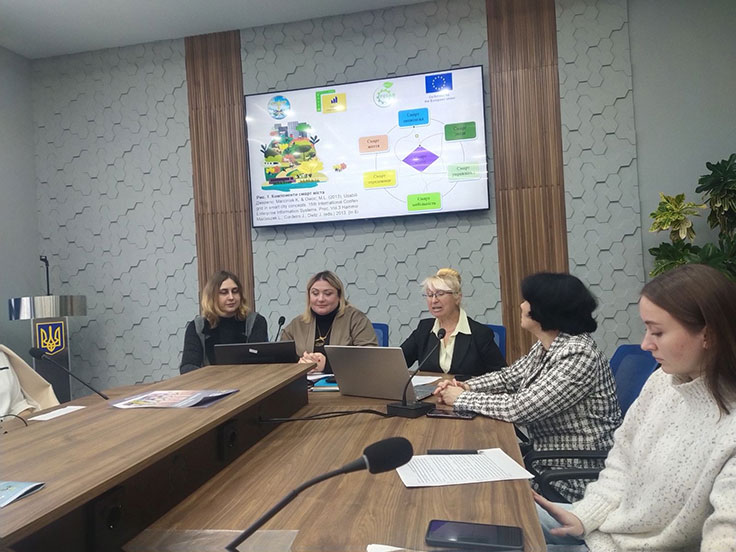
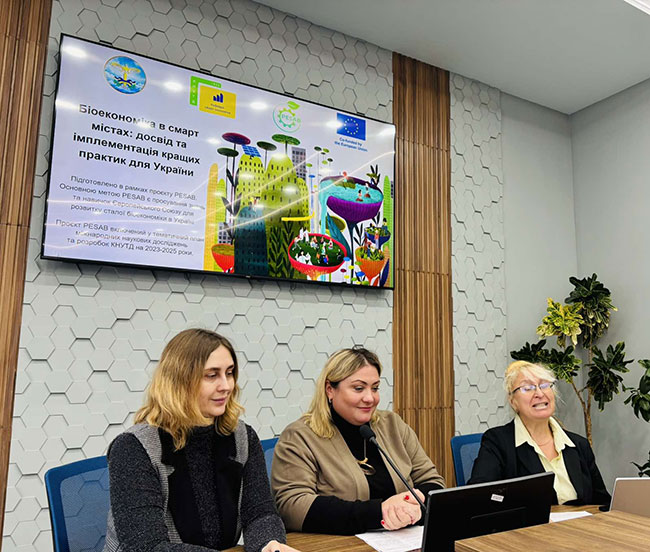
Olena BUDYAKOVA, PhD in Economics, Associate Professor, Associate Professor of the Department of Economics, told the students about bioeconomics in smart cities, namely about the experience and implementation of best practices for Ukraine.
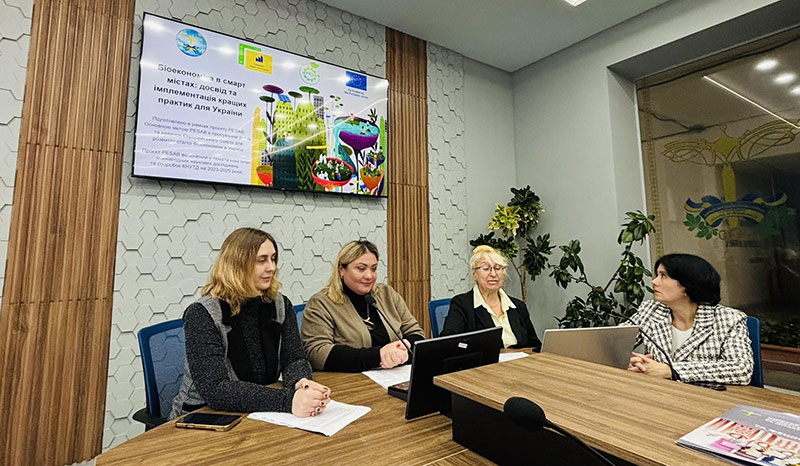
Lyudmila MELNYK, Doctor of Philosophy in Economics, Associate Professor of the Department of Economics, presented a report on «Circular Economy for Waste Management in Wartime» using the example of the Bucha district.
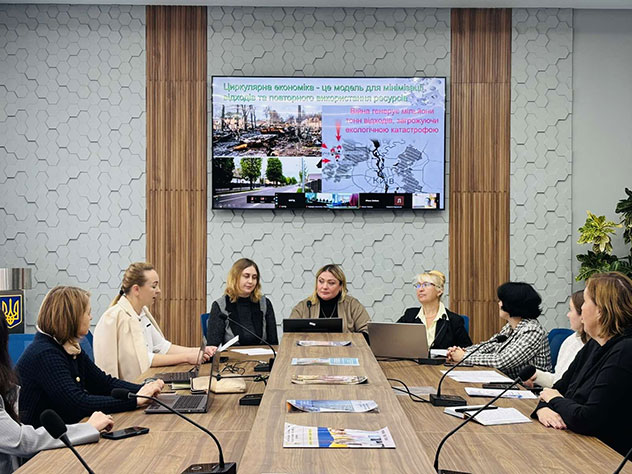
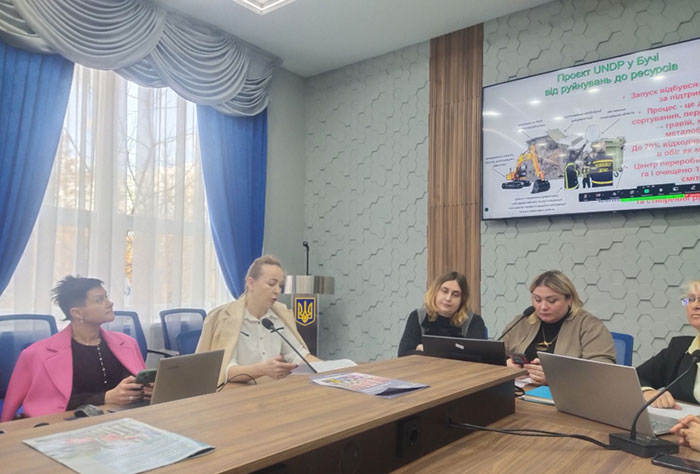
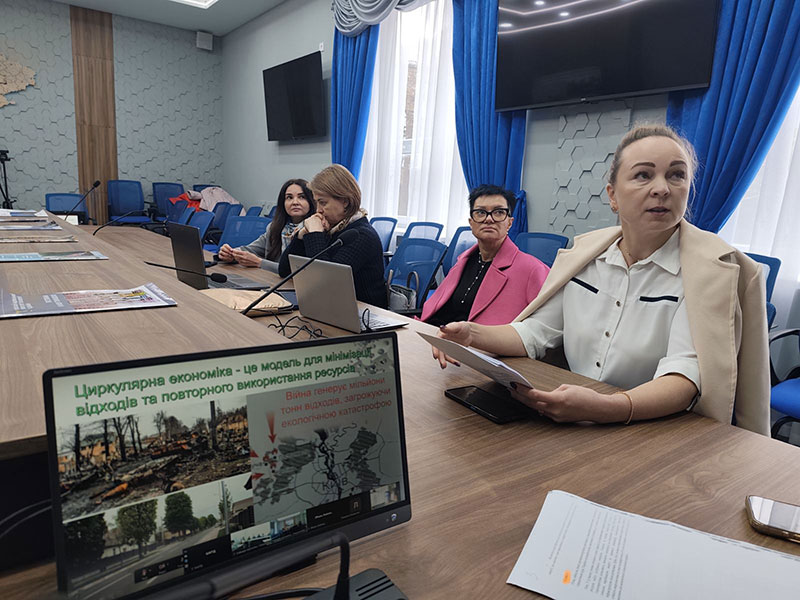
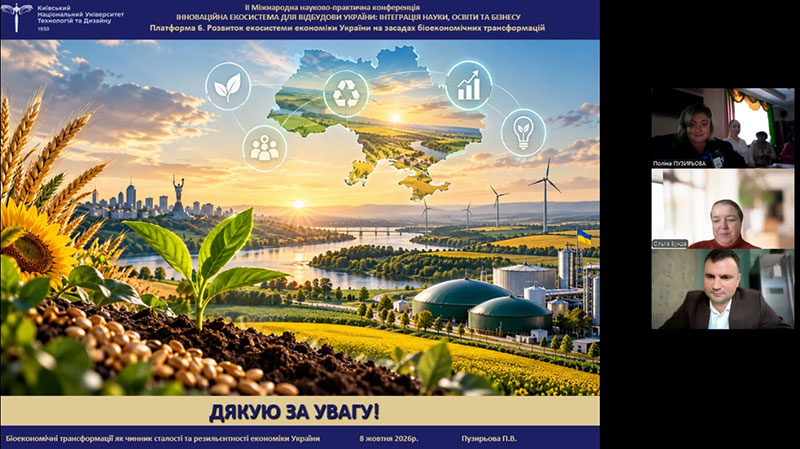
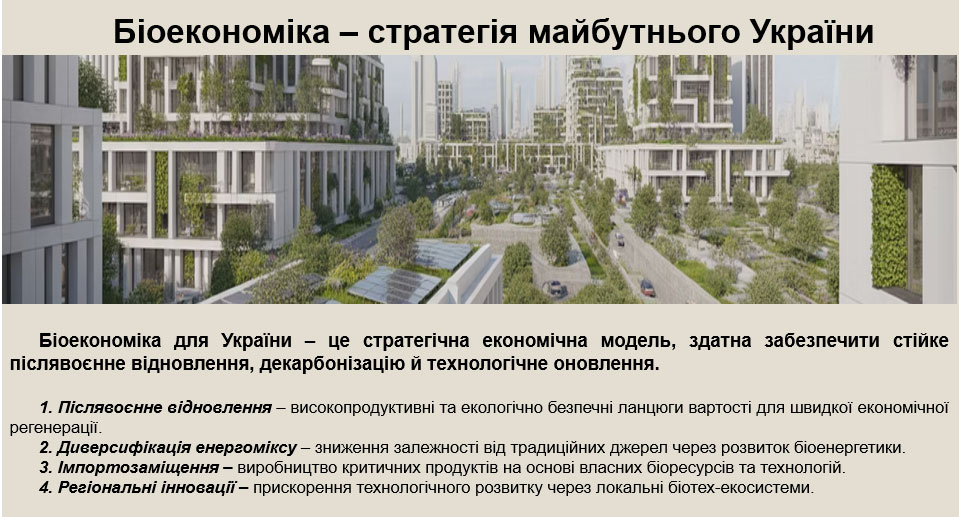
Project coordinator Polina PUZYROVA, Doctor of Economics, Professor, Head of the Department of Economics, presented a report on «Prospects for the formation of Ukraine's economic ecosystem based on bioeconomics», in which she outlined a strategic path to sustainable development through innovation, renewable resources, and technological modernisation. She emphasised that the bioeconomy for Ukraine is a strategic economic model capable of ensuring sustainable post-war recovery, decarbonisation and technological renewal.
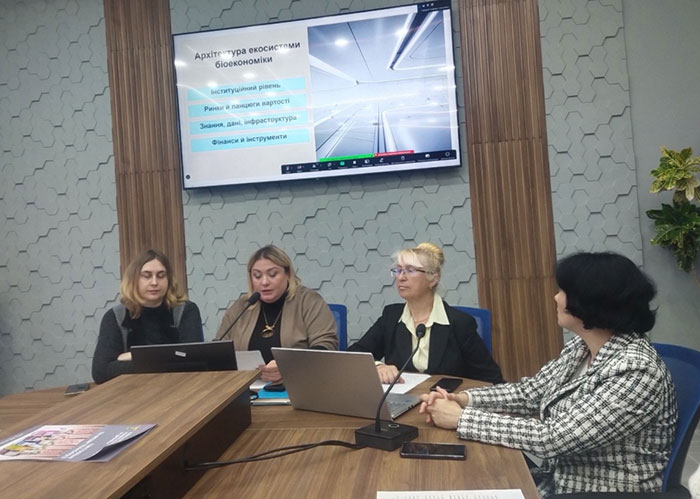
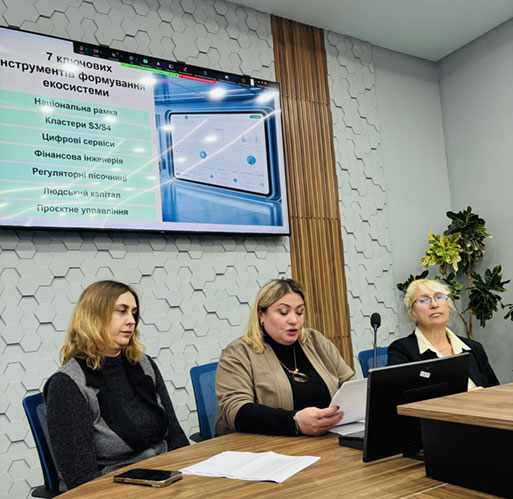
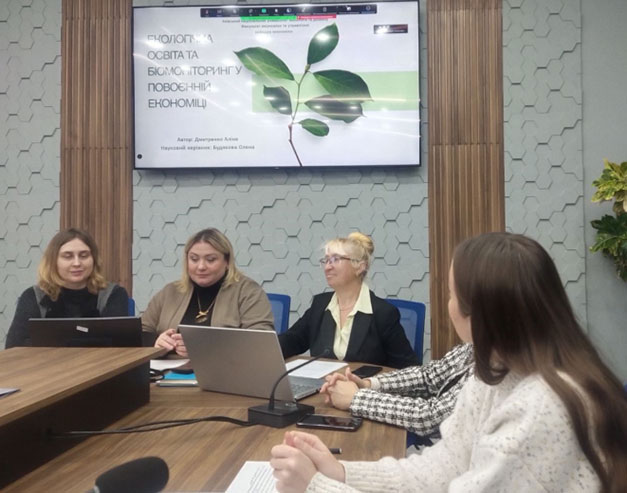
Besides, the short-term course for college and university students was attended by second-level higher education seekers Diana PRYGARSKA, who told everyone about the prospects of introducing bioeconomics in the pharmaceutical industry, and Alina DMITRENKO, who presented a report on «Environmental education and biomonitoring in Ukraine's post-war economy».
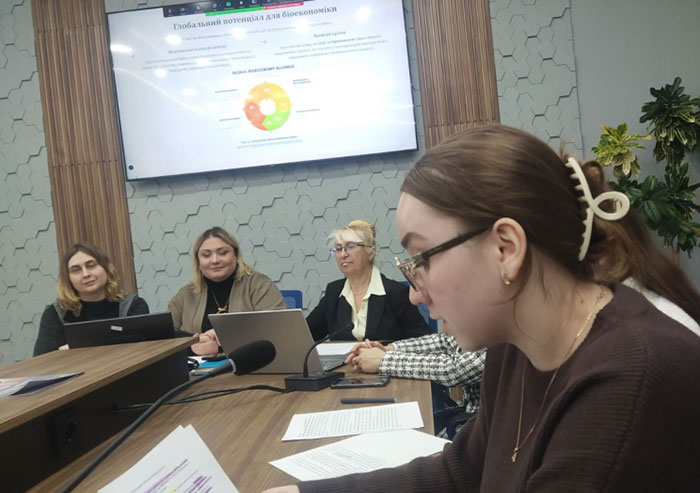
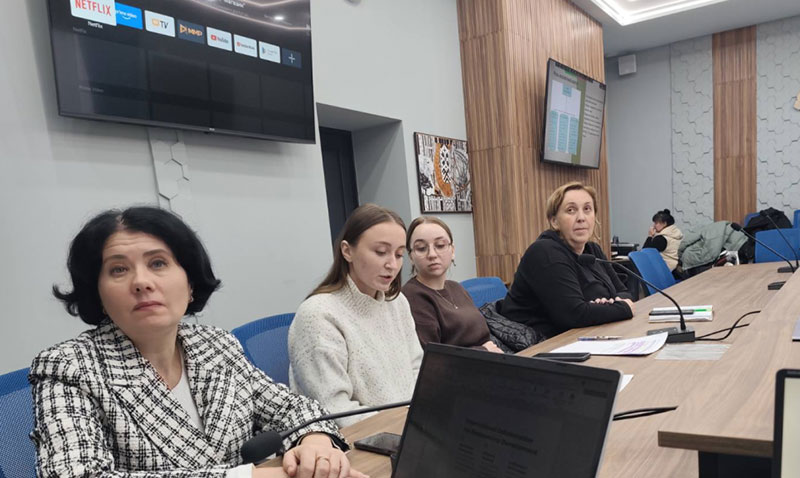
We would like to thank Tetiana VLASІUK, Dean of the Faculty of Economics and Management, Candidate of Economic Sciences, Associate Professor, for her support of our event. She helped organise the short-term course and attracted a wide range of applicants from partner higher education institutions, including our friendly partner, KROK University.
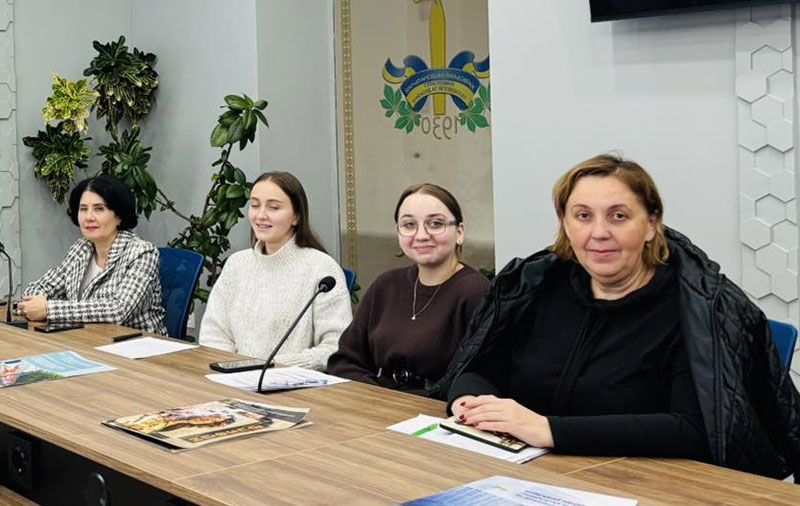
We would like to express our special gratitude to Lyubov Khmelevskaya, Director of the Professional College of Arts and Design at KNUTD, Candidate of Economic Sciences, Professor, for her assistance and support in attracting online students to the college.
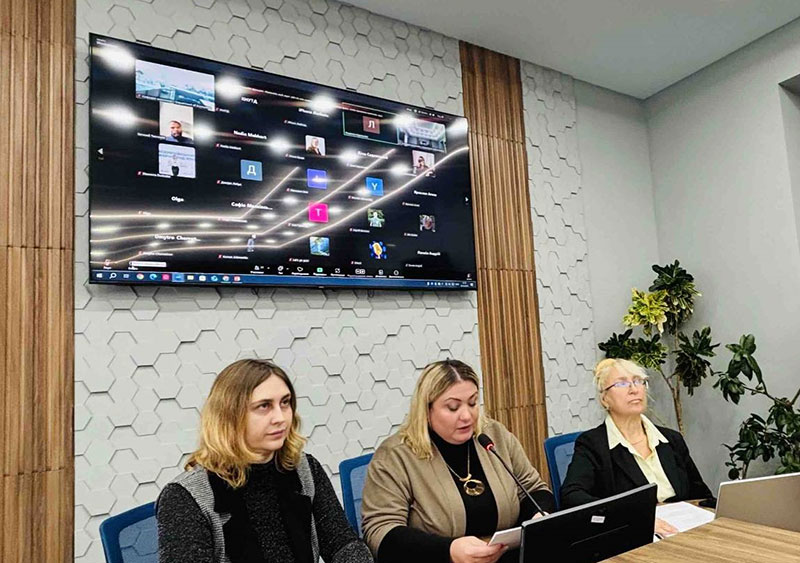
We would like to thank everyone present – Viktoria MARGASOVA, Director of the Office of International and Project Activities at KNUTD, Doctor of Economics, Professor, Honoured Economist of Ukraine; Natalia FASTOVETS, Director of the KNUTD Labour and Career Centre, Candidate of Sciences in Public Administration, Associate Professor; Yevheniia HAUSTOVA, Doctor of Economics, Professor, Professor of the Department of Economics, Mark LEBEDEV, Doctor of Philosophy in Economics, Senior Lecturer at the Department of Economics, and all those present via the ZOOM platform for their active support and implementation of a short-term course for college and university students on «Green Transformation and Sustainable Bioeconomy».
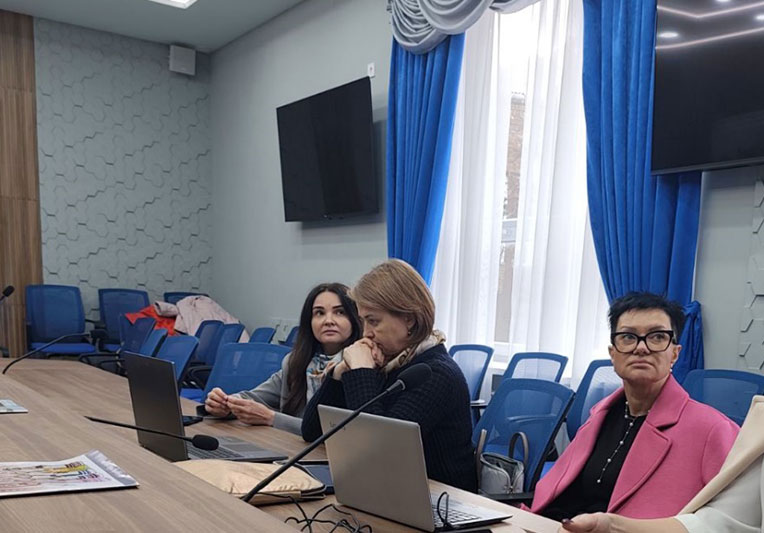
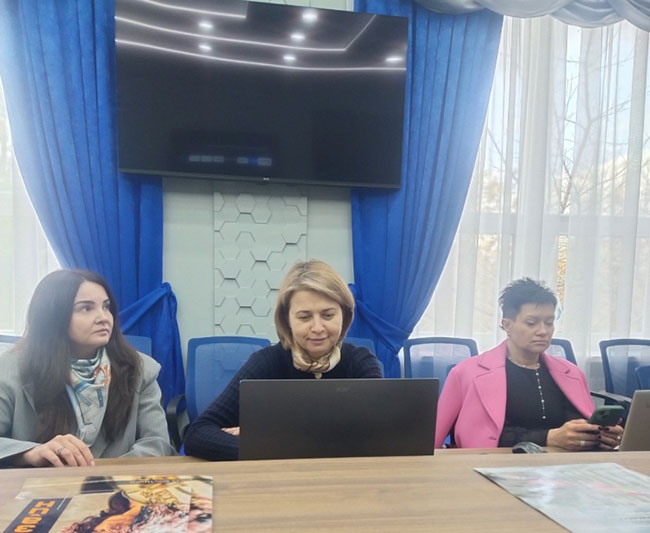
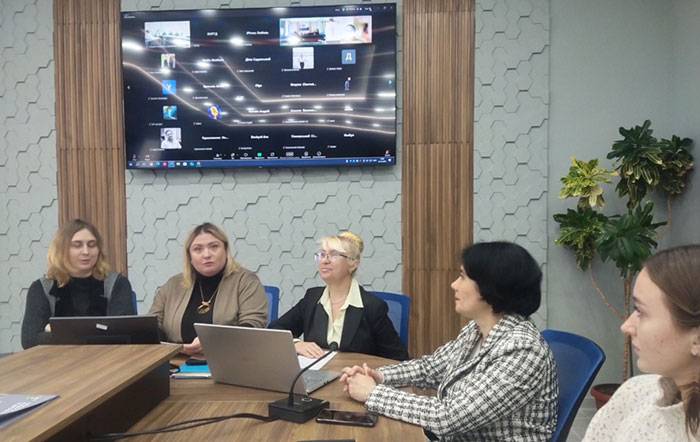
At the end of the event, project coordinator Polina PUZYROVA thanked everyone for a productive day and reiterated the importance and main goal of ERASMUS-JMO-2023-MODULE «Promoting European skills and approaches to a sustainable bioeconomy in the context of contemporary challenges in Ukraine» (PESAB), namely: promoting European Union knowledge for the development of a sustainable bioeconomy in Ukraine and providing students with additional skills in sustainable bioeconomy.
Post-release of the scientific seminar
"Development of bioeconomy and smart specialization of Ukrainian regions"
On February 27, 2024, a scientific seminar on "Development of the bioeconomy and smart specialization of Ukrainian regions" was held at the Kyiv National University of Technologies and Design within the framework of the Jean Monnet Module of the Erasmus+ project "Promoting of European skills and approaches for sustainable bioeconomy in the conditions of Ukrainian acute challenges" (PESAB).
The scientific seminar was dedicated to the exchange of ideas and results of scientific research activities on the prospects for the development of the bioeconomy and smart specialization of the regions of Ukraine. The seminar was attended by scientists from the departments of Smart Economics, Marketing and Communication Design, Biotechnology, Leather and Fur, business representatives, as well as students of the department of Smart Economics.
The purpose of the scientific seminar is to involve the scientific community and higher education students in scientific research in the field of smart specialization and the formation of students' European skills and approaches to a sustainable bioeconomy.
Oleksandra OLSHANSKA, Dean of the Faculty of Management and Business Design, Professor, Doctor of Economics, Chair of the scientific seminar, noted the successful practices of implementing ERASMUS+ projects at the Faculty of Management and Business Design.

Primary Coordinator, Head of the Department of Smart Economy, Doctor of Economics, Professor Anna OLESHKO outlined the first results of the Jean Monnet module "Promoting European Skills and Approaches to Sustainable Bioeconomy in the Context of Modern Challenges in Ukraine" and prospects for further activities.
Dmytro NOVIKOV, Head of Marketing at UIFK-AGRO LLC, presented the main bioeconomy technologies that are promising for use in Ukrainian agriculture.

Olena MOKROUSOVA, Head of the Department of Biotechnology, Leather and Fur, Doctor of Technical Sciences, Professor, outlined the prospects for biomethane production in Ukraine.

Zoryna SHATSKA, Associate Professor of Smart Economics, presented a report on the agricultural sector of Ukraine as a vector of Ukraine's smart specialization.
Svitlana BEBKO, Doctor of Economics, Professor of the Department of Marketing and Communication Design, identified the prospects for biofuel production in Ukraine.
Olena BUDIAKOVA, Associate Professor of the Department of Smart Economics, presented the Training Manual "European Knowledge for Sustainable Bioeconomy in Ukraine", developed for teaching the Jean Monnet PESAB Module.

The courses of the module "European Knowledge for Sustainable Bioeconomy in Ukraine" were presented by students of the Department of Smart Economy:
→ Course 1 "Strategies of sustainable bioeconomy of the European Union" – Maria ZVEREVA;
→ Course 2 "Sustainable biomass potentials of the EU and Ukraine" – Maria MELNYK;
→ Course 3 "Bioeconomy and Trade in the Context of International Relations between Ukraine and the European Union" – Yelyzaveta BIHUNENKO.

The Manual "European Knowledge for Sustainable Bioeconomy in Ukraine" covers the applied aspects of implementing a sustainable bioeconomy in the European Union and opportunities for Ukraine. The Manual is intended for students, postgraduates and university professors of various fields of study, as well as readers interested in the bioeconomy.
We sincerely thank the participants of the scientific seminar for their informative presentations, exchange of ideas, experience and best practices in promoting European knowledge of sustainable bioeconomy in Ukraine.