In the face of today’s global challenges, arts education in Ukraine is transforming into a powerful tool for preserving national identity and driving the strategic recovery of the state. Representatives of the Kyiv National University of Technologies and Design (KNUTD) took an active part in the National Round Table "Arts Education Under Martial Law and Post-War Recovery of Ukraine: Challenges and Achievements," organized by the Institute of Pedagogy of the National Academy of Educational Sciences (NAES) of Ukraine. The event served as a platform for an in-depth analysis of the current state of arts pedagogy and the search for innovative ways to train specialists for the creative industries.
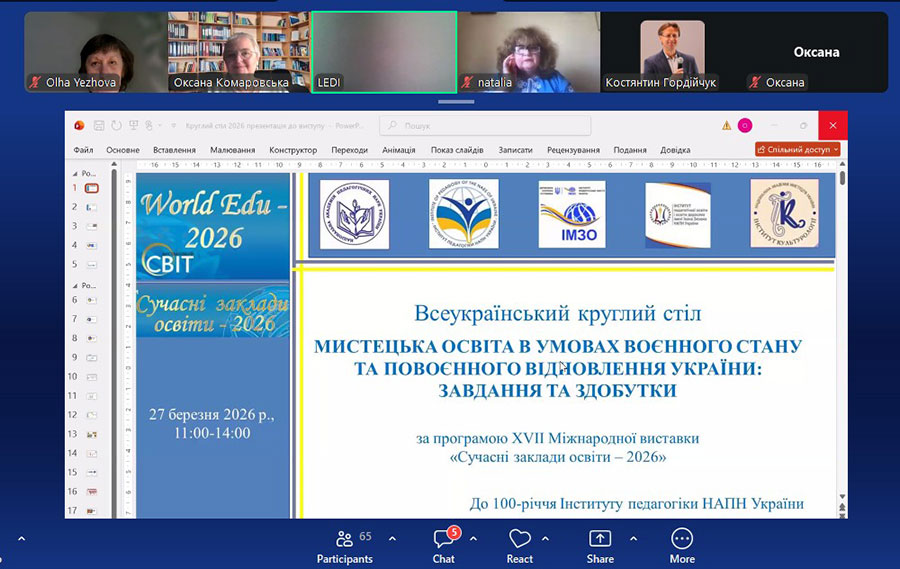
A representative delegation from KNUTD, comprising both academic staff and students, participated in the discussion. Faculty and students of the Department of Performing Arts and Culture played a significant role in the sessions, contributing their expertise in the performing arts—a field critical to understanding contemporary cultural processes. Alongside them, specialists from the Faculty of Design made a substantial contribution to the round table, highlighting the university's multidisciplinary approach to addressing pressing industry issues. The synergy between performing arts and visual culture provided a comprehensive vision for the development of the creative sector under martial law.
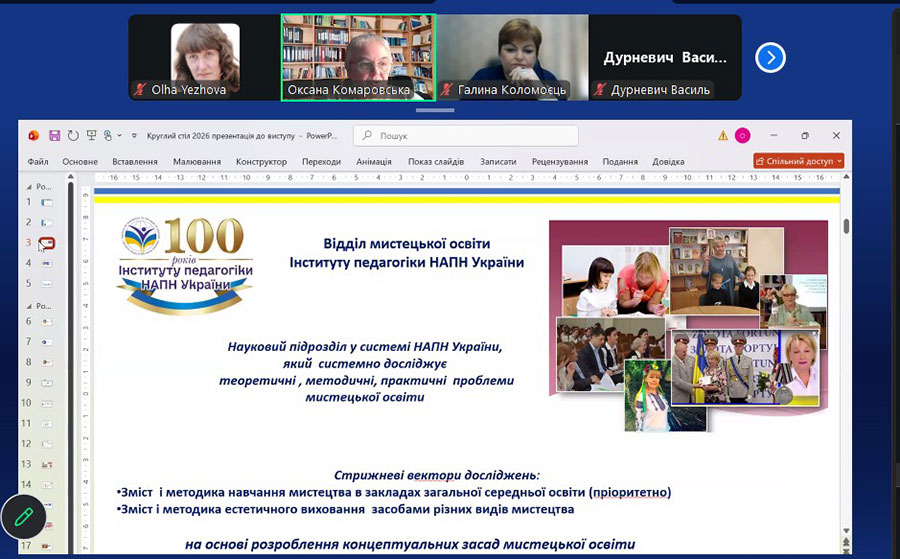
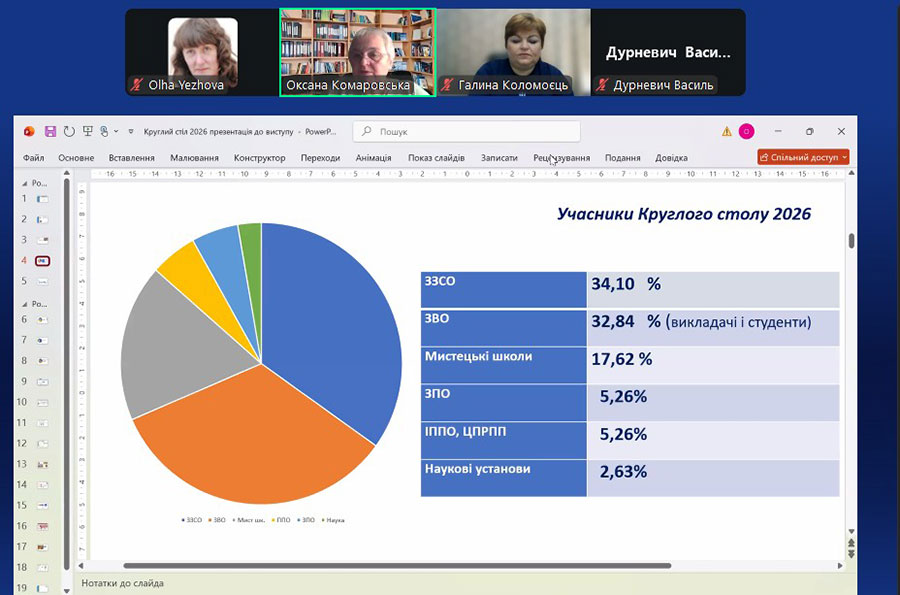
During the sessions, participants focused on key thematic areas, including the digitalization of arts education, psychological and pedagogical support for students in crisis conditions, and the updating of educational content to meet the demands of post-war recovery. KNUTD faculty shared their own successful cases of adapting the educational process, emphasizing the importance of practice-oriented learning and engaging youth in international cultural initiatives. The collaborative efforts of representatives from various faculties allowed for a detailed examination of training competitive specialists capable of working at the intersection of technology and art.
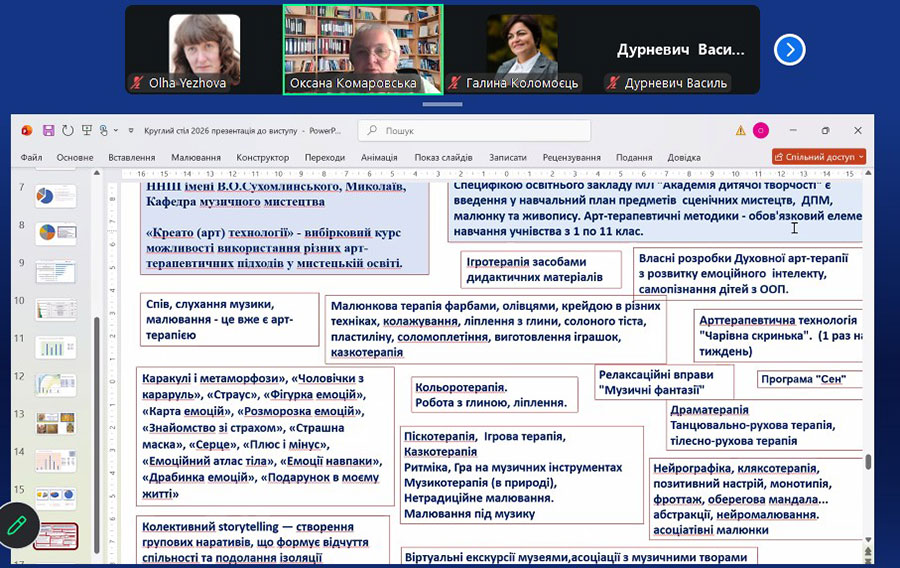
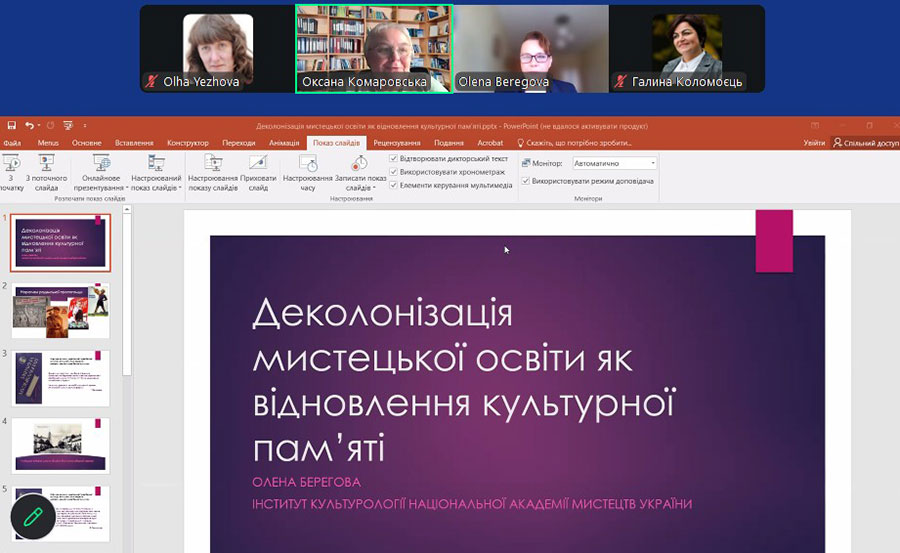
Special attention was paid to the topic of national-patriotic education through the arts. Participants of the round table noted that the role of a designer, actor, or cultural manager today extends far beyond purely aesthetic activities – it is a mission to represent Ukraine to the world. A direct dialogue between NAES scientists and KNUTD practitioners facilitated the development of specific recommendations for improving educational standards and integrating the Ukrainian arts school into the European Higher Education Area.
Following the round table, strategic vectors for cooperation between higher education institutions and scientific entities were outlined. For our university community, participation in such an event serves as further confirmation of our high professional standing and readiness to be a driver of positive change in Ukraine's cultural landscape. We extend our gratitude to the organizers for the insightful discussion and to our colleagues from the Department of Performing Arts and Culture and the Faculty of Design for their proactive stance and professional contribution to shaping the future of Ukrainian arts education.
30.03.2026